Last summer as I was browsing through some blogs I stumbled upon a post on Winged Beauty Butterflies that mentioned Butterflies and Blooms in the Briar Patch, a butterfly habitat in Eatonton, Georgia. The next time we were visiting near there I stopped by the habitat and fell in love with it. I posted about my first visit to the habitat at Wandering in the Briar Patch.
My latest visit to the habitat was this past weekend in July, 2016. While I was wandering through the garden I had the pleasure of meeting Virginia Linch, the woman with the vision to create this magnificent butterfly habitat. Her enthusiasm was contagious as she gave me a tour and introduced me to many of the native Georgia nectar plants that I wasn’t familiar with. She also knew where to look for caterpillars and showed me some so tiny I would have never seen them if she hadn’t pointed them out.
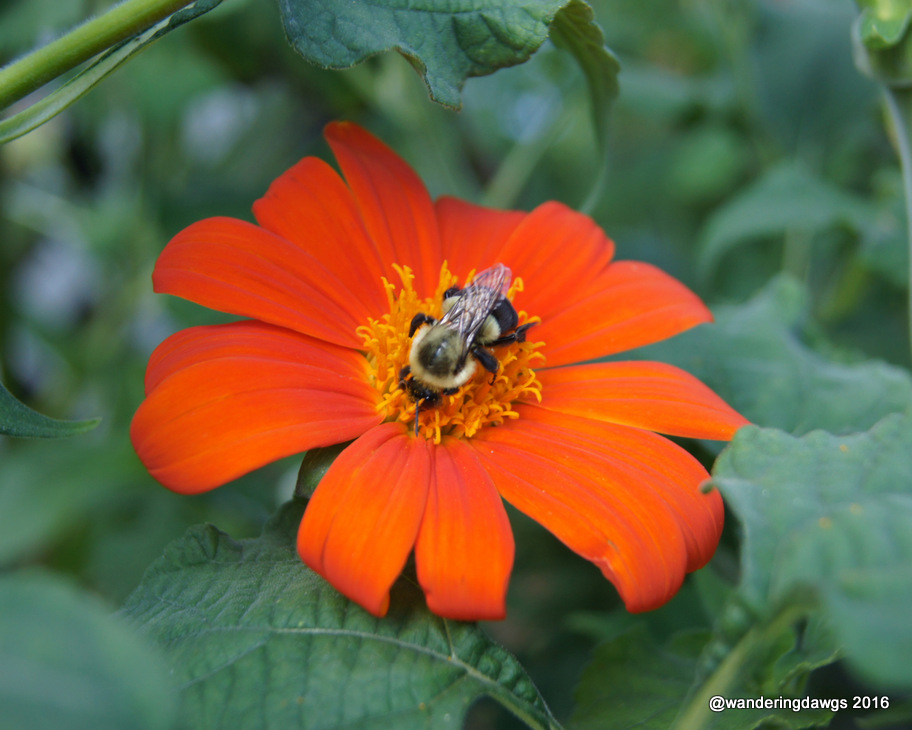
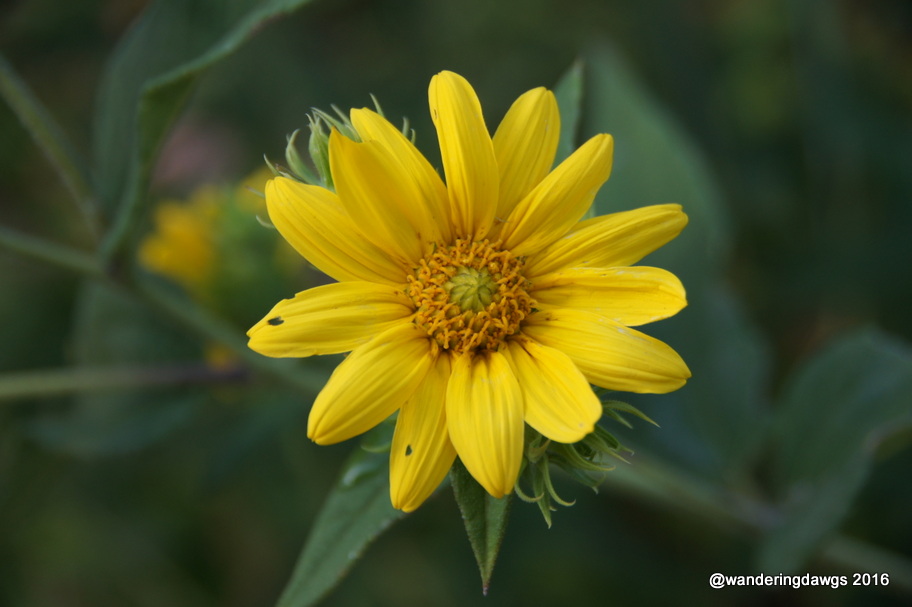
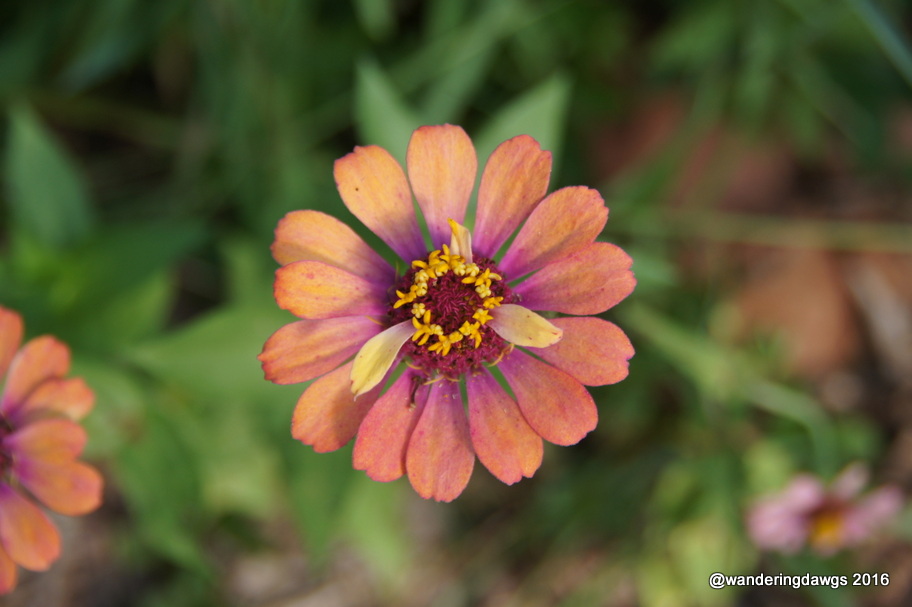
The blooms were vibrant throughout the garden.
Mexican SunflowerBlooms in the Briar PatchBee on Black Eyed Susan
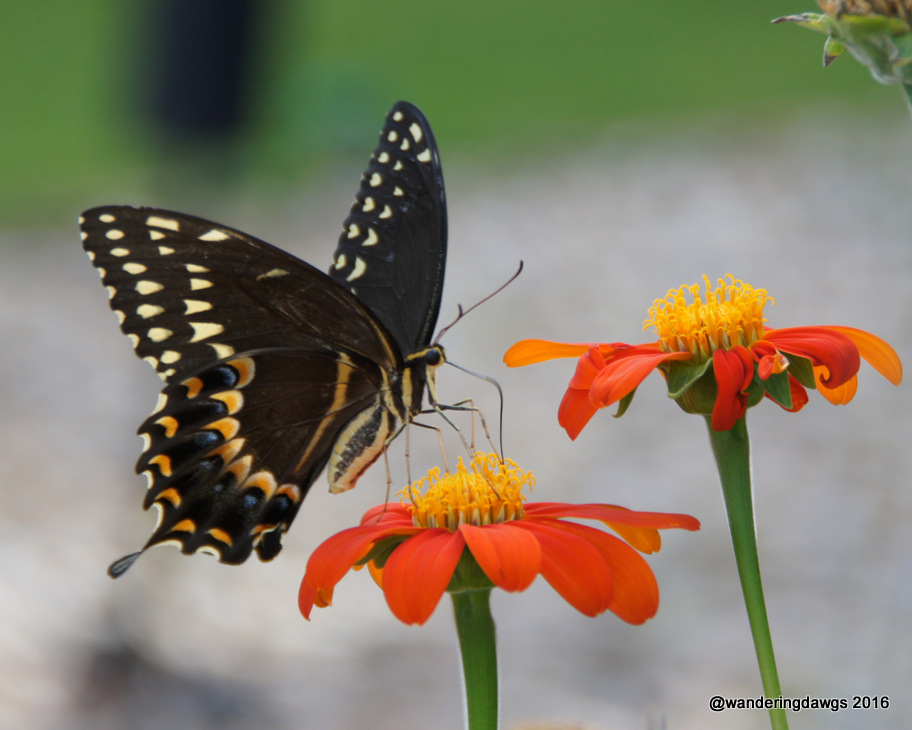
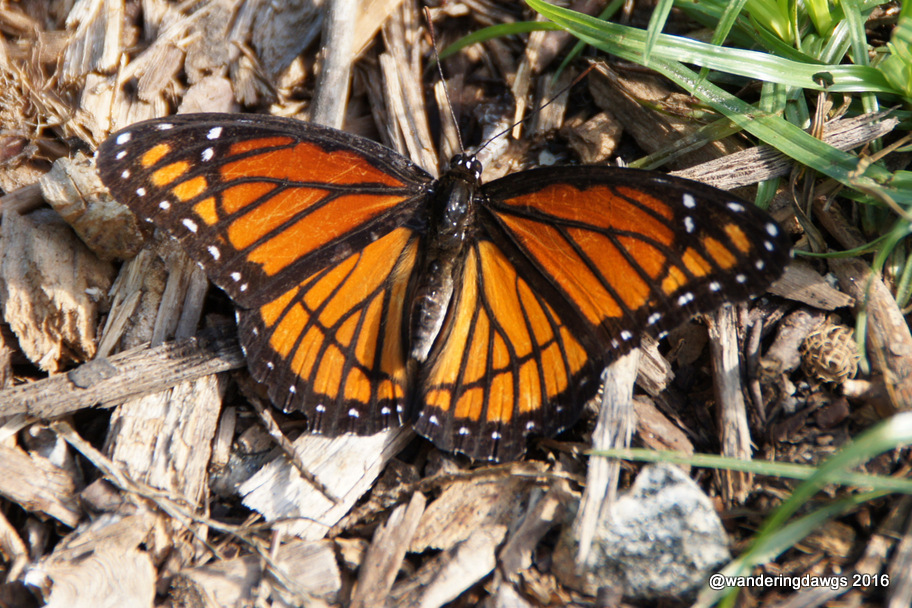
I could see swallowtails, monarchs and other butterflies landing on the blooms but none would stay around long enough for me to get a picture. A Viceroy landed on the ground in front of me and paid no attention to me at all.
Viceroy in the Briar Patch
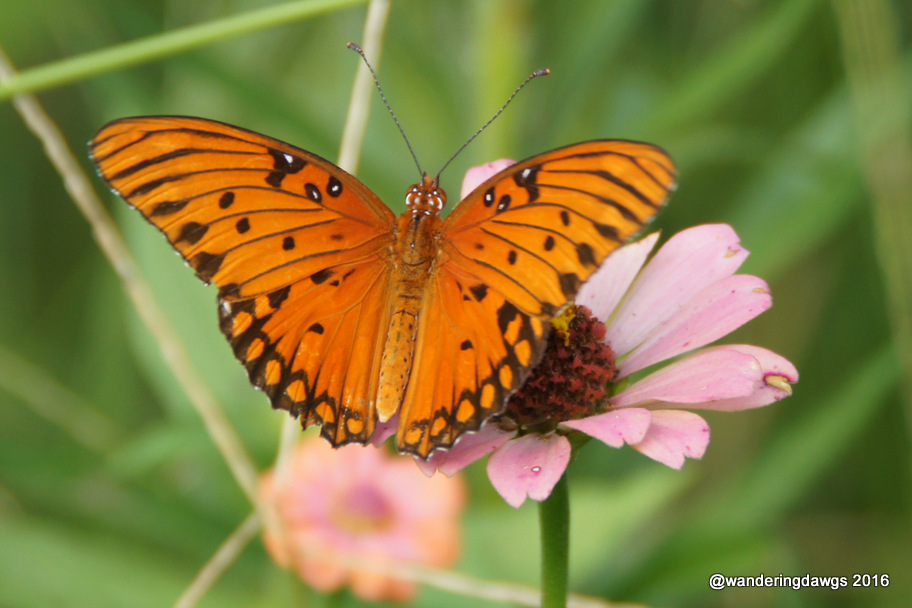
This Gulf Fritillary wasn’t shy.
Gulf Fritillary
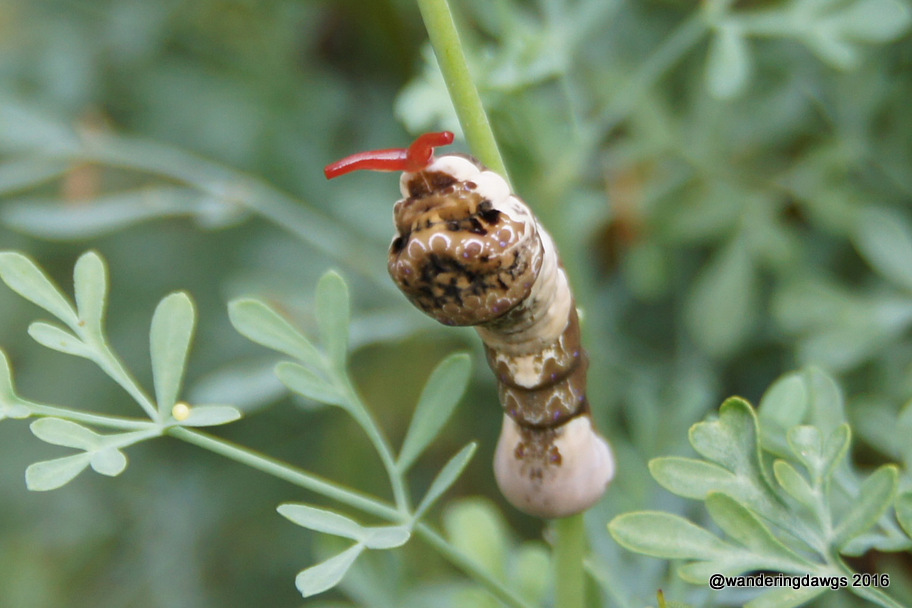
I would never have spotted this Giant Swallowtail caterpillar if Virginia hadn’t pointed it out to me.
Giant Swallowtail Caterpillar
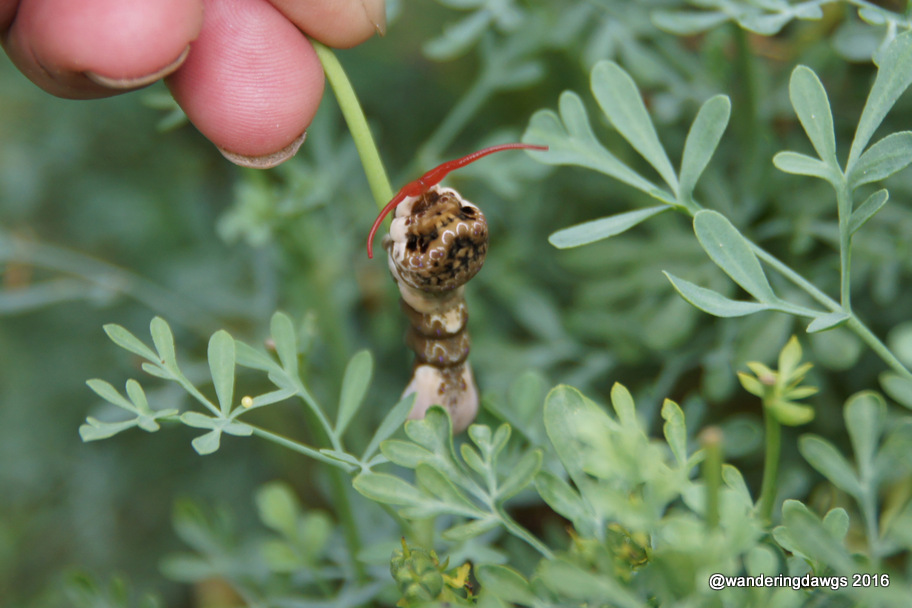
You can see how small it is compared to Virginia’s hand.
Giant Swallowtail Caterpillar
There are benches for resting and even a new porch for sitting.
Porch sitting in the Briar Patch
Thank you Virginia for giving me a tour and for all of your hard work!
On St. Patrick’s Day we left Stephen Foster Folk Culture Center in White Springs, Florida and drove about 50 miles to another park named after the famous composer. At the end of the road 17 miles from the nearest highway, Stephen C. Foster State Park in Fargo, Georgia is located in the Okefenokee National Wildlife Refuge .
This is one of our favorite Georgia state parks and one we have returned to over and over through the years. There is just something I love about being surrounded by nature miles away from civilization.
The Okefenokee Swamp is one of North America’s most unspoiled natural wilderness areas. According to the U. S. Fish and Wildlife Service Okefenokee National Wildlife Refuge web page, “the Okefenokee National Wildlife Refuge has 353,981 acres of National Wilderness Area within the refuge boundaries. In addition, the refuge is a Wetland of International Importance (RAMSAR Convention – 1971) because it is one of the world’s largest intact freshwater ecosystems.”
Indians who once lived in the area called it Okefenokee which roughly translated means “Land of Trembling Water.” The headwaters of the Suwanee River is located in the Okefenokee Swamp.
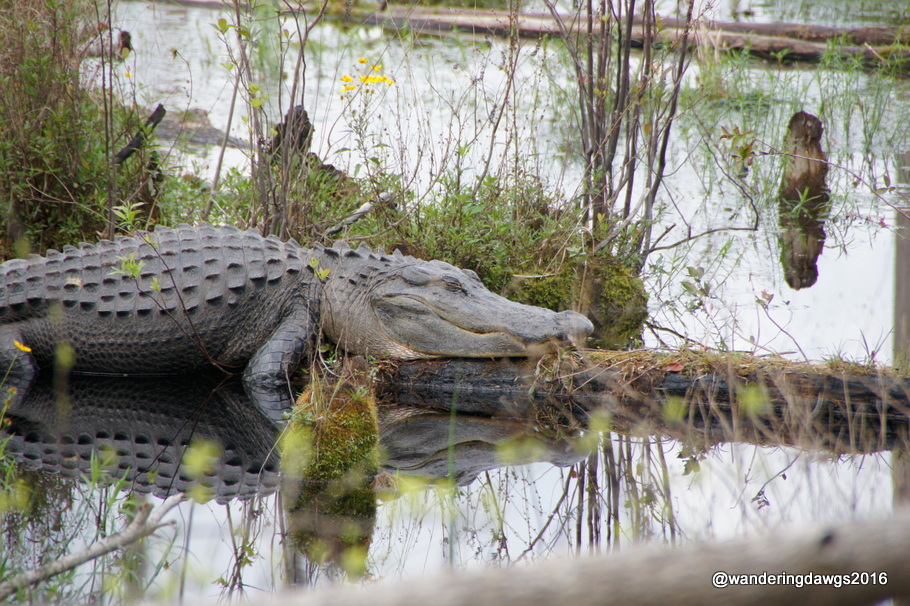
Going out in a boat is a great way to see the swamp but there is also plenty to see from land. All the photos in this post were taken as we walked around the campground, marina and on the Trembling Earth Nature Trail which starts at the marina. One section of the trail is a boardwalk through the swamp. This huge gator was sunning on a log beside the boardwalk.
Giant gator beside the boardwalk trail
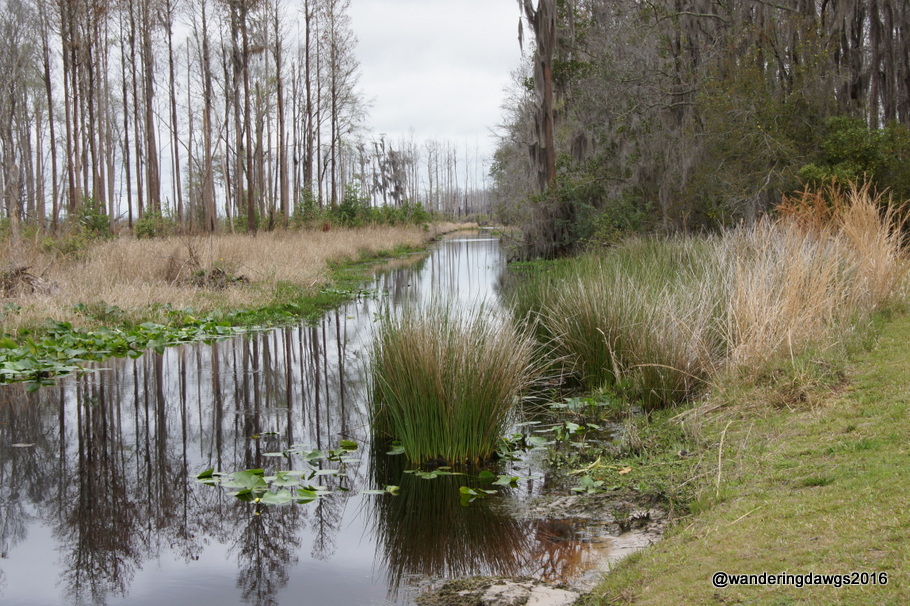
The only man made waterway in the park is this canal which leads to the open water of the Okefenokee Swamp.
Canal leading into the Okefenokee Swamp
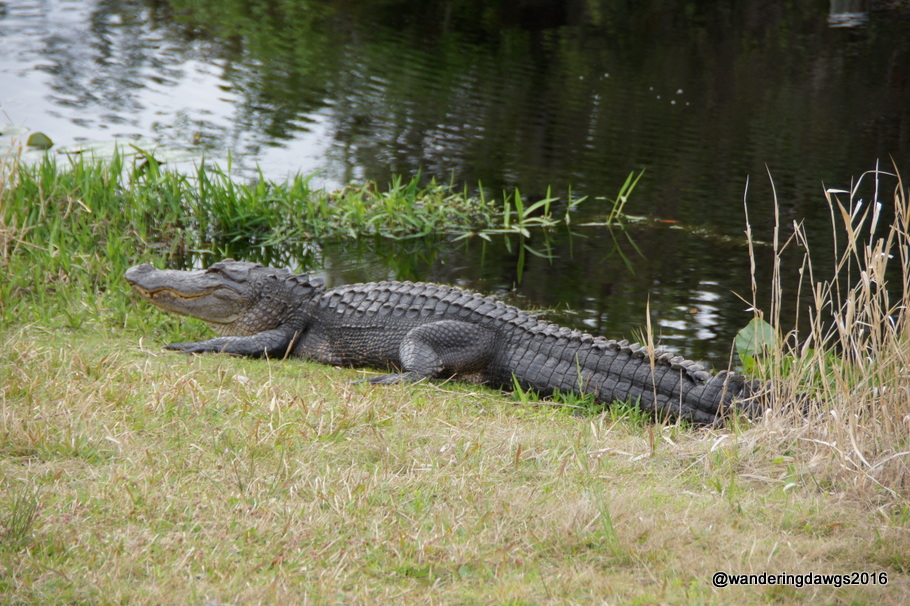
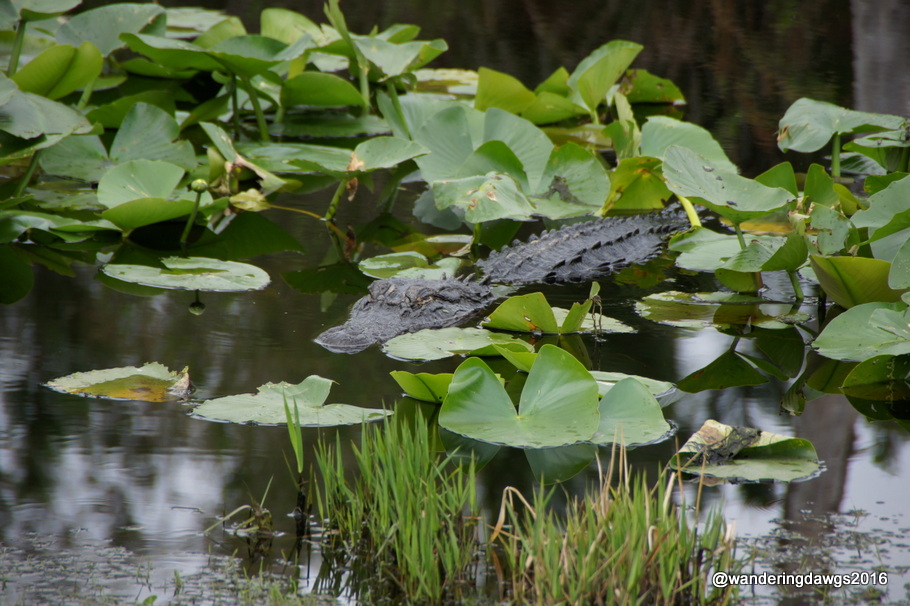
The canal runs beside the road and alligators are frequently seen sunning themselves on the bank or chilling in the water.
Alligator among the lily pads
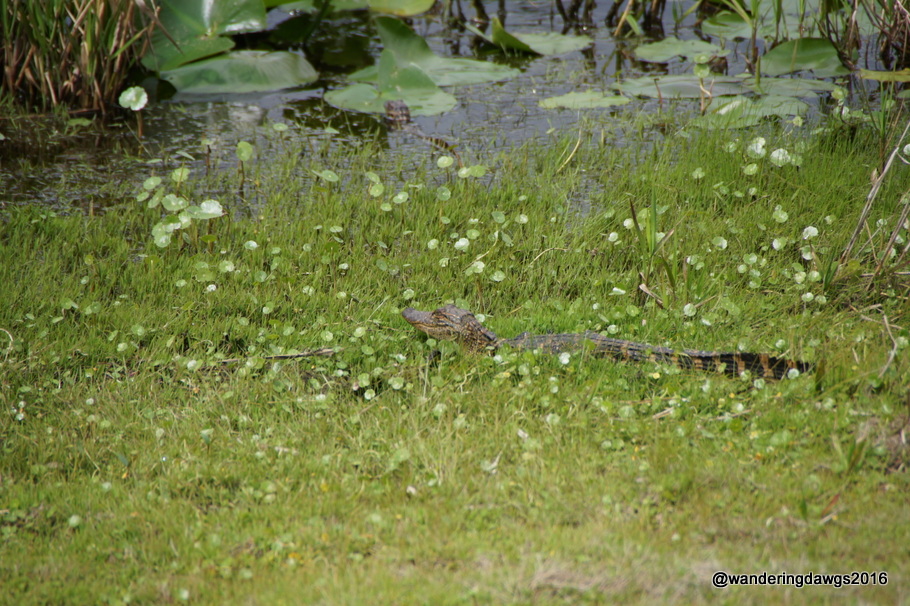
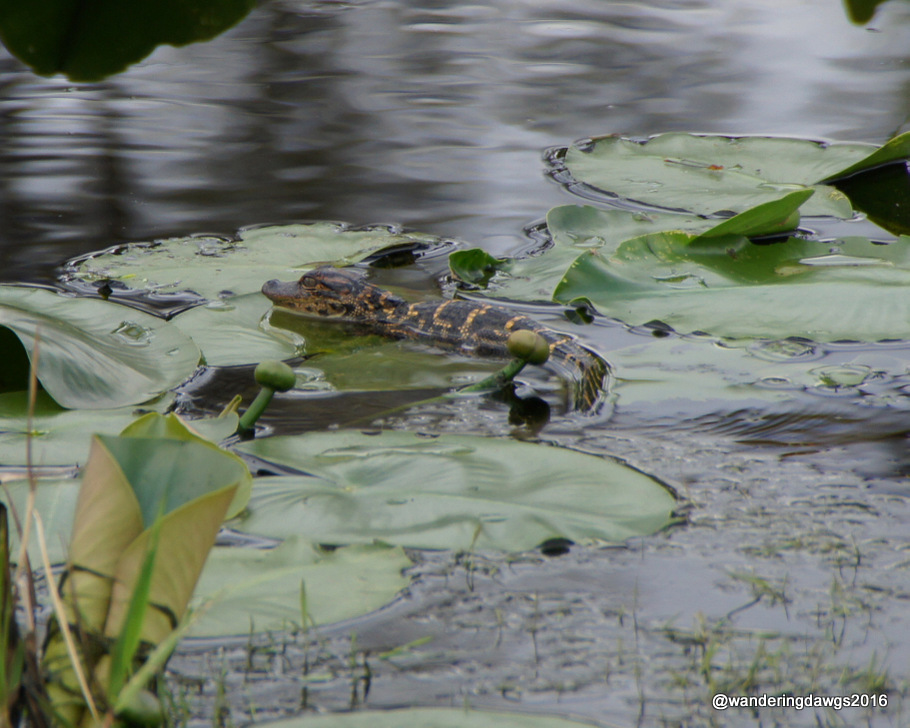
One of the other campers told me about baby alligators beside the road so off we went in search of baby gators.
Baby gator in the canal beside the road. Do you see the one in the water?Baby Gator on Lilly Pad
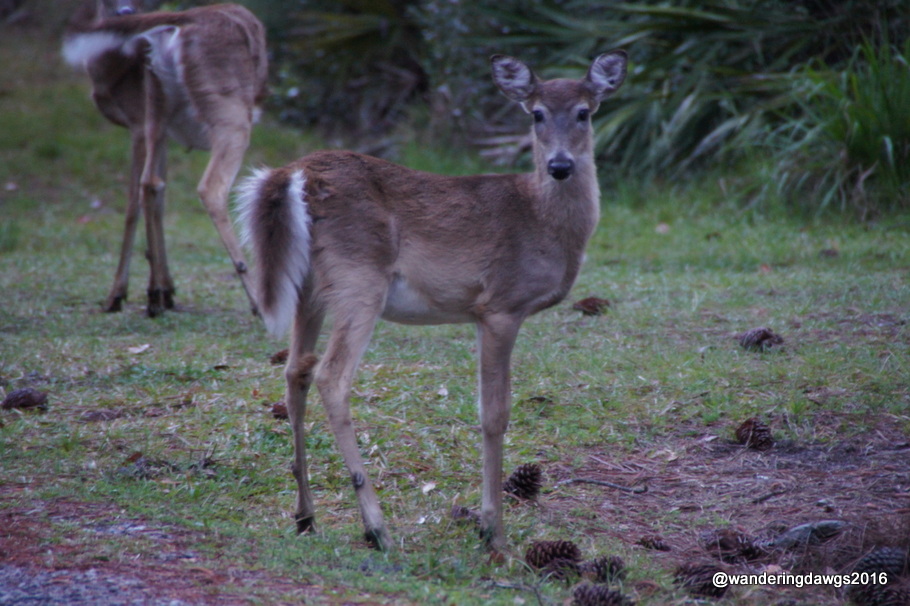
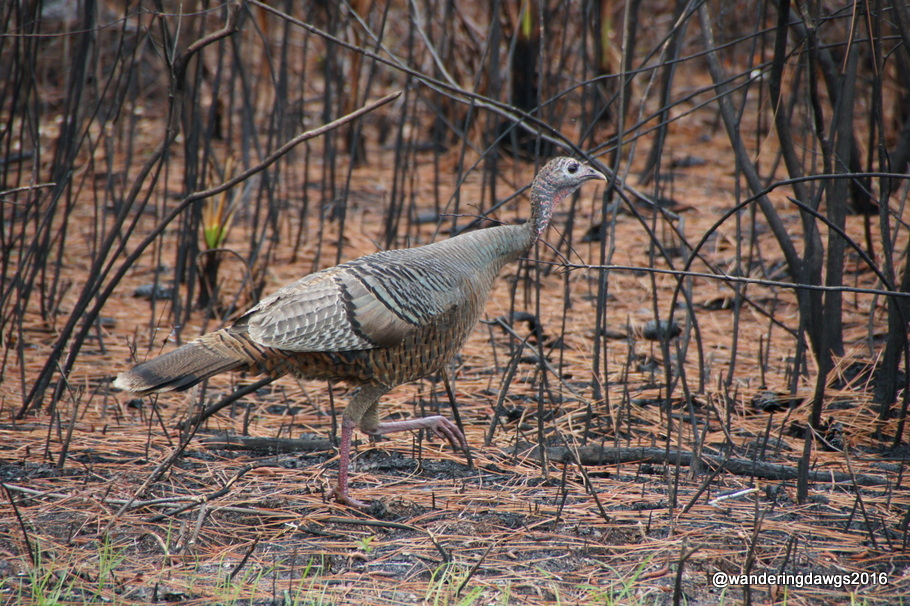
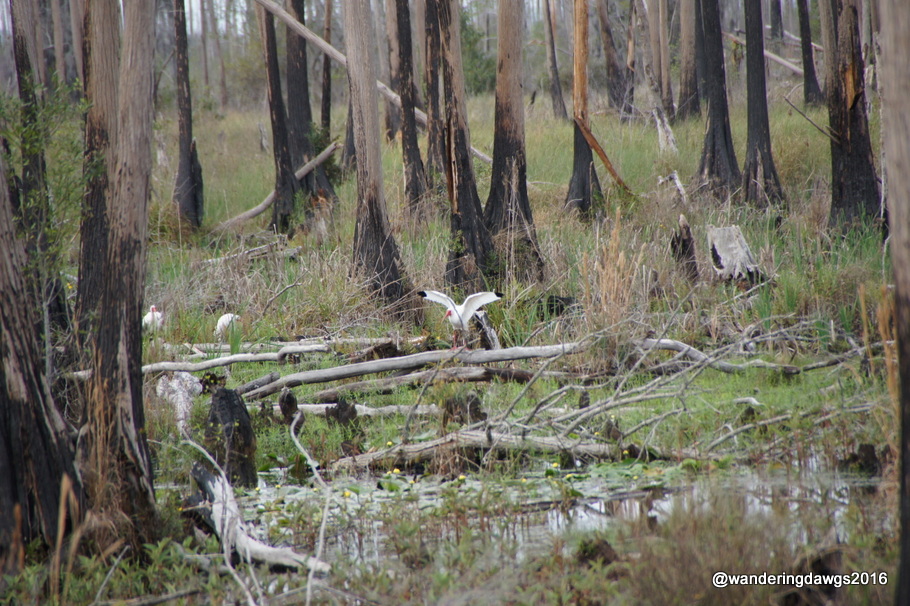
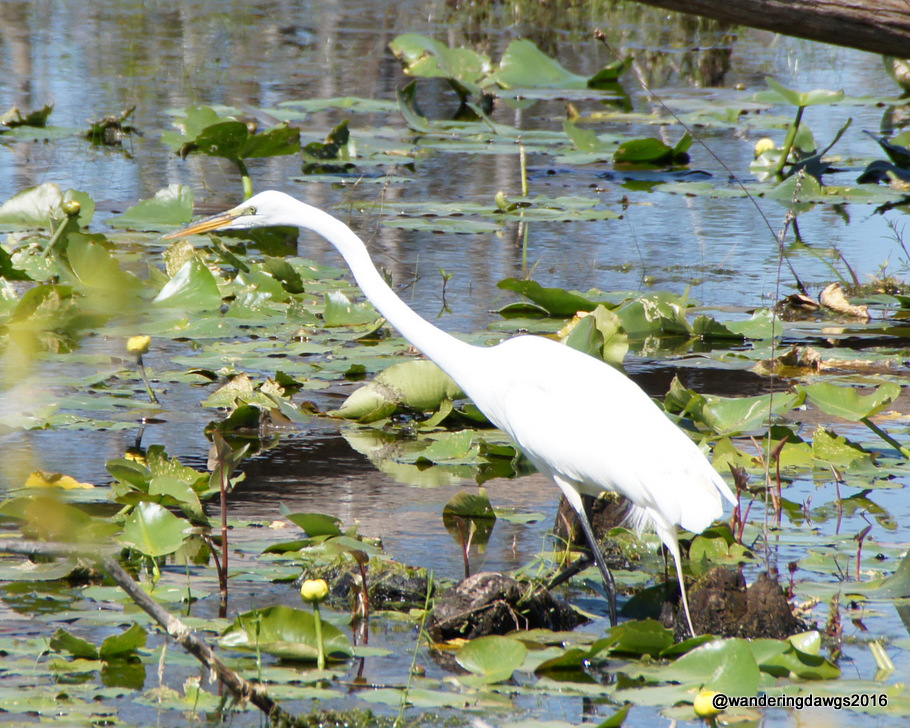
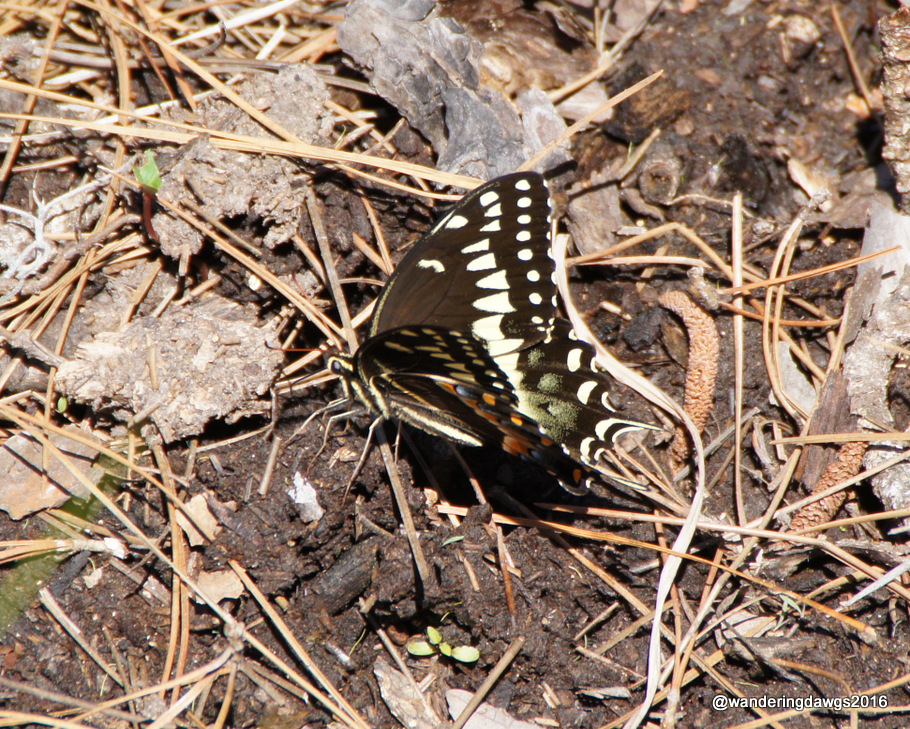
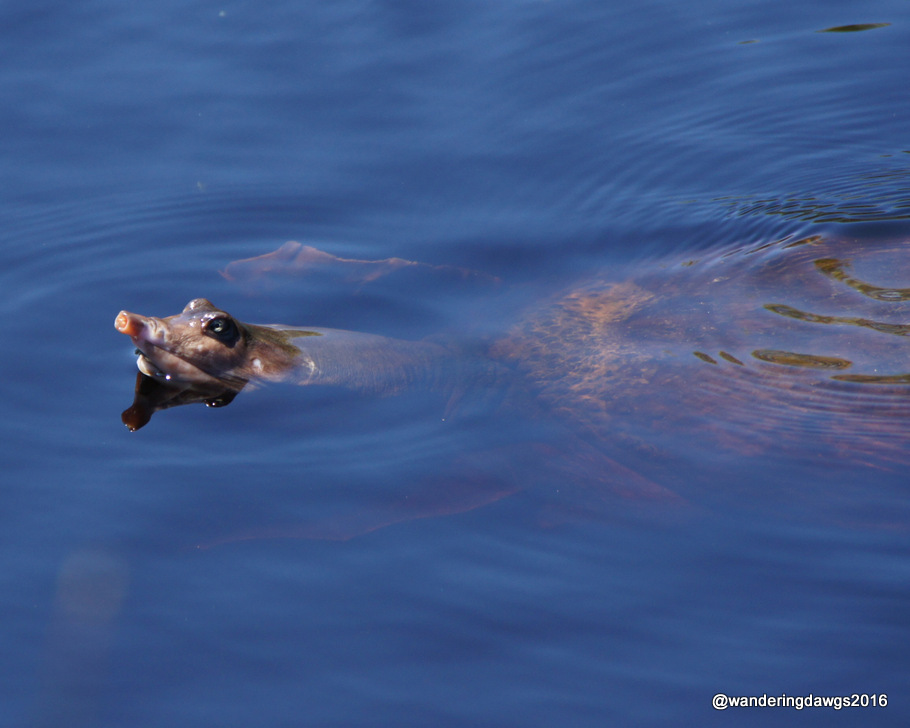
Besides alligators, many other animals make their home in the Okefenokee.
White Tail Deer at duskWild TurkeyIbis in the swampEgret in the swampButterfly beside the trailTurtle swimming in the marina
Coming up in my next post – a ranger guided boat tour into the Okefenokee.
When I first read about Florida’s tallest waterfall at Falling Waters State Park my first thought was “I didn’t know there were ANY waterfalls in Florida!” I had to see it with my own eyes.
So off we went to Falling Waters State Park to check it out. The campground sits at 324 feet above sea level on top of one of the highest hills in Florida.
An easy trail down the hill leads to a small pond and boardwalk trails to the waterfall and around several sinkholes. We observed the 73 foot tall waterfall from a platform above the falls but construction on the platform near the bottom of the falls prevented us from seeing the water dropping into the sinkhole at the bottom.
Florida’s Tallest Waterfall at Falling Waters State Park
The trails meander through a long leaf pine forest with southern magnolias scattered among the pines. A few wildflowers blooming along the trail let us know that spring was almost here.
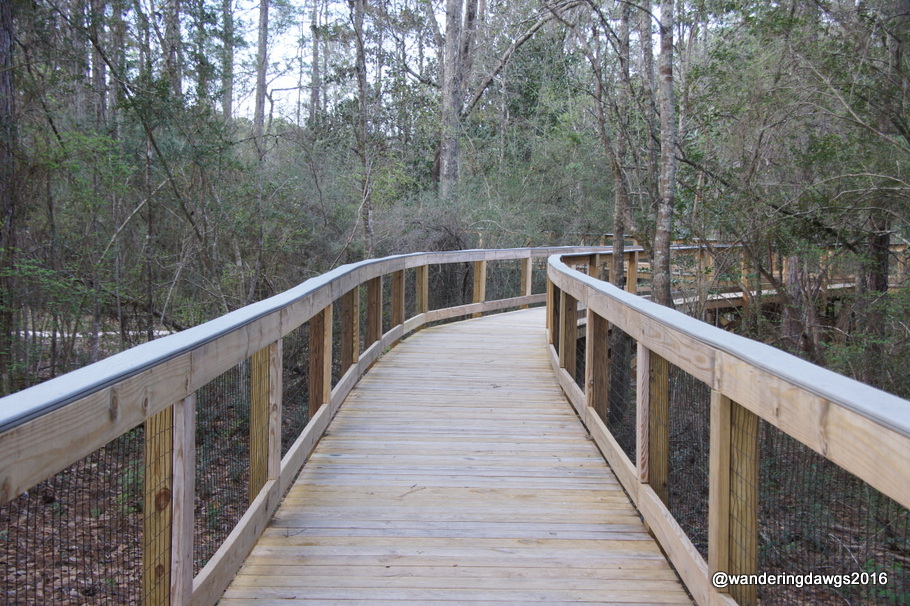
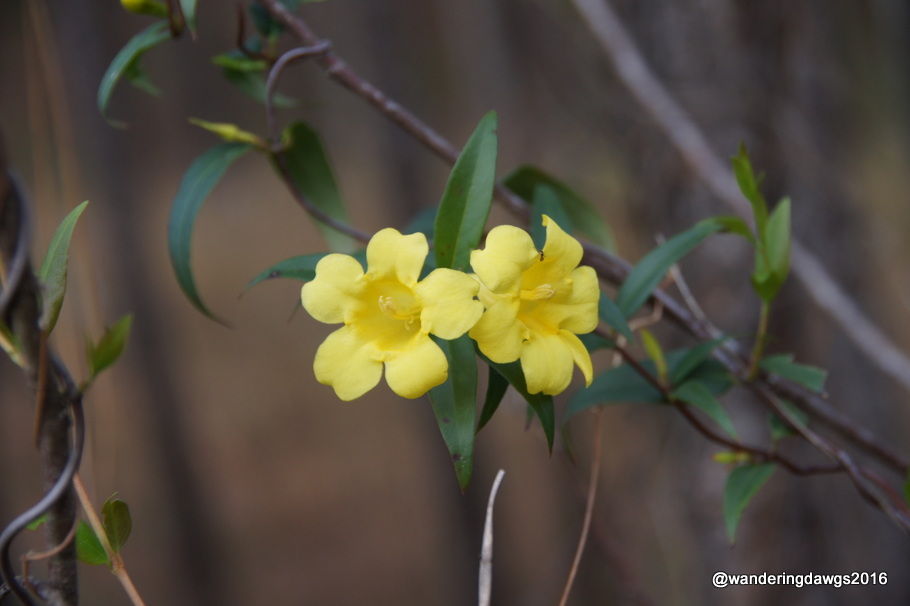
Boardwalk trail at Falling Waters State ParkCarolina JessimineWild Azalea
While exploring the trails we did some more geocaching and found two in the park. We’re getting better at this!
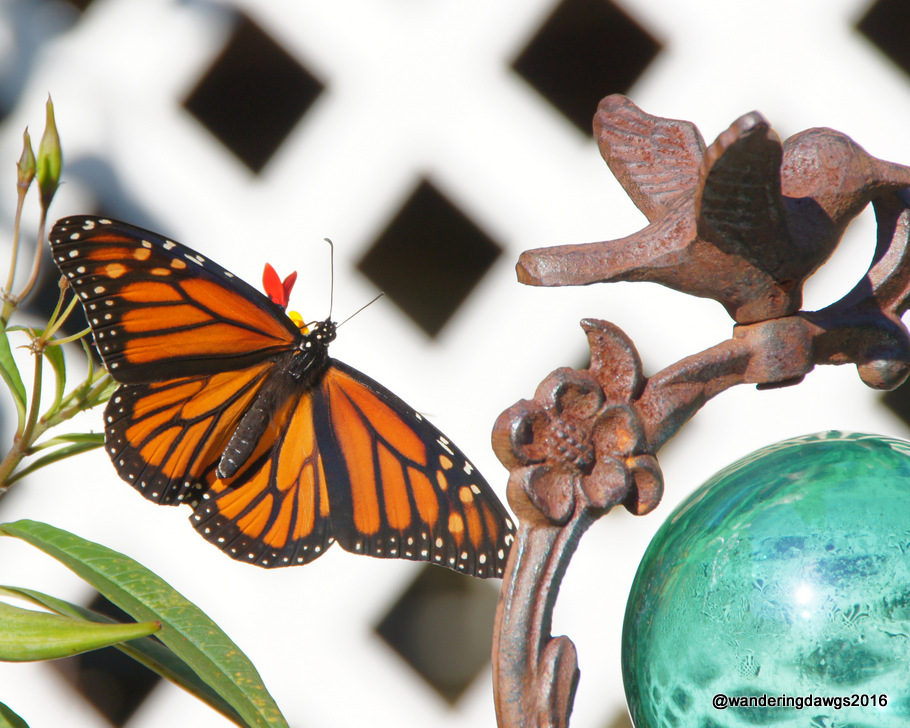
A Zebra Swallowtail became fascinated with my shoes when we stopped to take a break along one of the trails.
Zebra Swallowtail
We continued our quest for good local food and stopped at the Main Street Market in downtown Chipley for some Plant City strawberries. These wonderful, sweet strawberries are only available for a short while and although we had been getting them at grocery stores I had to have some more. While we were there I was thrilled to see some Florida Honeybells. These strange looking orange citrus fruits are sweet and juicy. The also have a very short season so of course I grabbed some of those, too.
Florida Honeybells
Falling Waters State Park is located south of Chipley, Florida just a couple of miles from I-10.









 Wandering Dawgs