When I first read about Florida’s tallest waterfall at Falling Waters State Park my first thought was “I didn’t know there were ANY waterfalls in Florida!” I had to see it with my own eyes.
So off we went to Falling Waters State Park to check it out. The campground sits at 324 feet above sea level on top of one of the highest hills in Florida.
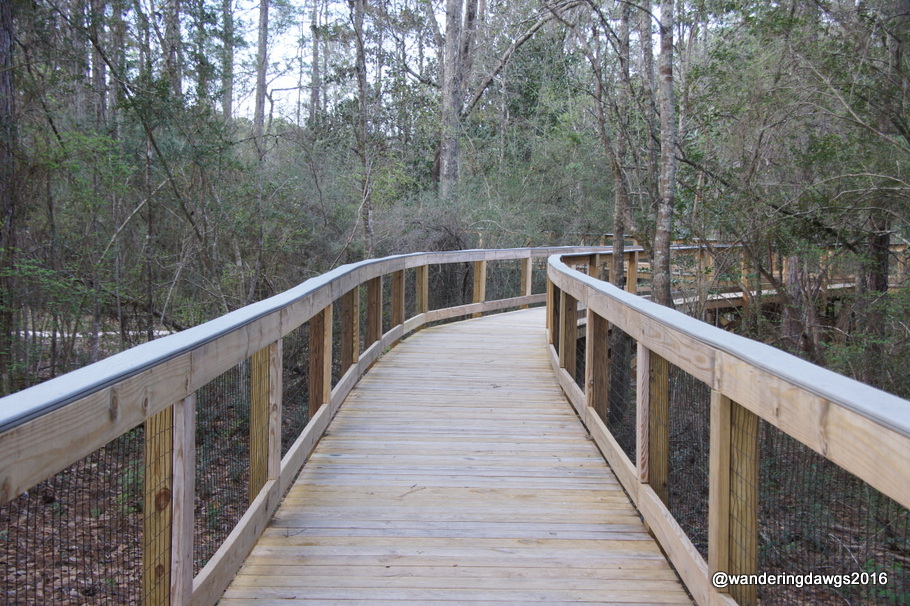
An easy trail down the hill leads to a small pond and boardwalk trails to the waterfall and around several sinkholes. We observed the 73 foot tall waterfall from a platform above the falls but construction on the platform near the bottom of the falls prevented us from seeing the water dropping into the sinkhole at the bottom.
Florida’s Tallest Waterfall at Falling Waters State Park
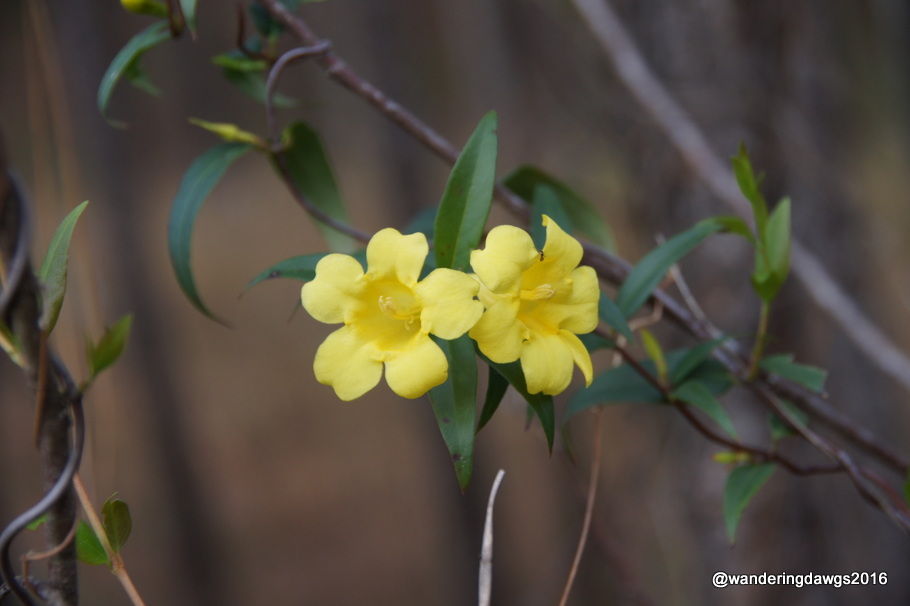
The trails meander through a long leaf pine forest with southern magnolias scattered among the pines. A few wildflowers blooming along the trail let us know that spring was almost here.
Boardwalk trail at Falling Waters State ParkCarolina JessimineWild Azalea
While exploring the trails we did some more geocaching and found two in the park. We’re getting better at this!
A Zebra Swallowtail became fascinated with my shoes when we stopped to take a break along one of the trails.
Zebra Swallowtail
We continued our quest for good local food and stopped at the Main Street Market in downtown Chipley for some Plant City strawberries. These wonderful, sweet strawberries are only available for a short while and although we had been getting them at grocery stores I had to have some more. While we were there I was thrilled to see some Florida Honeybells. These strange looking orange citrus fruits are sweet and juicy. The also have a very short season so of course I grabbed some of those, too.
Florida Honeybells
Falling Waters State Park is located south of Chipley, Florida just a couple of miles from I-10.
After a great stay in Virginia we headed south to the Smokies in North Carolina in search of bugling elk. I’ve seen elk in many different places but never thought I would be able to experience the sound of a bull elk bugling without traveling all the way to Yellowstone or the Rocky Mountains. I was wrong. There are elk in the Great Smoky Mountains.
Great Smoky Mountains National Park is the most visited national park in America. We’ve traveled there several times over the years but I had never heard about the elk in Cataloochee Valley until my friend Holly posted last year about the Bugling Elk in Cataloochee Great Smoky Mountains NP.
Elk were once abundant in the southern Appalachian Mountains. Over hunting and habitat loss caused the elk to be eliminated from North Carolina many years ago.
In February, 2001, the National Park Service began an experimental reintroduction of elk into Cataloochee Valley by releasing 25 elk from the Land Between the Lakes National Recreation Area on the Tennessee-Kentucky border. Another 27 elk from Canada were released in 2002.
Getting to Cataloochee Valley
Cataloochee Valley is located on the eastern side of the Great Smoky Mountain National Park. The nearest towns are Maggie Valley and Waynesville.
Getting to the valley involves an 11 mile drive on Cove Creek Road. This is a road that is not for the faint of heart. The turnoff to Cove Creek Road is only about a mile from Interstate 40 and the first part of the drive is on a narrow, curved paved road that passes by homes tucked away on the side of the mountain. After a few miles, the pavement is replaced by gravel. All along the way are few guardrails, many switchbacks, blind curves, and hairpin turns. As we continued on the road I felt like we were millions of miles away from civilization.
We stopped at an national park overlook for a spectacular view before continuing into the valley.
Hairpin Turn Cove Creek Road
Blind Curve Cove Creek Road
Cataloochee Valley Overlook Great Smoky Mountains
Cataloochee Valley Overlook Great Smoky Mountains
Cows on first day
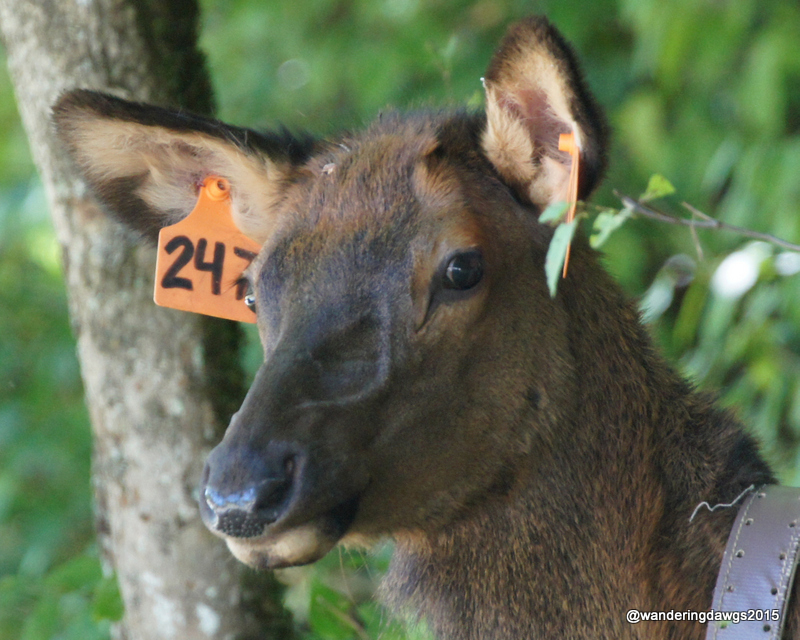
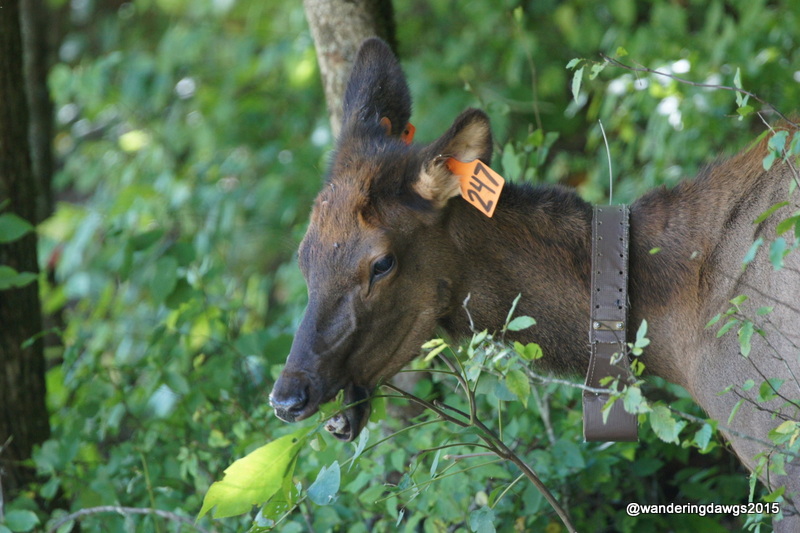
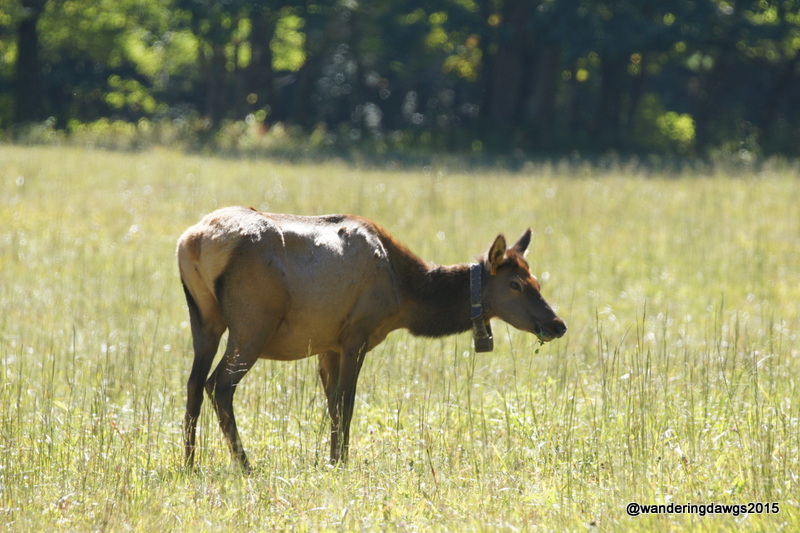
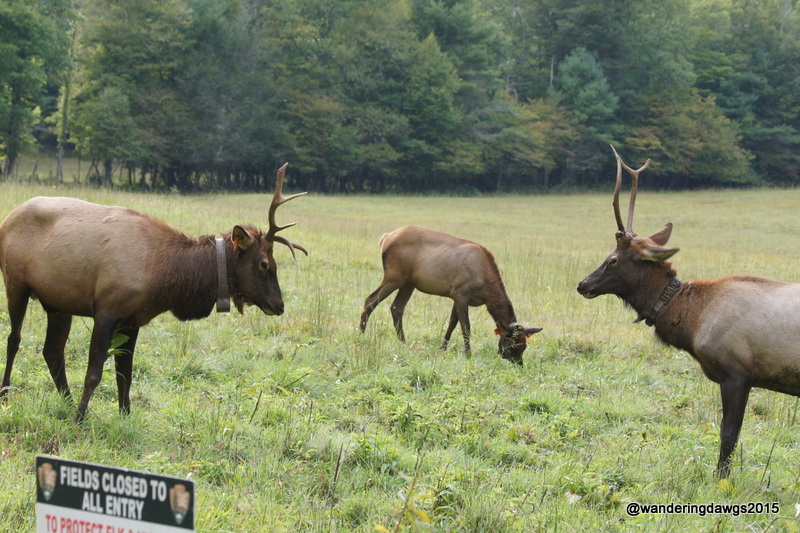
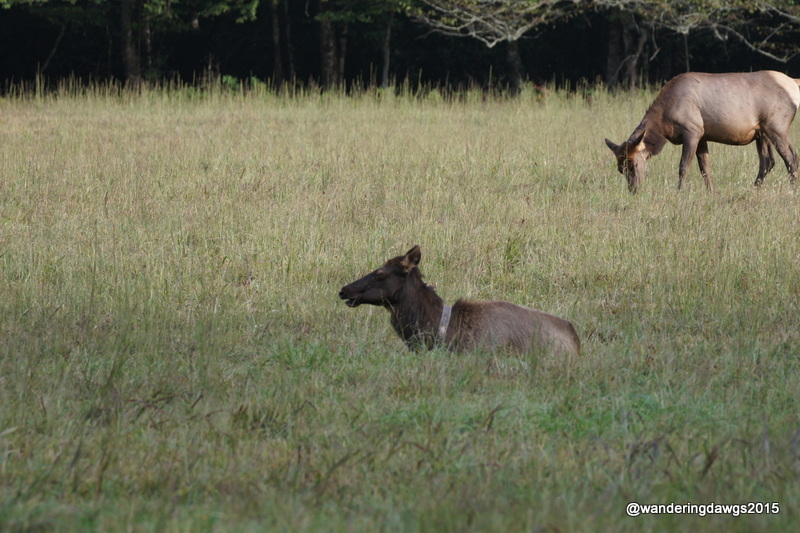
We made two trips into Cataloochee Valley. On our first visit we were thrilled to see elk by the first field. A young elk was grazing in the field with a large cow in the woods across the road. We stopped to watch a large bull elk at the far end of another field and had another bull cross the road in front of the truck. Alas, I wasn’t able to get pictures of them.
Cow Elk in Cataloochee ValleyCow Elk in Cataloochee ValleyYoung elk in Cataloochee Valley
Bugling Bulls
The breeding season, also known as the rutting season, is in the fall. During this time the bull elk make their bugling calls to attract females and challenge other bulls. We ventured down Cove Creek Road again a second day in hopes of seeing and hearing some bugling bulls.
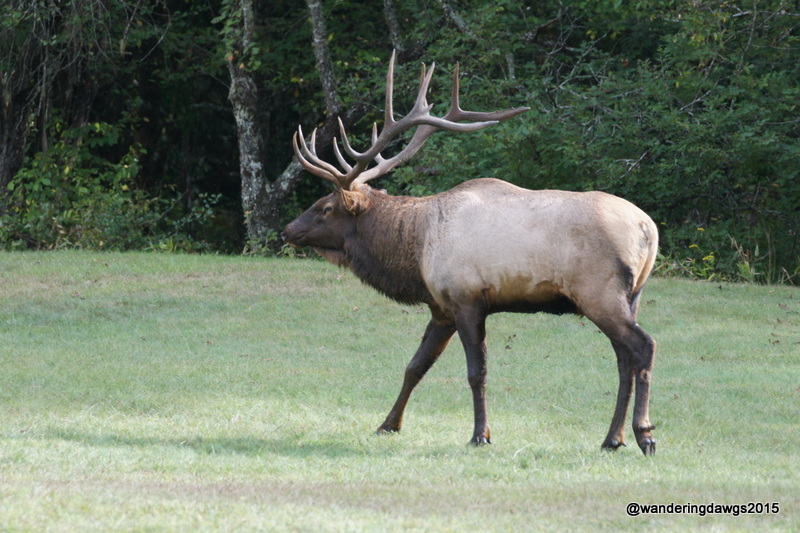
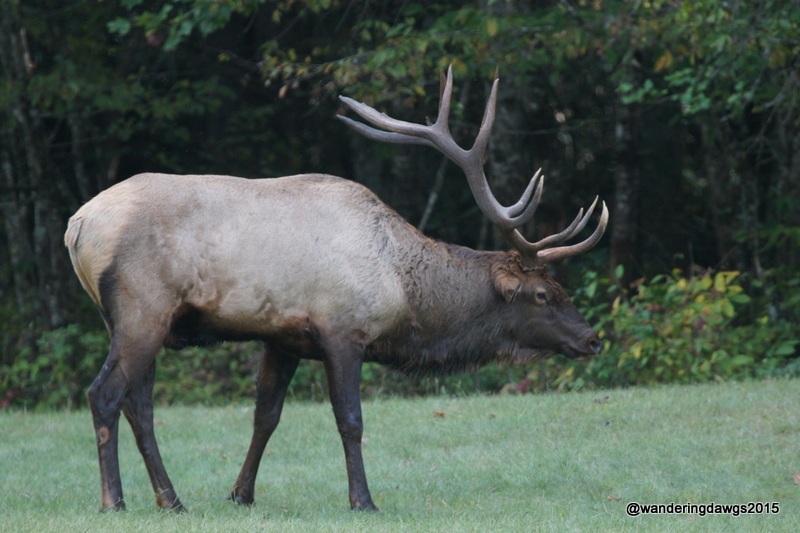
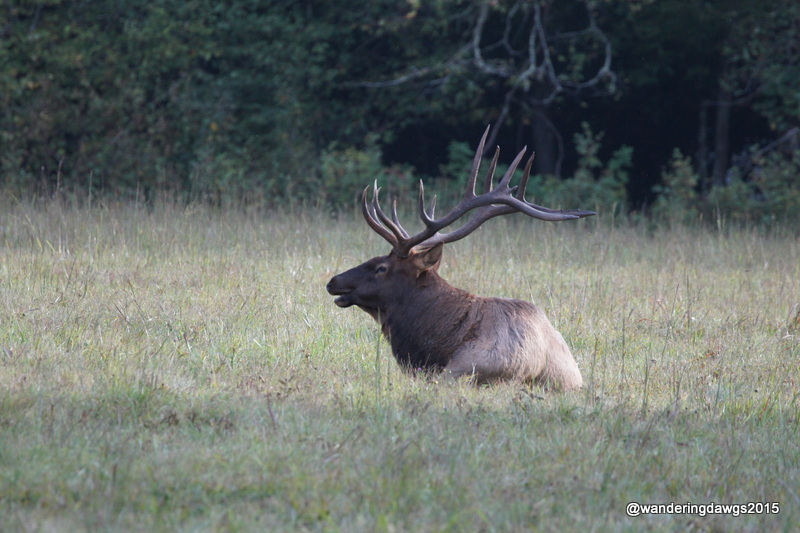
The best time to view elk is late in the afternoon before sunset so we arrived later in the afternoon than we had the first day. We weren’t disappointed. There were several elk in the first field we came to and as we continued down the road a lone bull stood in a small field. As we pulled off the road and rolled down the windows we watched him raise is head and we heard him make his bugle sound. We could hear more bugliing far off in the distance.
Bull Elk in Cataloochee ValleyBull Elk in Cataloochee Valley
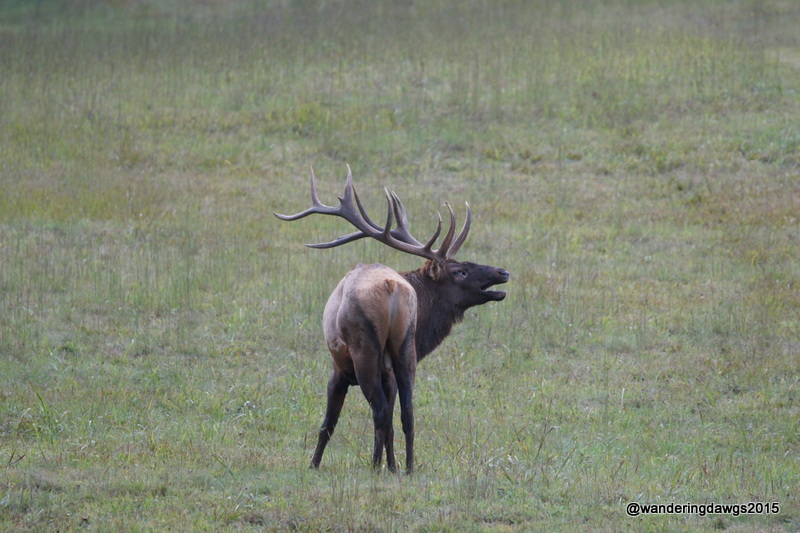
Later on we came across another bugling bull. We think he was trying to attract a female we saw in the woods. She wasn’t paying any attention to him.
Bull Elk Bugling in Cataloochee ValleyBull Elk in Cataloochee Valley
Young elk
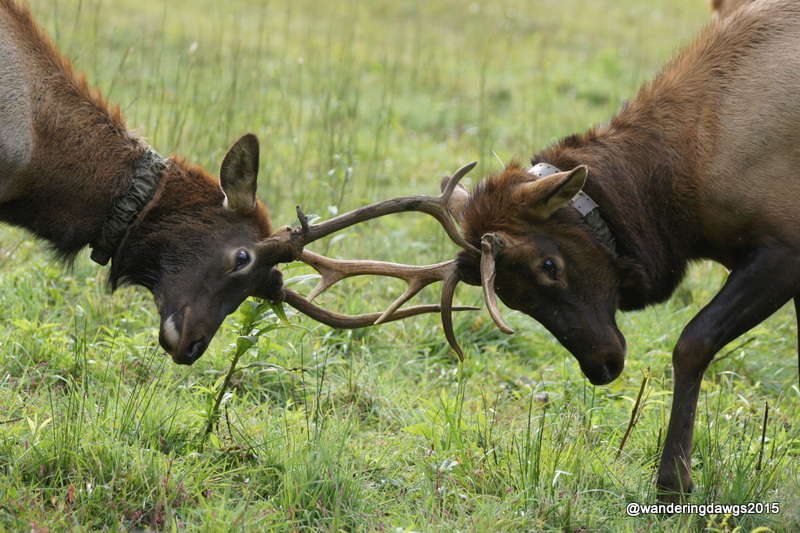
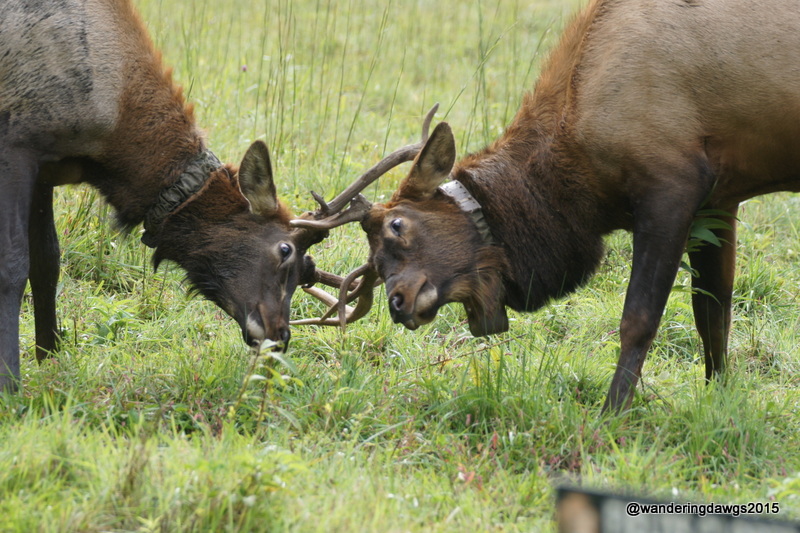
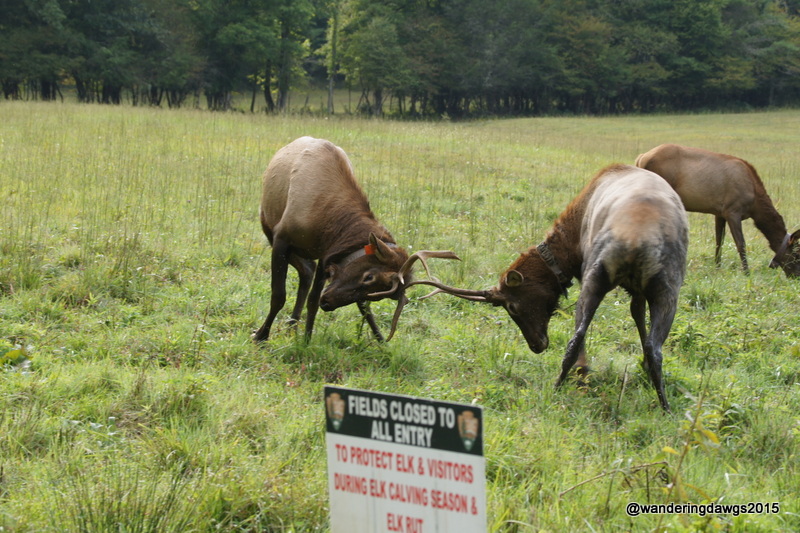
We didn’t witness any large bulls sparring but we did enjoy watching two young elk locking antlers right beside the truck. After a few minutes, they went back to grazing.
Two young male elk lock antlers in Cataloochee ValleyTwo young male elk lock antlers in Cataloochee ValleyTwo young male elk lock antlers in Cataloochee ValleyFace OffElk in Cataloochee Valley
History of Cataloochee
The first people to visit Cataloochee Valley were Native Americans who fished and hunted but did not settle there permanently. In the early 1800’s white settlers moved into the valley.
By the early 1900’s Cataloochee was the largest settlement in the Smokies with almost 200 buildings. Today a few of the remaining buildings can be seen as you drive through the valley and others are accessible by one of the many trails.
By 1938, most of the families had moved out of the valley after selling their land to the government for the creation of the Great Smoky Mountains National Park.
Caldwell Place in Cataloochee Valley
Old Barn in Cataloochee Valley
Start of one of the trails in Cataloochee Valley
Bridge at the beginning of one of the trails in Cataloochee Valley
We camped at Creekwood Farm RV Park in Waynesville, NC. The campground is less than a mile from the turnoff to Cove Creek Road.






 Wandering Dawgs