“The sea, once it casts its spell, holds one in its net of wonder forever.” –Jacques Cousteau
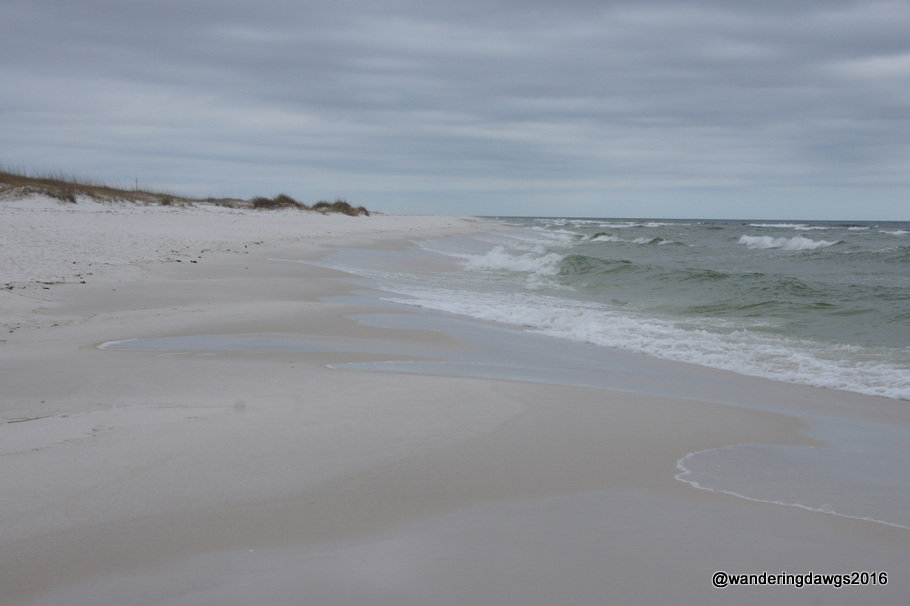
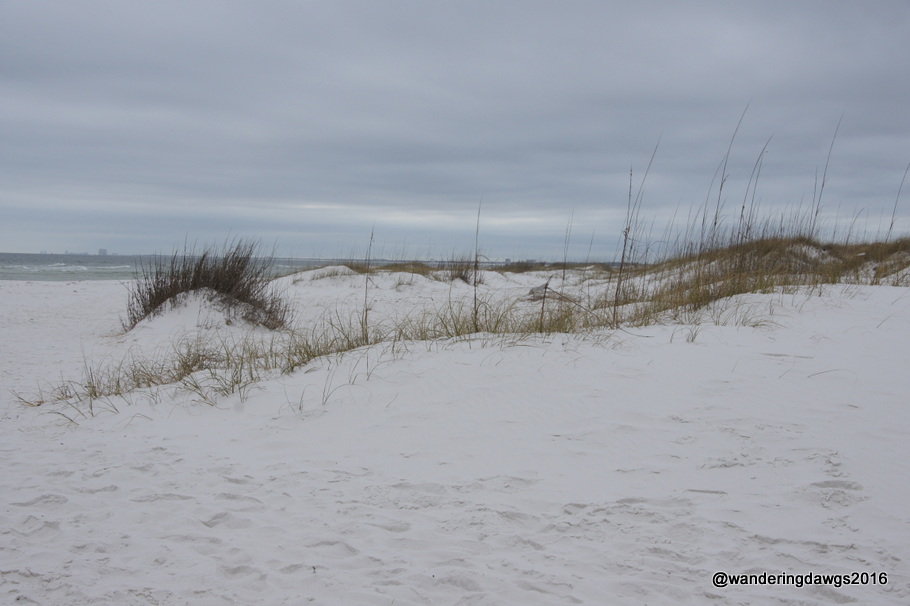
A beach with perfect sugar white sand only a five minute walk from our campsite. I think I am in heaven!
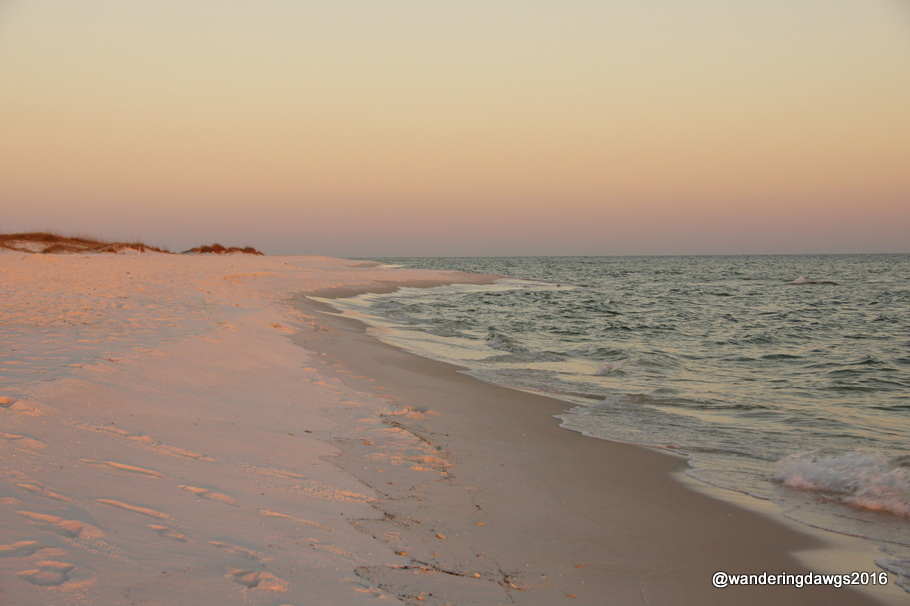
Gulf Islands National Seashore at Ft. PickensThe beach at sunsetGulf Islands National Seashore
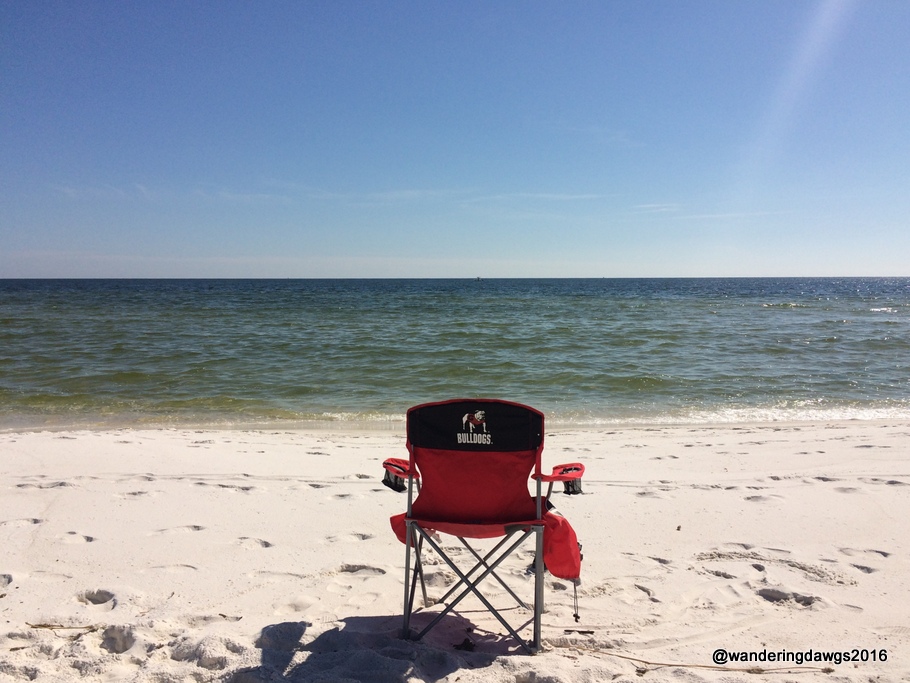
Our home for a week is Ft. Pickens Campground in Gulf Islands National Seashore on Santa Rosa Island. I’ve been doing a lot of walking on the beach and beach chair sitting.
Site A1 Ft. PickensReady for Beach Chair Sitting on the Gulf of Mexico
We’ve taken a couple of hikes on the half-mile Blackbird Marsh Nature Trail near the campground.
Along the Blackbird Marsh Nature Trail
It is nest building time for Ospreys and several nests can be seen in the area. Ospreys are frequently seen soaring over the campground and a few of the nests can be viewed close up from the nature trail.
Pair of Ospreys on the nature trailPair of Ospreys on the nature trailOsprey
And the sunsets over the Gulf of Mexico are breathtaking!
Sunset over the Gulf of Mexico
More of the Fort Pickens area coming up in my next post.
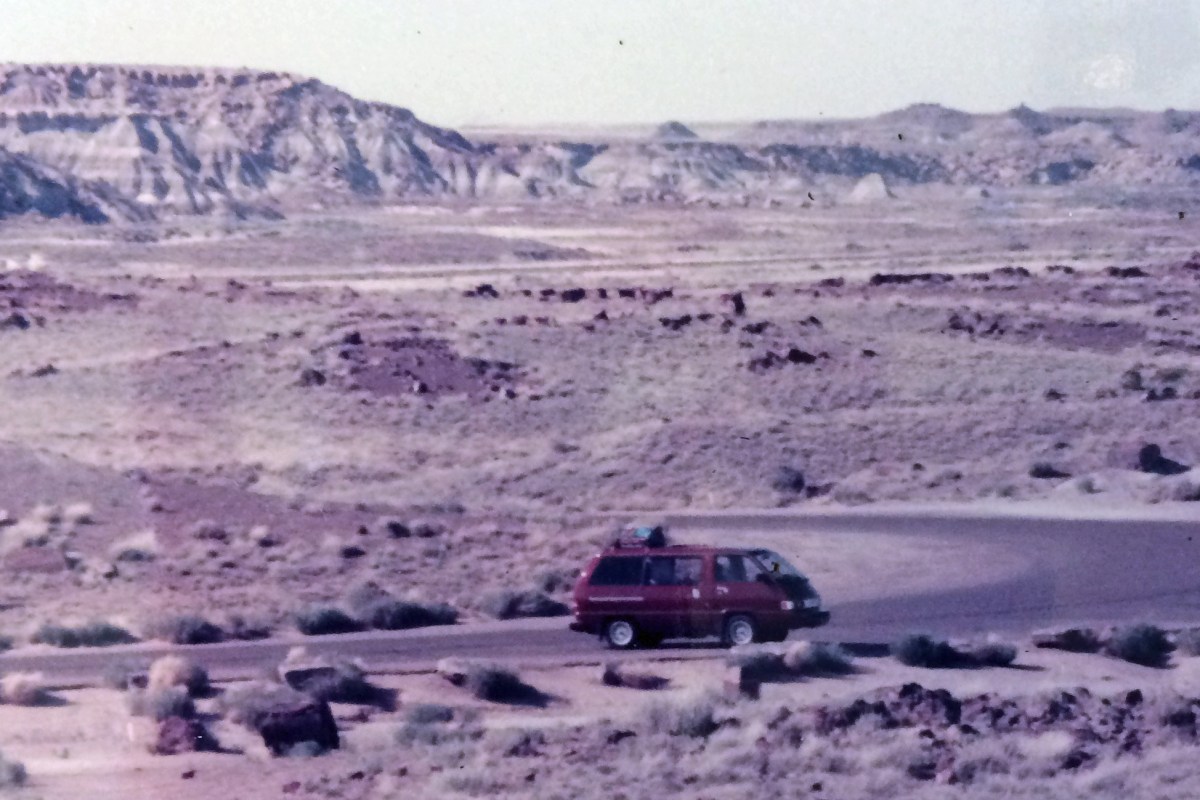
A new Toyota mini van + 2 tents + 2 parents + 2 kids = 2 weeks of fun!
We’ve had some wonderful adventures since we began traveling in our fifth wheel nine years ago but our first cross country journey when our kids were 14 and 10 will always be one of my favorites.
Way back in 1985, over twenty years before we bought our fifth wheel, we packed up our new mini van and and set out on a trip from Georgia to the Grand Canyon South Rim, about 2600 miles each way. We had been taking our kids camping around Georgia and Florida many times but this was the first time we ventured west.
Our plan was to drive as far as we could each day and stay in motels until we got to the Grand Canyon. Loaded down with two tents, coolers, and all the camping gear we owned, we were ready for anything.
Our longest driving day of the trip was on our way to the Grand Canyon when we drove 694 miles across Mississippi, Louisiana and Texas. Once we reached Arizona we slowed down to take the scenic drive through the Painted Desert and Petrified Forest National Parks.
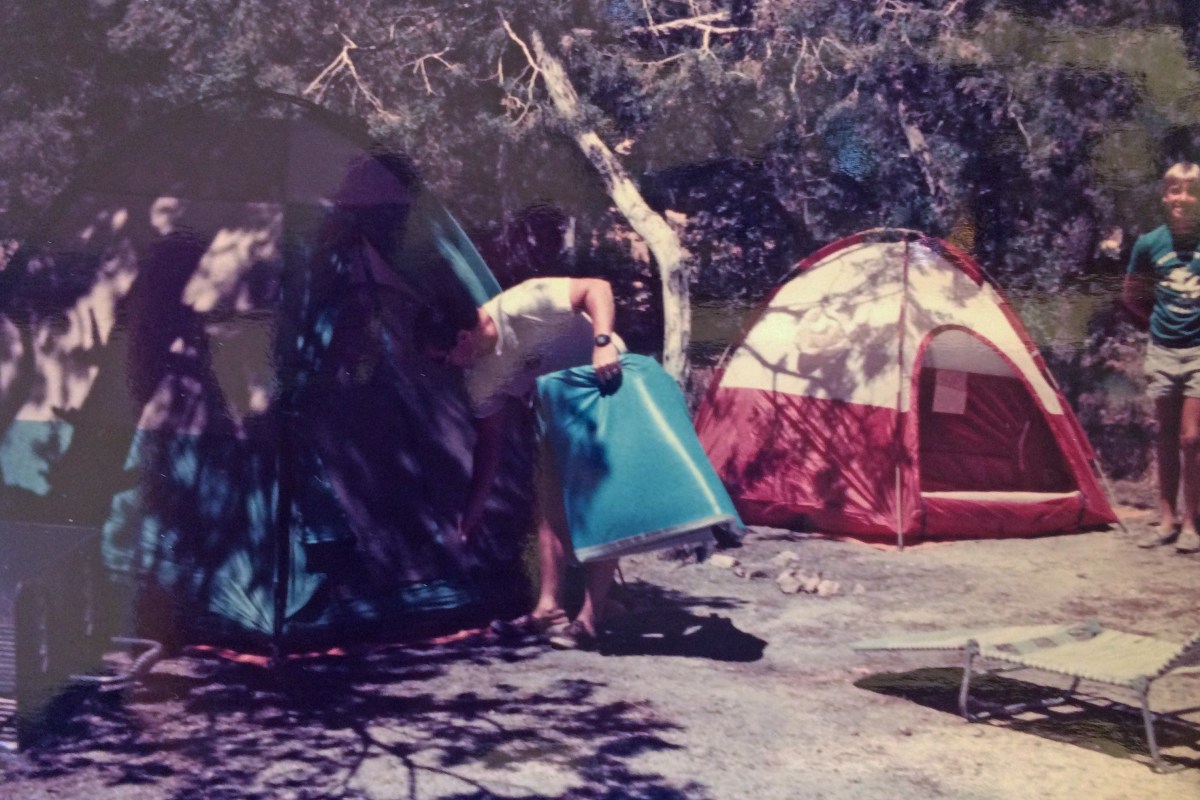
Our Campsite at the Grand Canyon South Rim in 1985
Of course the highlight of the trip was at the Grand Canyon South Rim. After setting up camp we went exploring and planned a hike on the Bright Angel Trail for the next morning. Keep in mind we were there the first week of July and it was HOT! With backpacks filled with water, trail mix and other snacks we set off down the trail early in the day. Going down into the canyon was fairly easy. The temperature kept rising as we got deeper into the canyon and my daughter and I decided to return to the rim while Henry and our son continued on to Plateau Point (about 5 miles from the rim) where there is an overlook into the canyon and a view of the Colorado River.
Going up was hard. There were few places to sit and rest and almost no shade. When my daughter and I got back to camp we went in the tents and collapsed on the cots hoping to cool off. After a short rest we were no cooler so we went to the snack bar for air conditioning and ice cream. We were well rested when the guys got back.
On our return trip to Georgia we stopped at Carlsbad Caverns before driving all across Texas, this time on I-10 instead of I-40. We spent a night in New Orleans and visited the Tabasco Factory before stopping at a beach front hotel in Ft. Walton Beach. We all enjoyed the huge swimming pool and finally felt cool!
I recently came across a log I kept of our trip. We drove a total of about 5200 miles and spent a whopping $321 on gas!
We travel much differently these days. We have the luxury of being able to take our time and rarely travel more than 300 miles in a day. We set up our fifth wheel and usually stay 2 or 3 nights in each location. And we can turn on the air conditioner and go inside to cool off without leaving our campsite!
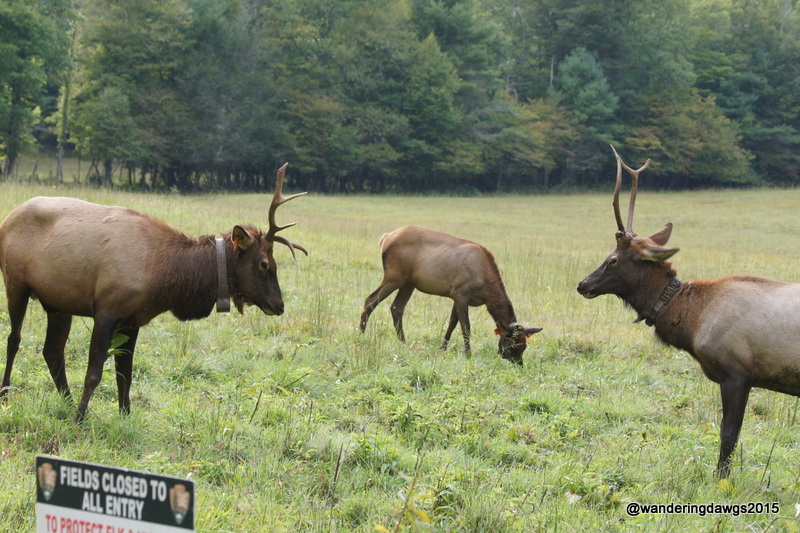
After a great stay in Virginia we headed south to the Smokies in North Carolina in search of bugling elk. I’ve seen elk in many different places but never thought I would be able to experience the sound of a bull elk bugling without traveling all the way to Yellowstone or the Rocky Mountains. I was wrong. There are elk in the Great Smoky Mountains.
Great Smoky Mountains National Park is the most visited national park in America. We’ve traveled there several times over the years but I had never heard about the elk in Cataloochee Valley until my friend Holly posted last year about the Bugling Elk in Cataloochee Great Smoky Mountains NP.
Elk were once abundant in the southern Appalachian Mountains. Over hunting and habitat loss caused the elk to be eliminated from North Carolina many years ago.
In February, 2001, the National Park Service began an experimental reintroduction of elk into Cataloochee Valley by releasing 25 elk from the Land Between the Lakes National Recreation Area on the Tennessee-Kentucky border. Another 27 elk from Canada were released in 2002.
Getting to Cataloochee Valley
Cataloochee Valley is located on the eastern side of the Great Smoky Mountain National Park. The nearest towns are Maggie Valley and Waynesville.
Getting to the valley involves an 11 mile drive on Cove Creek Road. This is a road that is not for the faint of heart. The turnoff to Cove Creek Road is only about a mile from Interstate 40 and the first part of the drive is on a narrow, curved paved road that passes by homes tucked away on the side of the mountain. After a few miles, the pavement is replaced by gravel. All along the way are few guardrails, many switchbacks, blind curves, and hairpin turns. As we continued on the road I felt like we were millions of miles away from civilization.
We stopped at an national park overlook for a spectacular view before continuing into the valley.
Hairpin Turn Cove Creek Road
Blind Curve Cove Creek Road
Cataloochee Valley Overlook Great Smoky Mountains
Cataloochee Valley Overlook Great Smoky Mountains
Cows on first day
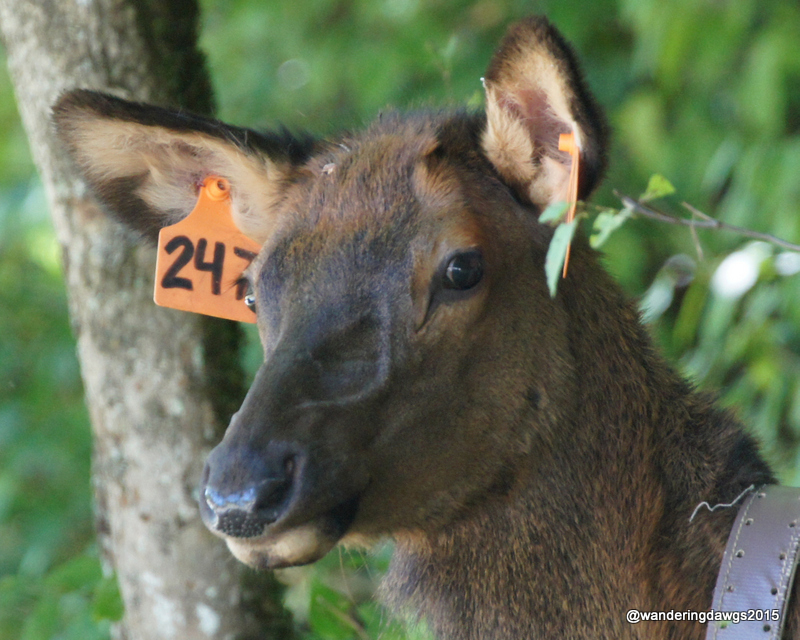
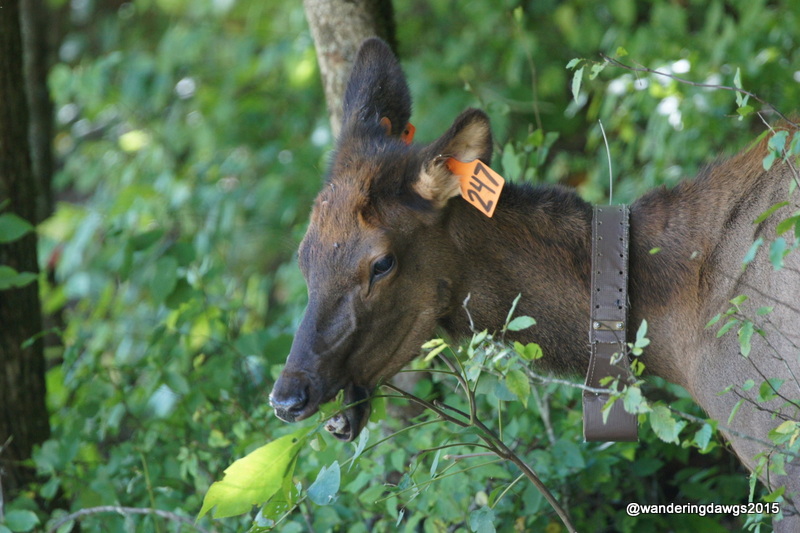
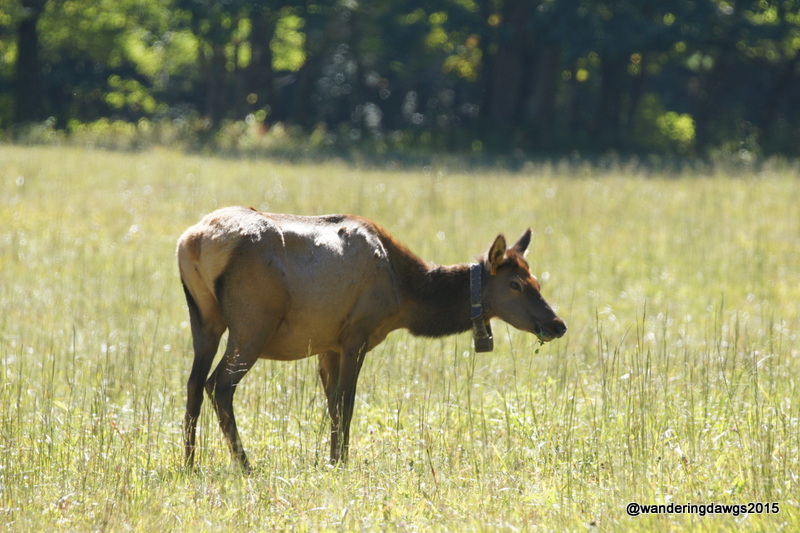
We made two trips into Cataloochee Valley. On our first visit we were thrilled to see elk by the first field. A young elk was grazing in the field with a large cow in the woods across the road. We stopped to watch a large bull elk at the far end of another field and had another bull cross the road in front of the truck. Alas, I wasn’t able to get pictures of them.
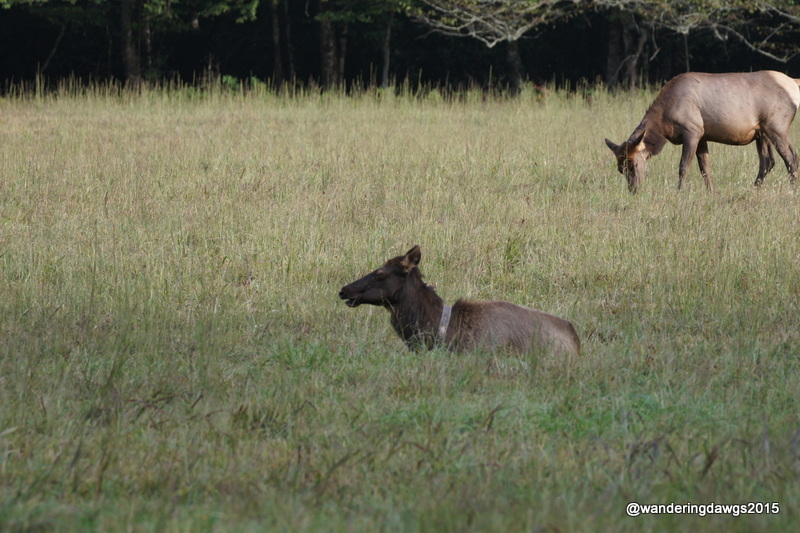
Cow Elk in Cataloochee ValleyCow Elk in Cataloochee ValleyYoung elk in Cataloochee Valley
Bugling Bulls
The breeding season, also known as the rutting season, is in the fall. During this time the bull elk make their bugling calls to attract females and challenge other bulls. We ventured down Cove Creek Road again a second day in hopes of seeing and hearing some bugling bulls.
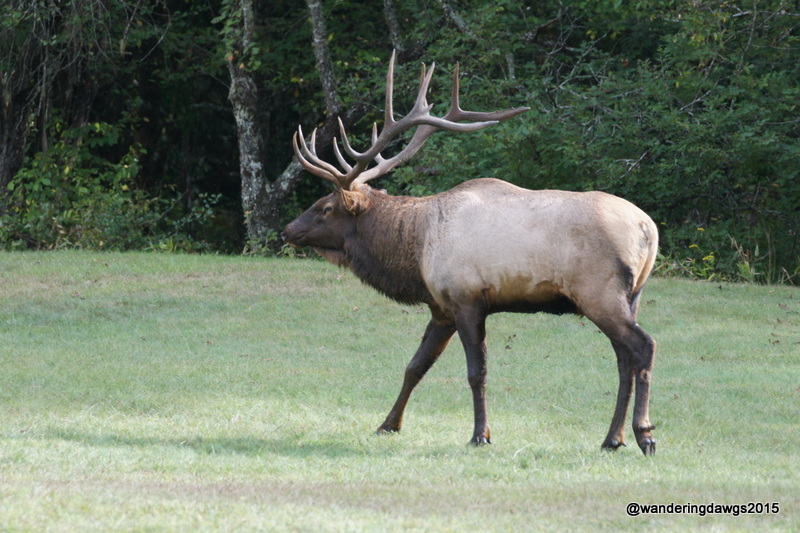
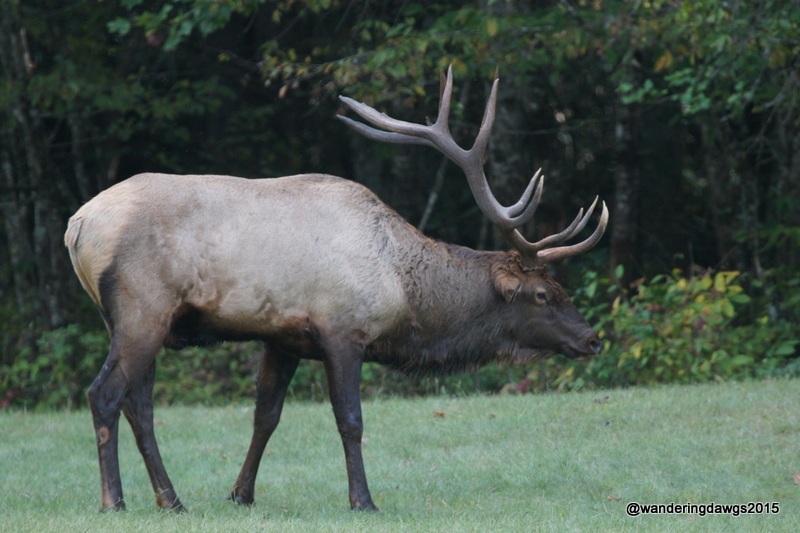
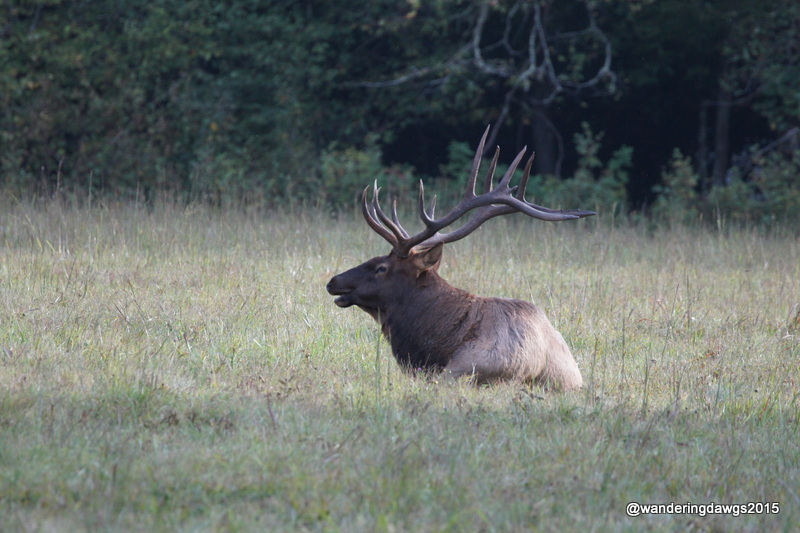
The best time to view elk is late in the afternoon before sunset so we arrived later in the afternoon than we had the first day. We weren’t disappointed. There were several elk in the first field we came to and as we continued down the road a lone bull stood in a small field. As we pulled off the road and rolled down the windows we watched him raise is head and we heard him make his bugle sound. We could hear more bugliing far off in the distance.
Bull Elk in Cataloochee ValleyBull Elk in Cataloochee Valley
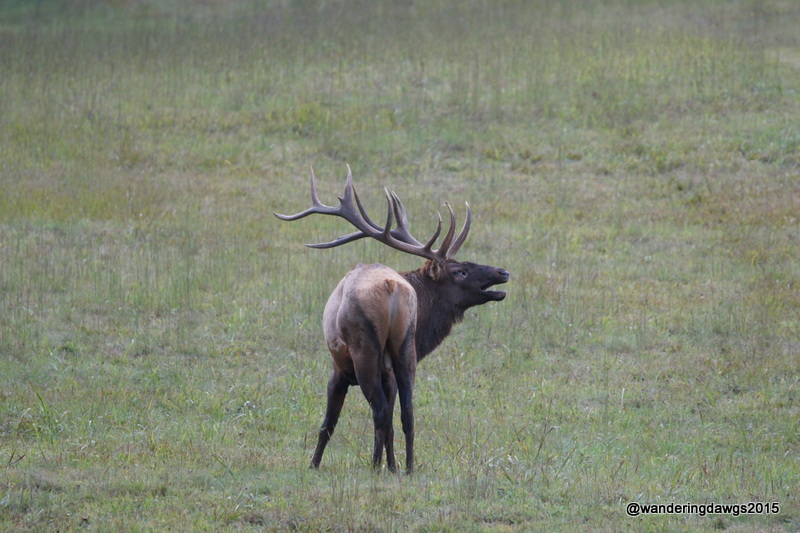
Later on we came across another bugling bull. We think he was trying to attract a female we saw in the woods. She wasn’t paying any attention to him.
Bull Elk Bugling in Cataloochee ValleyBull Elk in Cataloochee Valley
Young elk
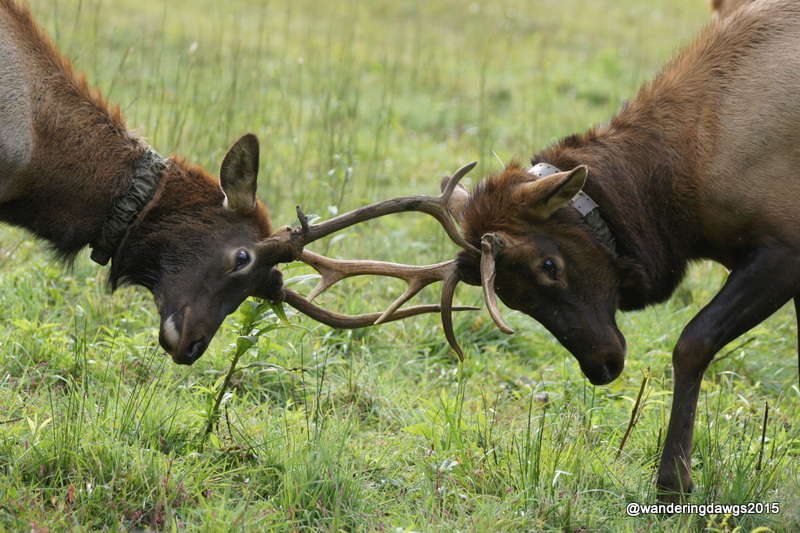
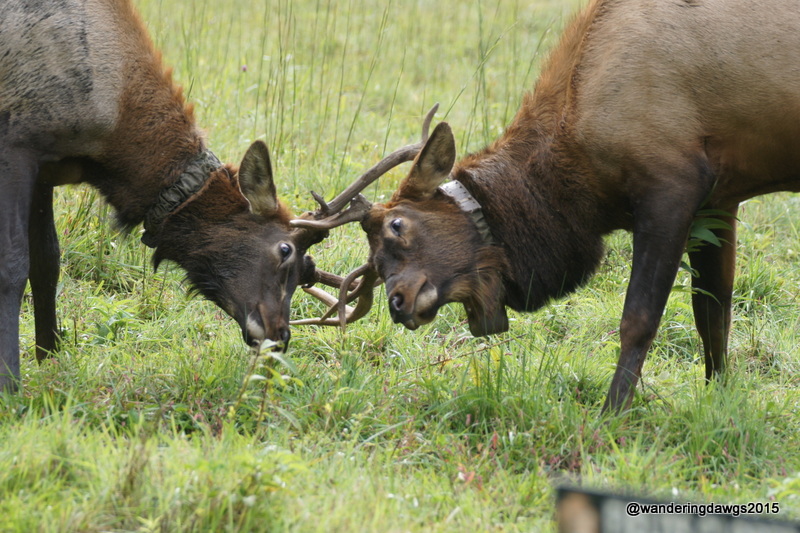
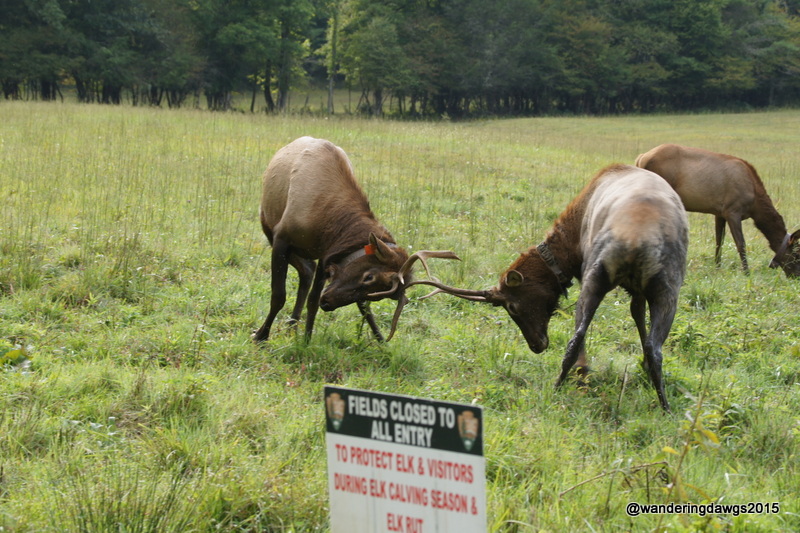
We didn’t witness any large bulls sparring but we did enjoy watching two young elk locking antlers right beside the truck. After a few minutes, they went back to grazing.
Two young male elk lock antlers in Cataloochee ValleyTwo young male elk lock antlers in Cataloochee ValleyTwo young male elk lock antlers in Cataloochee ValleyFace OffElk in Cataloochee Valley
History of Cataloochee
The first people to visit Cataloochee Valley were Native Americans who fished and hunted but did not settle there permanently. In the early 1800’s white settlers moved into the valley.
By the early 1900’s Cataloochee was the largest settlement in the Smokies with almost 200 buildings. Today a few of the remaining buildings can be seen as you drive through the valley and others are accessible by one of the many trails.
By 1938, most of the families had moved out of the valley after selling their land to the government for the creation of the Great Smoky Mountains National Park.
Caldwell Place in Cataloochee Valley
Old Barn in Cataloochee Valley
Start of one of the trails in Cataloochee Valley
Bridge at the beginning of one of the trails in Cataloochee Valley
We camped at Creekwood Farm RV Park in Waynesville, NC. The campground is less than a mile from the turnoff to Cove Creek Road.
It rained all night our last night in Goose Island. Our 40 miles trek south to our next Gulf Coast destination included a ride on the Port Aransas ferry. After departing the ferry in Port Aransas we drove south about 12 miles to Mustang Island State Park. Despite rain, fog and overcast skies we enjoyed our stay there.
Port Aransas Ferry, Texas
Beach at Mustang Island State Park
Blondie going after a sand crab
Fishing Jetty at Mustang Island State Park
Parked on the beach at Mustang Island State P
Sand Dunes at Mustang Island State Park
The first morning the fog was thick as pea soup when I took Blondie for a walk on the beach. After doing laundry there was still no sign of a clear sky so we decided to drive to Port Aransas. We had heard there were some good birding opportunities there and Henry needed to pick up some supplies from a hardware store so he could repair our steps (there’s always something to fix on an RV).
First stop was Charlie’s pasture, a nature preserve. I spied a lone white pelican and a couple of roseate spoonbills across the marsh. The next stop was Leonabelle Turnbull Birding Center where we hit the jackpot. Spoonbills perched in trees, many varieties of ducks, cormorants, American Coot, tri-colored heron, a green heron and many I couldn’t identify. We even saw some turtles.
Tri-Colored Heron
Roseate Spoonbill
Northern Shoveler
American Coot
Spoonbills and ducks
Red eared slider
Red eared sliders
Green Heron
The next day was still overcast and foggy but we made the drive to Padre Island National Seashore anyway. The park is 60 miles long and extends all the way to the southern tip of Padre Island. The paved road ends shortly past the Visitor’s Center. From there on vehicles must drive on hard packed sand on the beach. Camping is allowed on the beach and we saw some interesting campers as we drove along for a few miles. A picnic table at the windsurfing beach (waterfront campsites with no hookups are available here) was a perfect place for lunch.
Big sand dunes at Padre Island National Seashore
We saw this rig from Alaska camped on the beach at Padre Island NS
Wildflowers at Padre Island National Seashore
Signpost at the windsurfing shop at Padre Island National Seashore
We camped in site 17 at Mustang Island. The campground, located just behind the dunes, is a large, rectangular paved parking lot with back in sites on two sides. There is a grassy area between most sites. Each site has water and electric, a shelter with picnic table, and a grill. There was standing water in some of the sites after a big storm the night before. The water drained overnight and everything was fine the next day. The beach access is a short walk or drive from the campground. There is a large area on the beach with picnic shelters where no driving is allowed. Driving and parking is allowed on the beach on both sides of the beach picnic area.
Has it really been eight years since we bought our RV and took off on our first adventure across our beautiful country?
We purchased our Titanium fifth wheel on June 29, 2006 and spent a couple of nights in the dealer’s lot to get familiar with our new home on wheels. After returning home to Georgia it took about two weeks to pack and get ready for our maiden voyage. With no reservations and no set itinerary we set out on our two month adventure across America and into the Canadian Rockies.
Here are a few highlights of that first amazing journey:
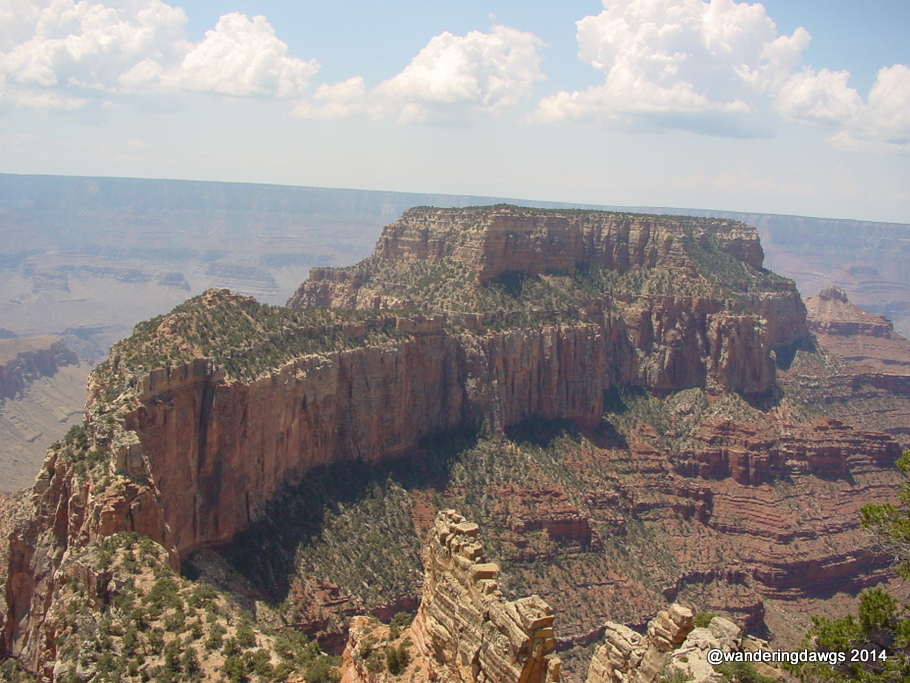
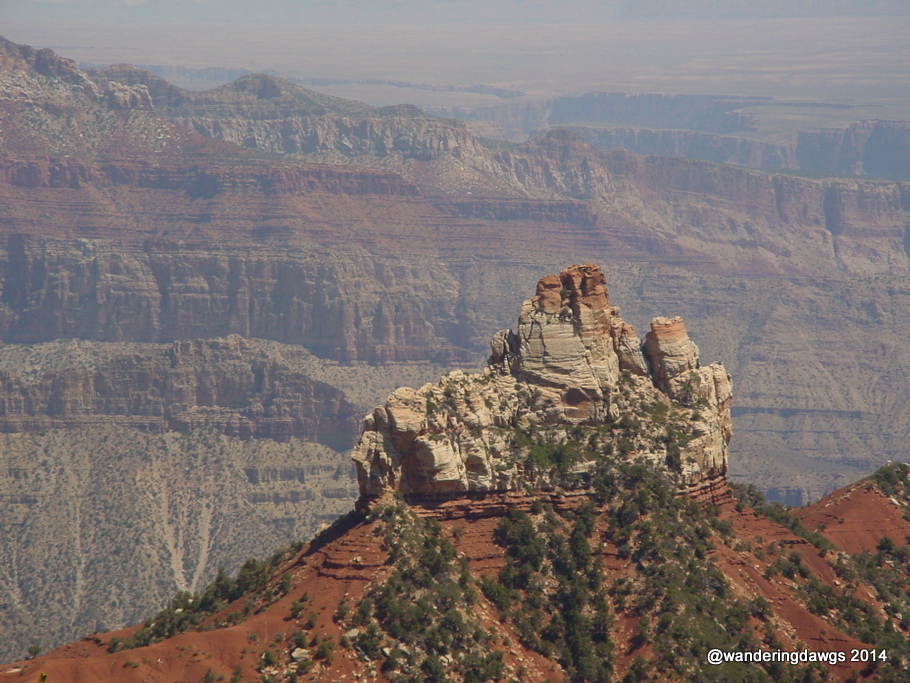
Grand Canyon North Rim – Vista Encantada (Arizona)
Bryce Canyon Hoodoos (Utah)
Capitol Reef National Park (Utah)
Canyonlands National Park (Utah)
Arches National Park – Delicate Arch (Utah)
Elk in Yellowstone National Park (Woming)
Old Faithful (Wyoming)
Lower Yellowstone Falls in Yellowstone National Park (Wyoming)
Bison in Yellowstone National Park (Wyoming)
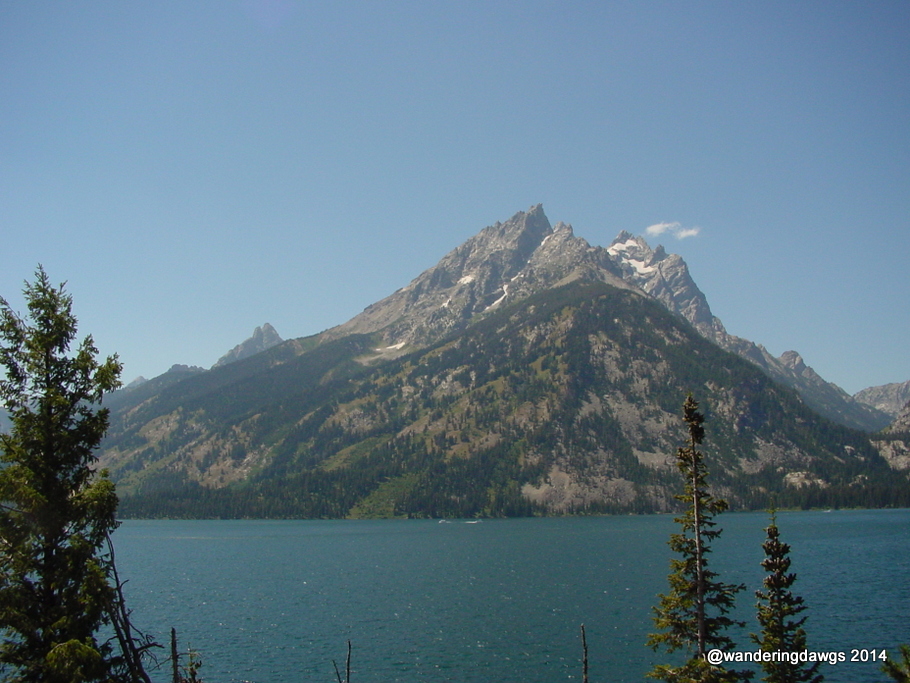
Grand Teton National Park (Wyoming)
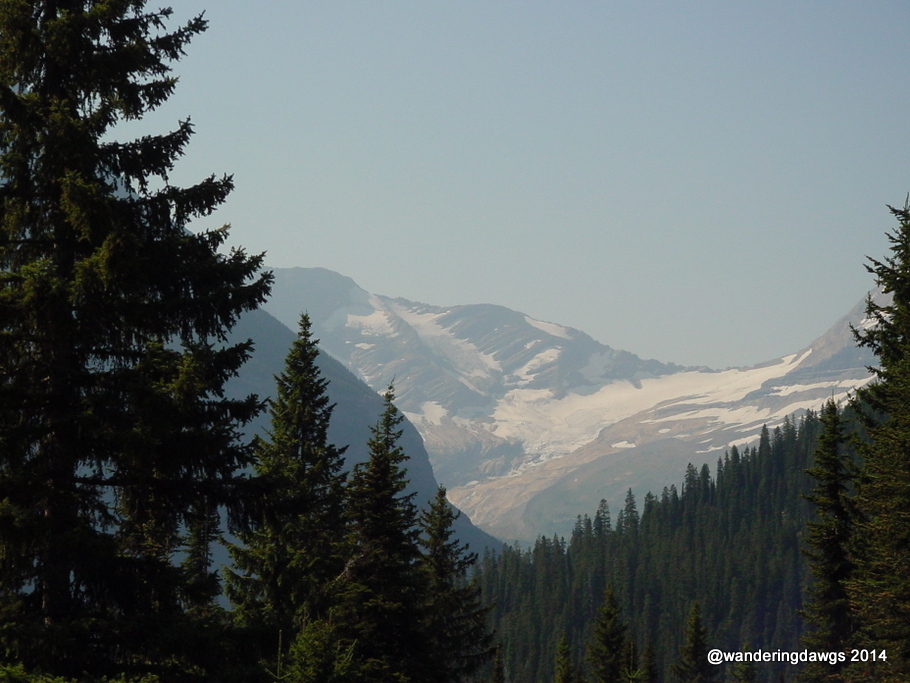
Glacier National Park, Montana
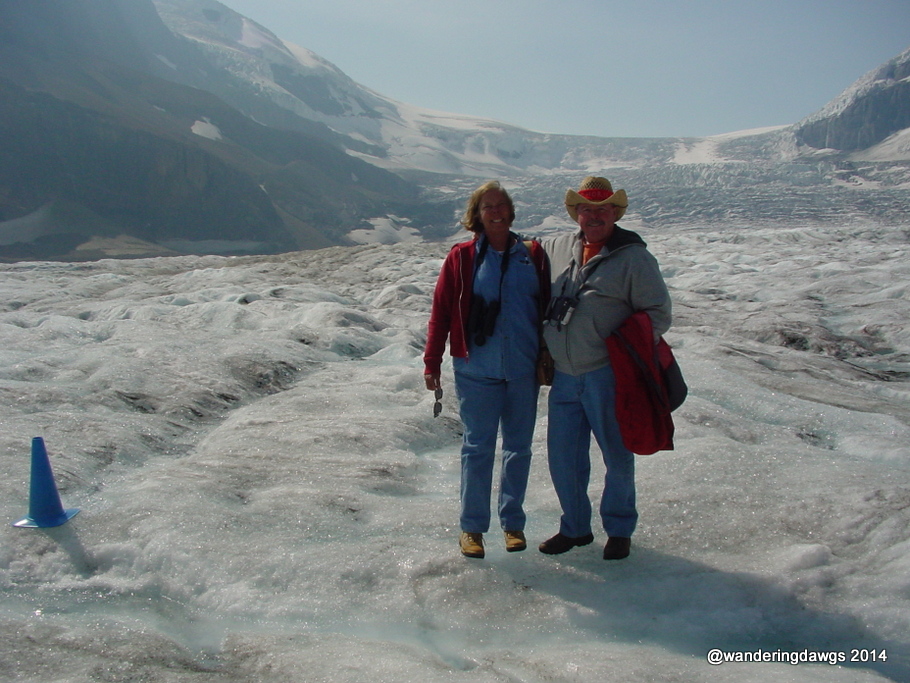
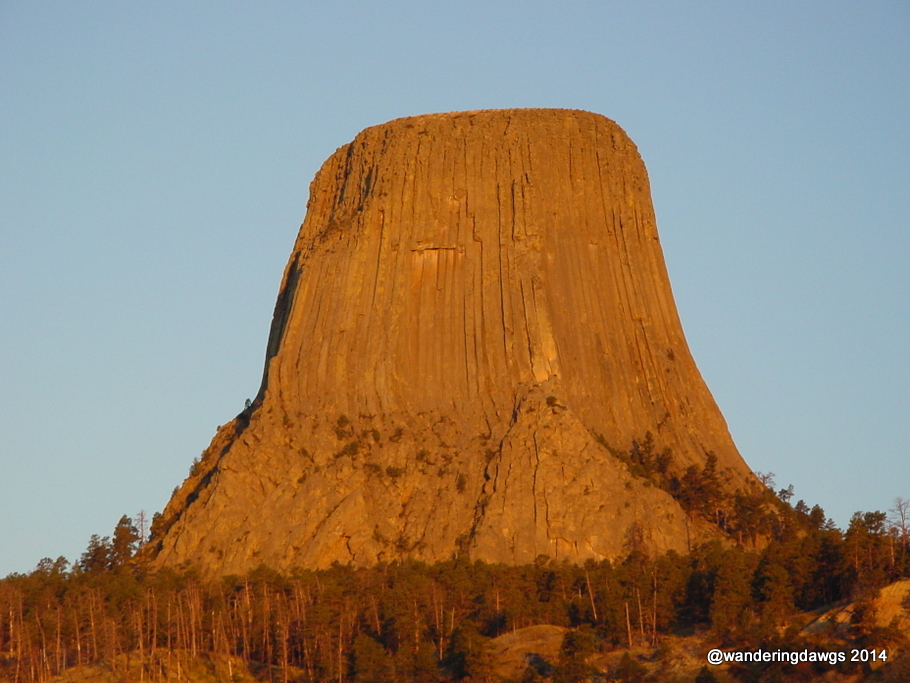
Columbia Icefields, Jasper National Park, Alberta, CanadaDevil’s Tower National Monument (Wyoming)
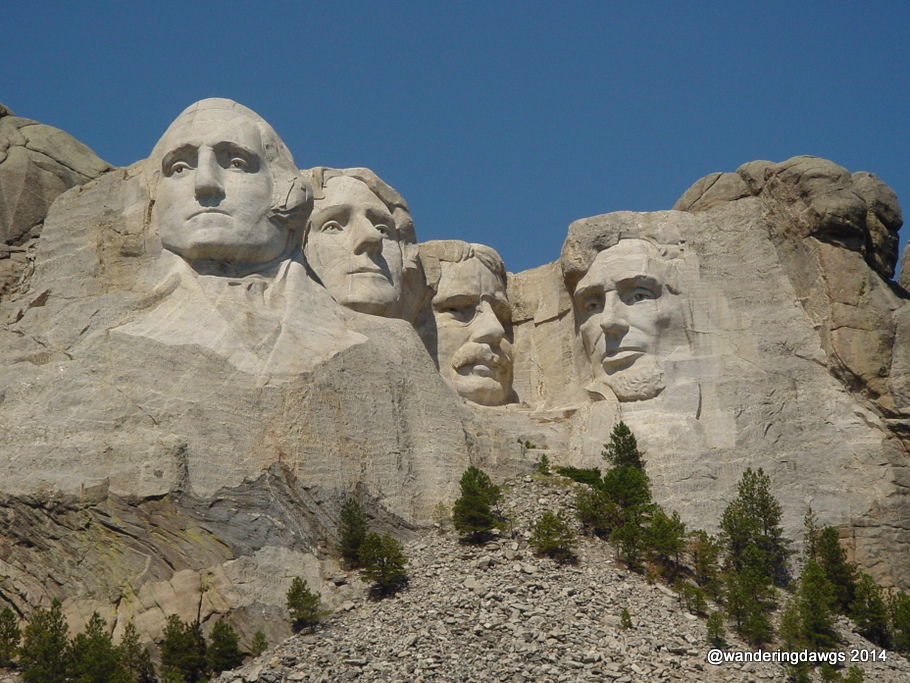
Mount Rushmore National Monument in the Black Hills of South Dakota
We were hooked! We knew this was the first of many amazing trips to come.










 Wandering Dawgs