Wishing you a safe and happy Independence Day!

Every Day is a Gift!
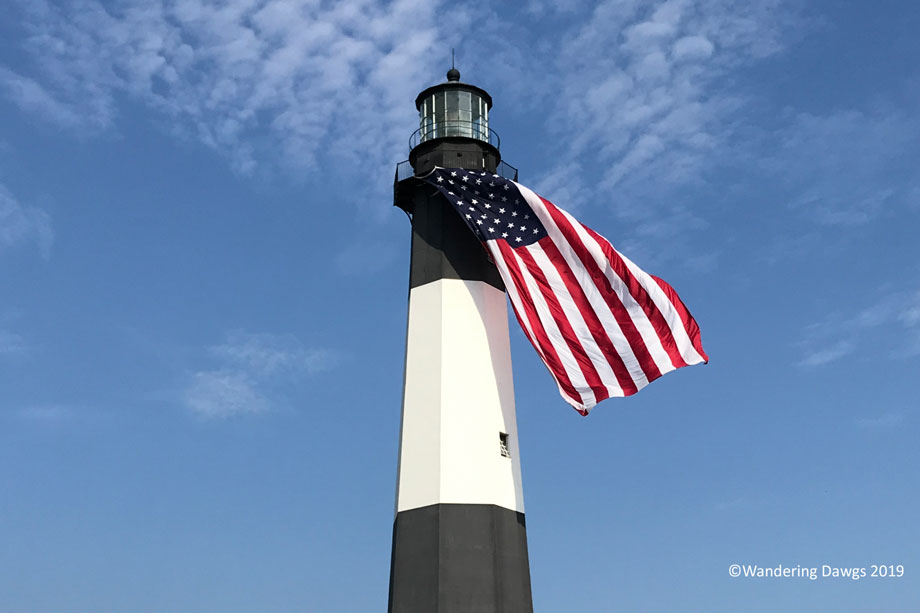
Wishing you a safe and happy Independence Day!
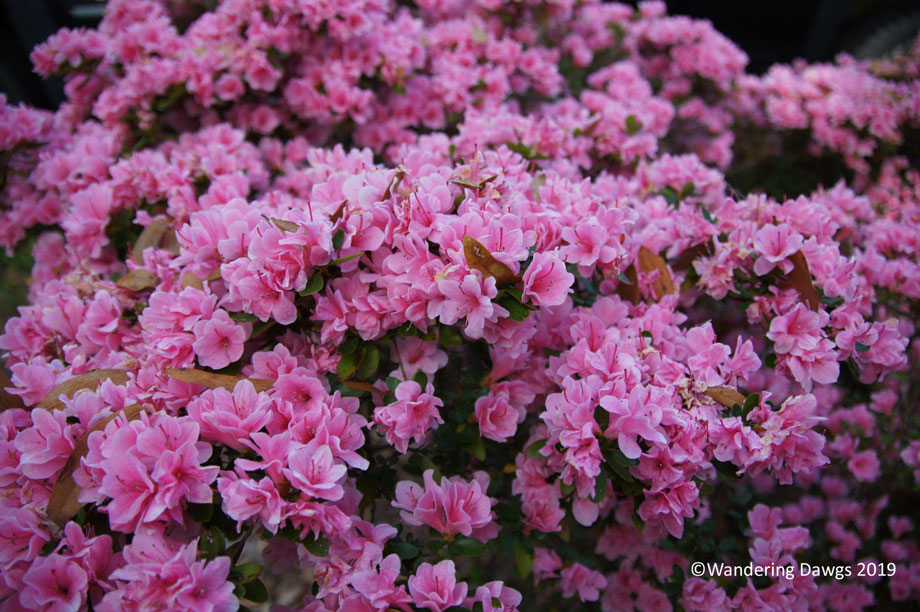
Where I live in coastal Georgia, March is the month when our azaleas and some flowering trees show off their brilliant colors. Some of the beds in my yard are filled with azaleas I planted about 30 years ago. Every spring they still delight me with their beautiful blooms.


Many of the blooms are gone now and after our first April shower this morning, a lot of the remaining flowers now lay on the ground. I’ll have to wait another year for the pink blooms to return.

The Rails-to-Trails Conservancy nonprofit organization has created a nationwide network of trails from former rail lines. The McQueen’s – Tybee Island Trail near Savannah, Georgia is one of the those trails. The gravel trail is a popular place for walking, biking and jogging.
The trail suffered extensive damage in 2016 when Hurricane Matthew came through the area in October. Less that a year later, Hurricane Irma caused more damage. The work to repair the damage is still not complete and parts of trail are closed.
As of now, the only access to the trail is a parking area at the trailhead near the entrance to Fort Pulaski National Monument. Starting at the trailhead, we walked until we came to a damaged bridge that still can be crossed safely. In all we went about about a mile and a half round trip.


We spied some wildlife along the trail.


It was a gorgeous March day to get out and explore close to home.

We are off again on our first RV trip of 2019. Our first stop was Laura S. Walker State Park in Hoboken, Georgia. We were there during the weekend and the park was full of families enjoying their days off. The park was a perfect home base to explore the Okefenokee Swamp Park which is a short drive away.


During the last 12 years we have visited the Okefenokee Swamp several times from the southern end in Fargo. I posted about our last visit there at The Land of Trembling Earth It’s been over 40 years since we visited the Okefenokee Swamp Park in Waycross. Our two young children were with us back then. Oh, the memories!
This well run and well maintained private park has been attracting visitors to the swamp since 1946. There are boardwalks with views of the swamp, a train ride, educational exhibits, and wildlife presentations which are all included in the entrance fee. For an additional fee, visitors can take a guided boat tour through the swamp.
Not all of the boardwalks were open when we were there. Some are closed due to the high water level caused by heavy rainfall in December and January. One of the boardwalks that is open took us by several American alligators in their native habitat.


After seeing an interesting presentation on native reptiles of the Okefenokee we took the train ride through the swamp.


After so many visits to the Okefenokee Swamp in Fargo, it was fun to see it from a different location.
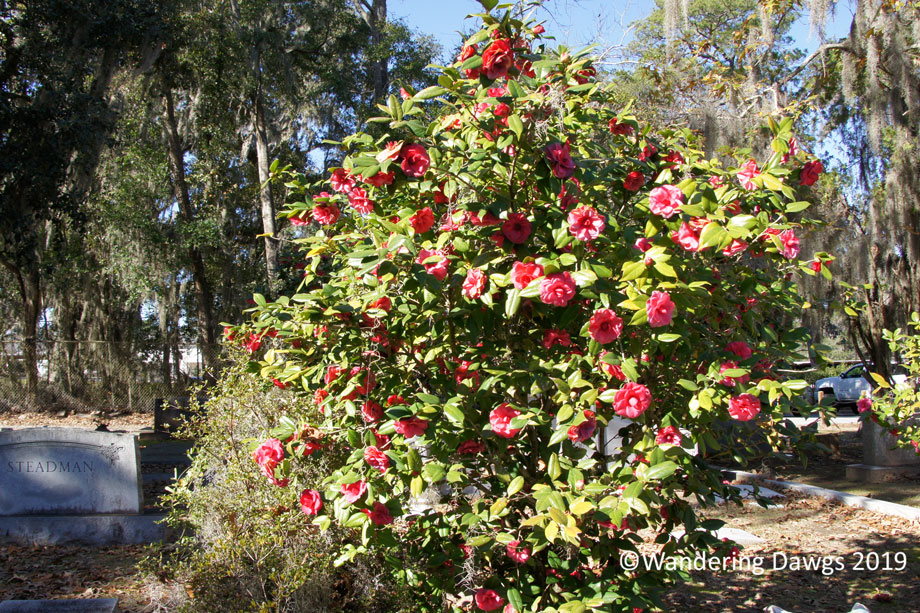
When a friend of mine asked me if I’d like to join the Tybee Island Garden Club on an outing to Bonaventure Cemetery in Savannah, Georgia to learn about camellias I didn’t have to think twice about saying yes. They couldn’t have picked a more perfect day to go. It was cool but not too cold on the sunny Saturday morning in January we spent going through the cemetery.
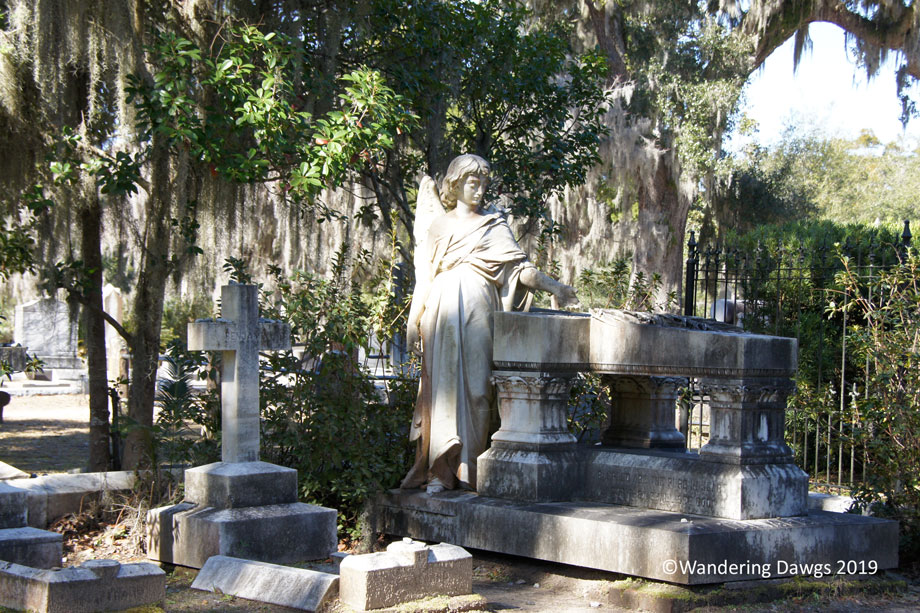
Bonaventure Cemetery is located on a beautiful bluff above the Wilmington River. Once a plantation, the land became a private cemetery in 1846. In 1907 the cemetery was made public. The cemetery covers about 100 acres of land with many interesting gravestones, monuments and tombs in a gorgeous setting with stately live oak trees, dogwoods, azaleas, camellias and other beautifully maintained vegetation. Today many visitors to Savannah make Bonaventure a must see stop during their stay.
Our guide was Doug Webb of the Bonaventure Historical Society. We learned that many of the camellias in the cemetery are historic, older varieties that are not easily found in nurseries these days. Doug is very knowledgeable about the camellias and spends one day a week at the cemetery with other volunteers planting, fertilizing, watering, and propagating the camellias.
As we went through the cemetery he pointed out the different varieties of camellias, talked about how they air layer the plants, and kept us entertained us with stories about the history of the property. We are very grateful to Doug for sharing his expertise with us.


One of the most visited graves in Bonaventure Cemetery is that of little Gracie Watson. Gracie was born in New England in 1883. Her family moved to Savannah when her father became manager of the Pulaski Hotel in downtown Savannah. Sadly, in 1889, when she was six years old, Gracie developed pneumonia and died. Her parents hired sculptor John Walz to carve a monument of their daughter. Her parents moved back to New England and are both buried there. Little Gracie is all alone in Bonaventure.
There are stories that Gracie’s spirit is still around. There have even been sightings of Gracie’s ghost.
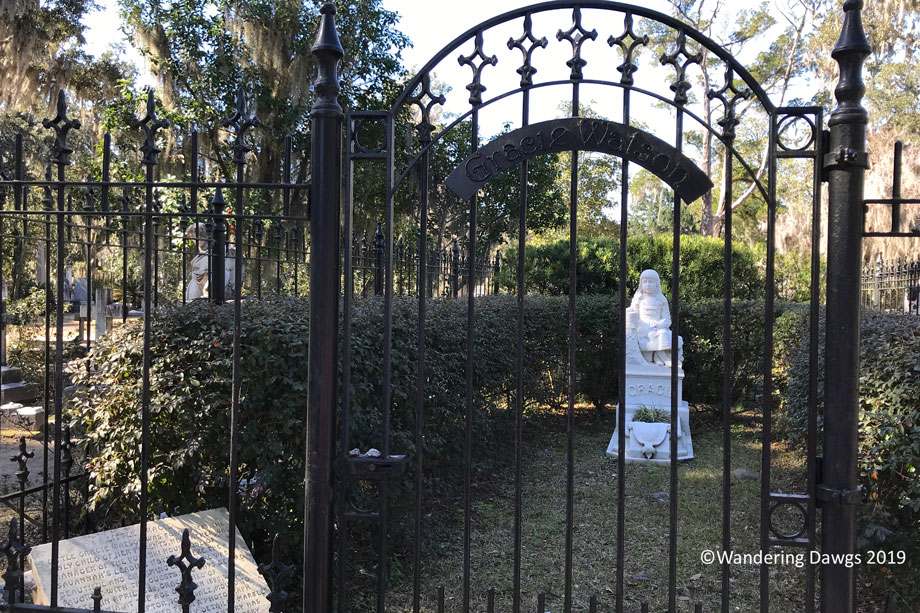
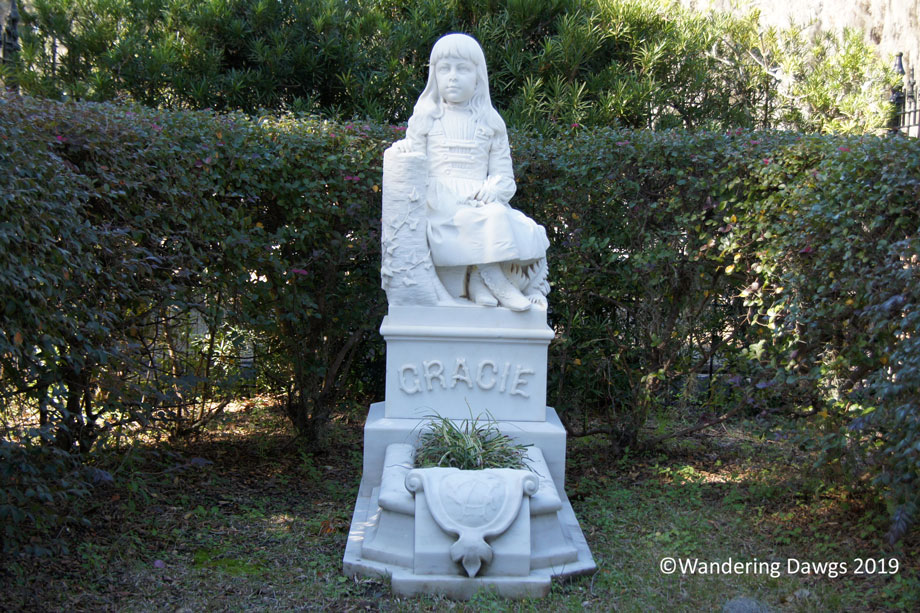
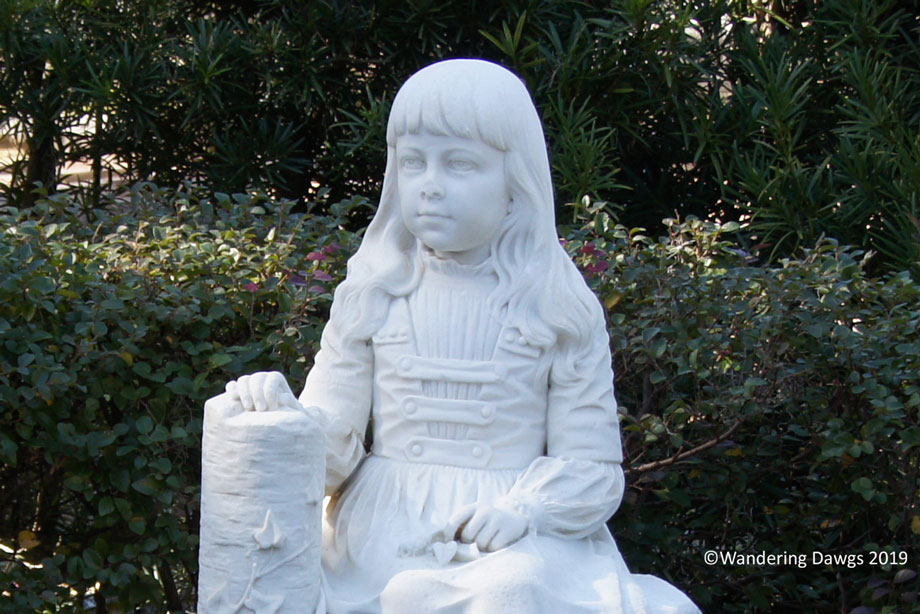
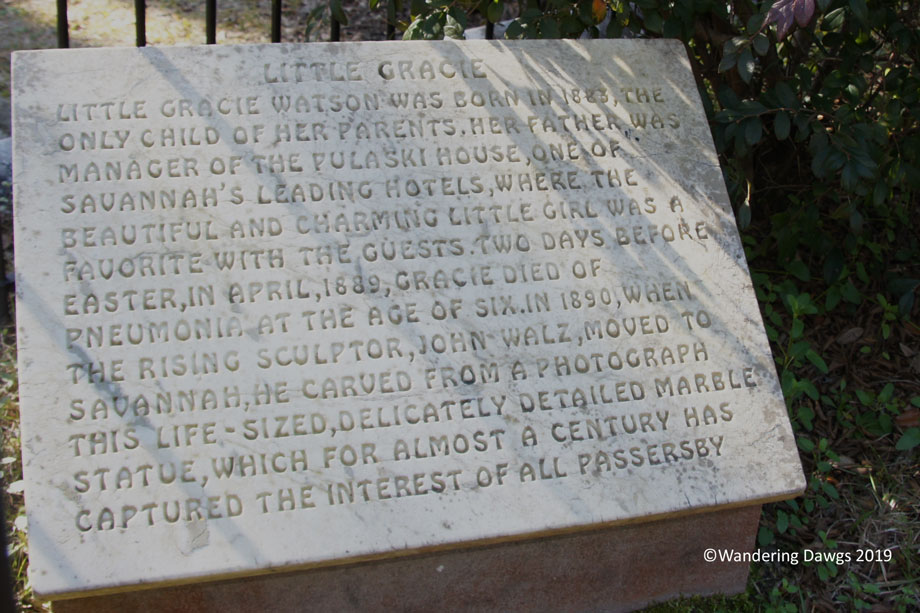
There is so much to see in Bonaventure it’s hard to capture it all. We went there to learn about camellias but we saw so much more.
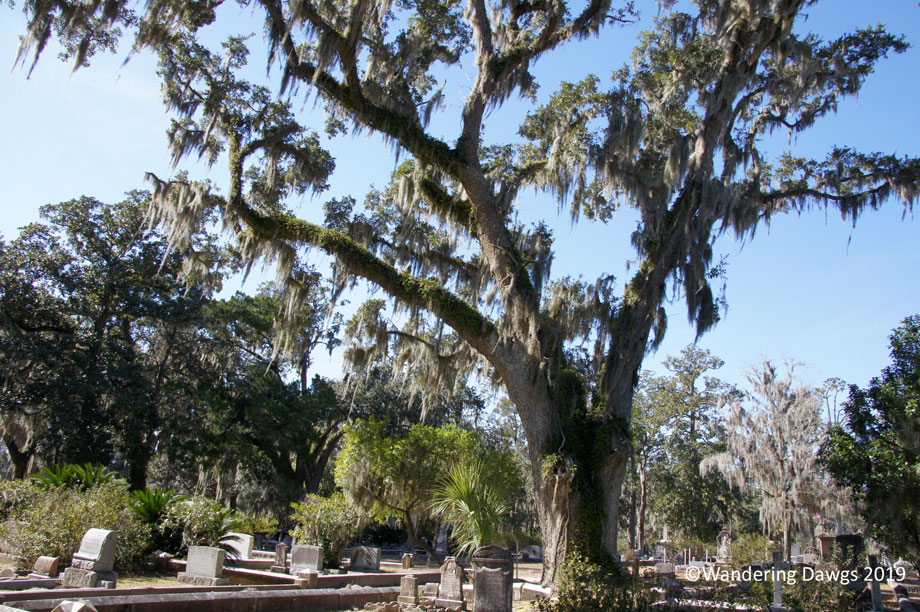
More information about the cemetery can be found at Bonaventure Cemetery. There are tour companies that offer guided tours or you can pick up a map at the visitor’s center and explore on your own. A good time of year to visit is in the spring when the azaleas and dogwoods are blooming.
 Wandering Dawgs