Prairie Dogs and Wildflowers at Lake Arrowhead

Every once in a while we discover an unexpected gem of a park. We just needed a quiet, restful place to stay for a couple of days after our adventure in Palo Duro Canyon. A place where we could buy some groceries and just chill. Lake Arrowhead State Park south of Wichita Falls sounded like it would fit the bill. As it turned out we enjoyed it so much we stayed an extra day.

It was wonderful seeing so much green after the brown plains of Texas. We had a nice big site with plenty of green grass and trees. There were hardly any other campers in the park and we sometimes felt like the only ones there.
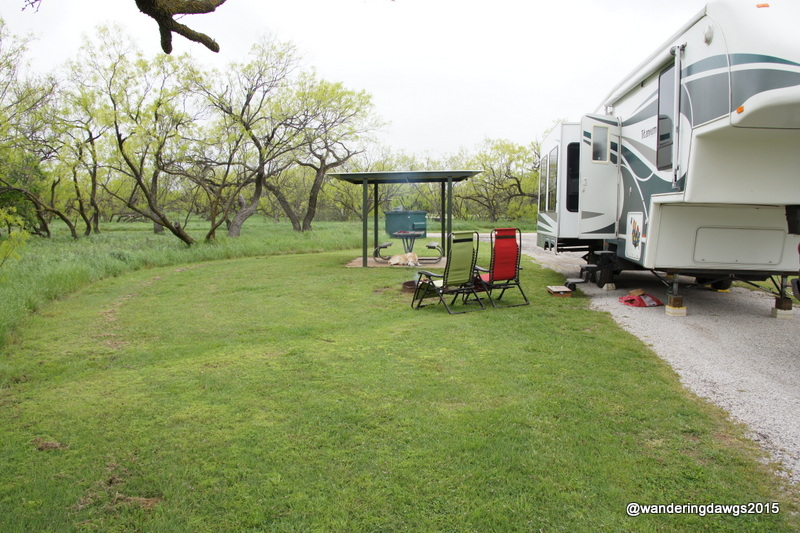
Green all around at Lake Arrowhead
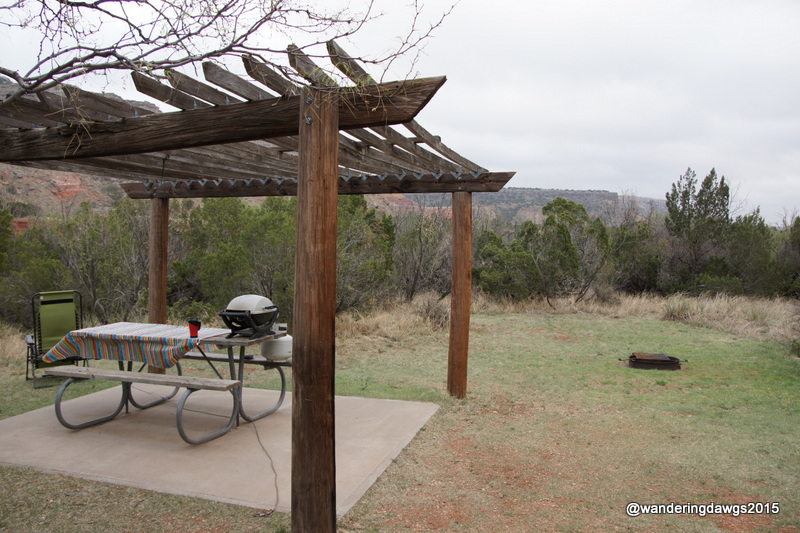
A great place to chill

Texas has been going through a drought for several years and many lakes have suffered because of it. Lake Arrowhead is really low and has been for a while. The fishing pier is high and dry and all of the boat ramps are closed.

Lake Arrowhead is really low

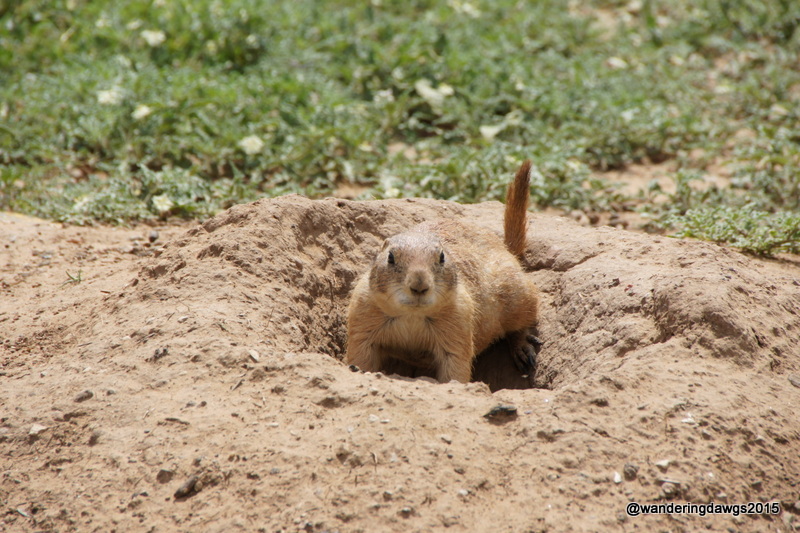
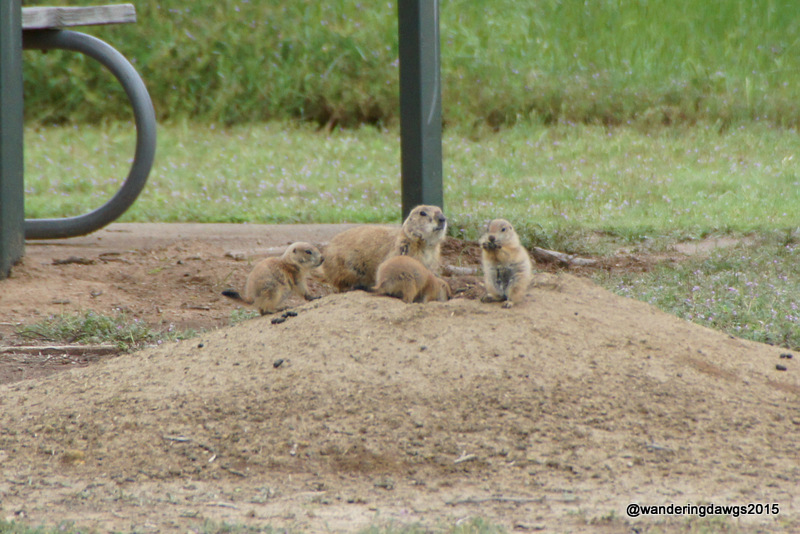
There is a Prairie Dog Town in the park that has spread to some of the campsites. Some of the holes were right beside the road and Blondie tried to stick her nose in them as we walked by. The Prairie Dogs would scamper away to their hole and disappear as Blondie and I approached on foot. They would stay around longer when we drove by in the truck.

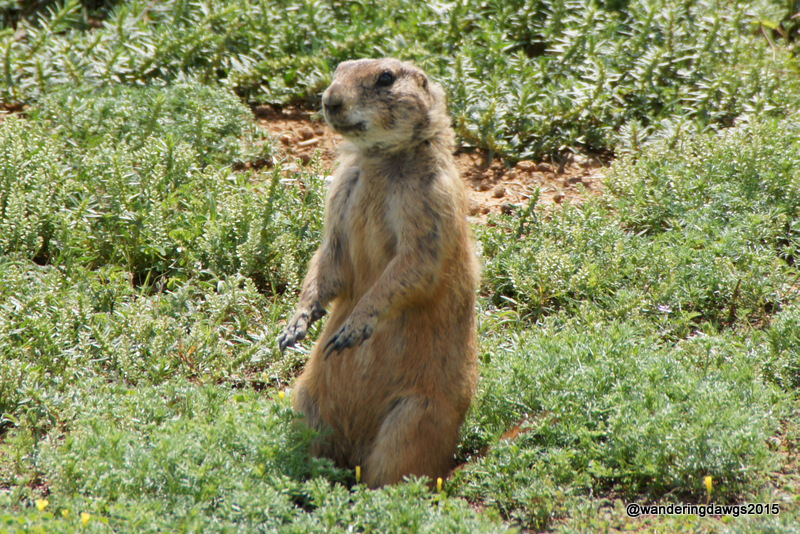
Prairie Dog Mama and babies
Prairie Dog Mama and her pups next to the picnic table in one of the campsites
Prairie Dog at Lake Arrowhead
Prairie Dog protecting his turf
Prairie Dog at Lake Arrowhead

There is a working oil pump in the campground. After seeing so many of them in the fields as we drove through Texas it was interesting to see one up close. The engineering term for this type pump is a walking beam. More common names for it are horsehead pump, nodding donkey, beam pump, rod pump, grasshopper, thirsty bird, pump jack or jack pump.

Inspecting an oil pump in the park

I was happy to see bluebonnets and other wildflowers growing beside the road.

It was a great place to chill before continuing our trek east.

The ranger who checked us in was very friendly and helpful and gave us great directions to shopping in Wichita Falls. She also recommended the Branding Iron for barbeque and it was delicious.

Our site was a pull through with paved pad, large grass sitting area, a covered picnic table and fire ring. The site had water and electric hookups. There was a bath house close by, several picnic areas and hiking trails in the park.

If you would like to read my detailed campground review of this park, click here.

Palo Duro Canyon – The Grand Canyon of Texas

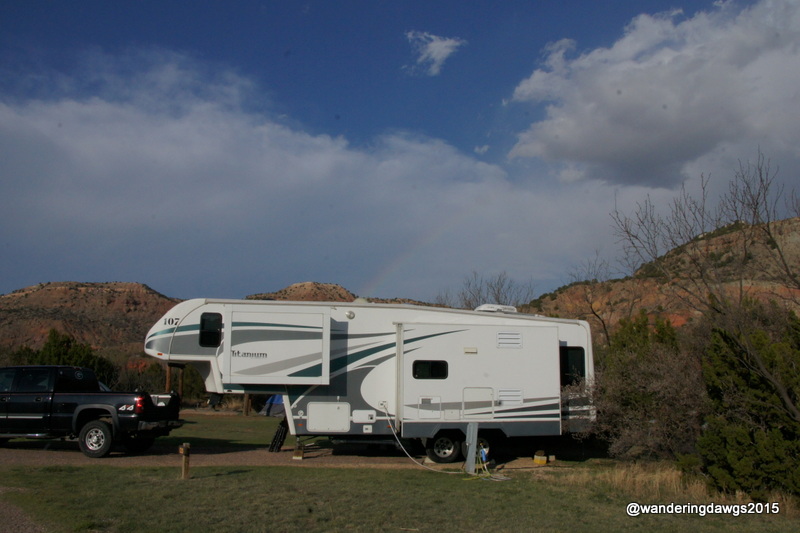
Our campsite in Palo Duro Canyon

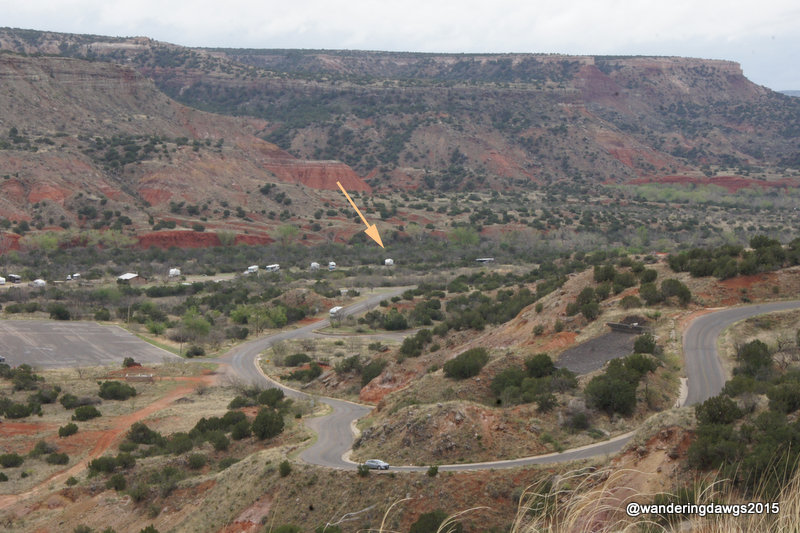
I was really looking forward to camping in Palo Duro Canyon. Just the idea of looking up at the canyon walls from our campsite was enough to plan our trip around a stay in the park. It was worth the two mile drive into Palo Duro Canyon down several switchbacks and a 10% grade to get to one of our most memorable campsites in all of our camping years. Our site in the Sagebrush campground had great views of the canyon and a private little sitting area behind our RV.

Our private picnic area behind the RV

Known as the Grand Canyon of Texas, Palo Duro Canyon is the second largest canyon in the United States. With 16 miles of paved roads through the canyon and miles of hiking, biking, and horse trails, there is enough to make everyone happy.

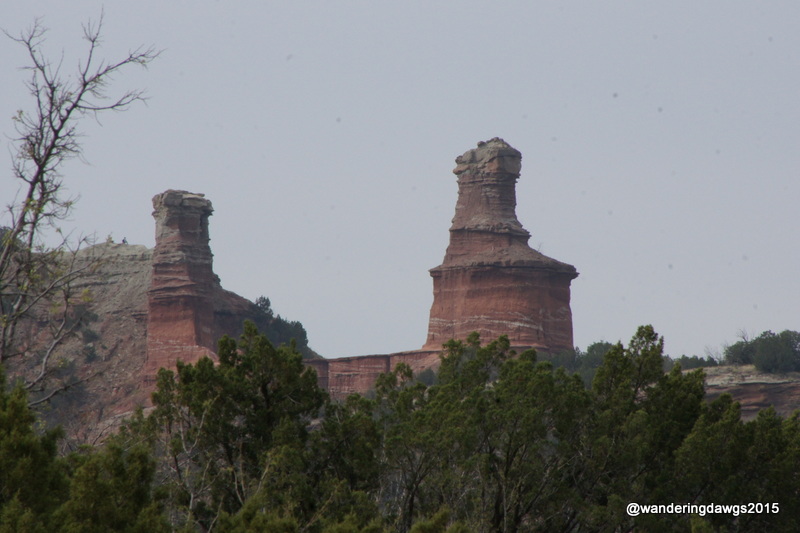
One of the most popular trails in the park is the Lighthouse Trail through the canyon for a close up look at the Lighthouse formation, the symbol of the state park. The multi-use trail is about a 6 mile round trip from the parking lot. We started out early on a cool Sunday morning and encountered cyclists, runners, and other hikers but no horses along the trail. A transplanted Georgian who now lives in Amarillo stopped to chat as we passed each other on the trail.

View from the Lighthouse Trail

The trail was packed red dirt and rock but not difficult. Our plan was to go to the base of the lighthouse but when two different hikers stopped to tell us about two rattlesnakes ahead of us I was done. Henry went a little farther and tried to convince me there was no sign of them but I wouldn’t budge! I was tired and ready to head back so we turned around about .2 miles before the end of the trail. We were done for the day when we got back to the campsite and loafed the rest of the afternoon.

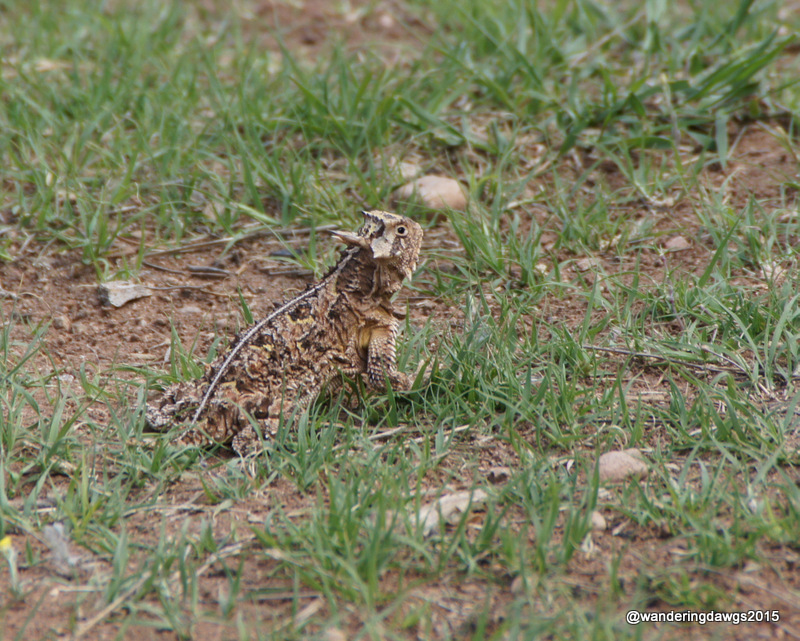
Although there was no wildlife along the trail (except for the rattlesnakes we didn’t see) there was plenty of wildlife in the park. On the first afternoon I spotted a threatened Texas Horned Lizard in our campsite.

This Texas Horned Lizard ran through our campsite

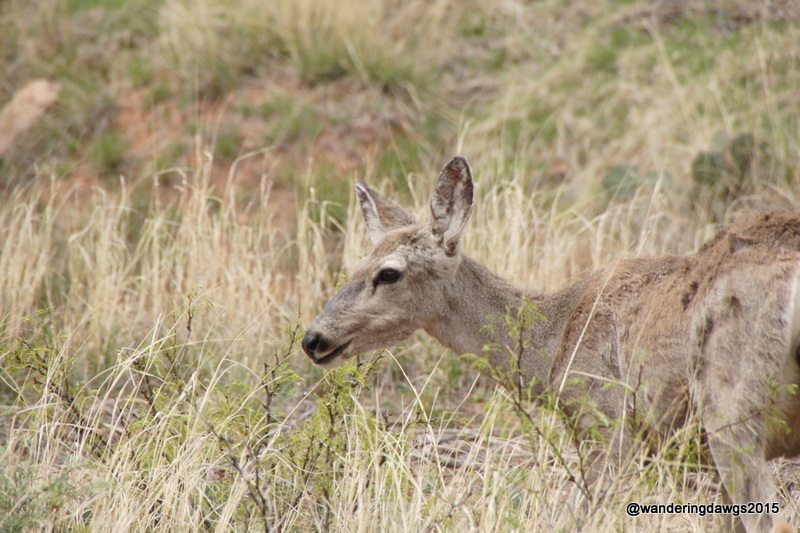
This Mule Deer beside the road wasn’t afraid of me.

Mule Deer
Mule Deer

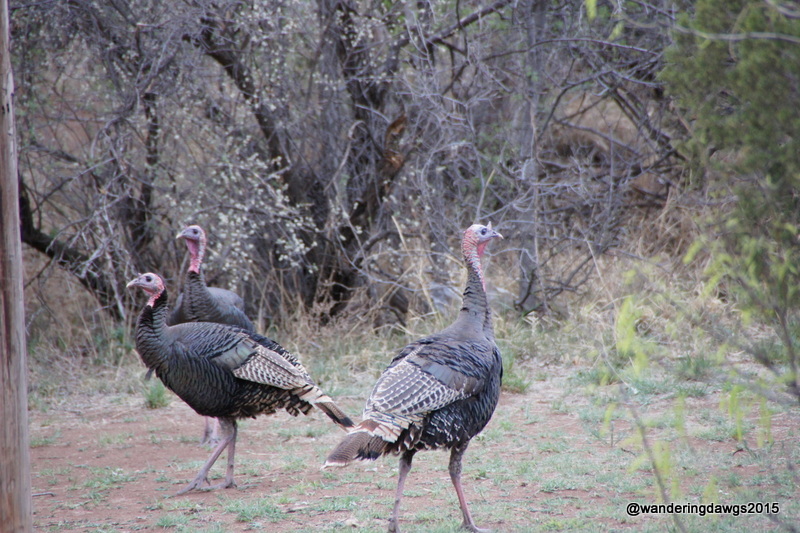
Wild Turkeys wandered through the campground one evening.

Wild Turkeys wandered through the campground

We took a short hike to explore the Hole In the Wall.

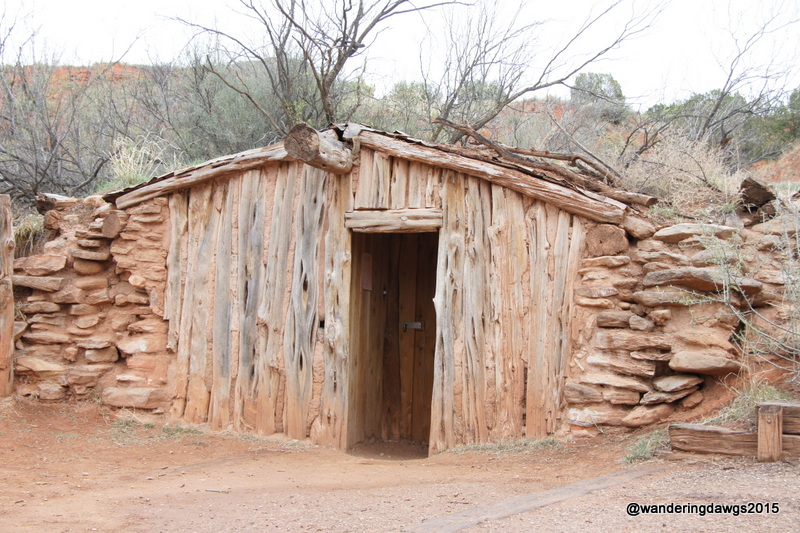
And explored the replica of a Cowboy Dugout.

Cowboy Dugout
Cowboy Dugout

There was a rainbow one afternoon.

Rainbow after a short rain shower

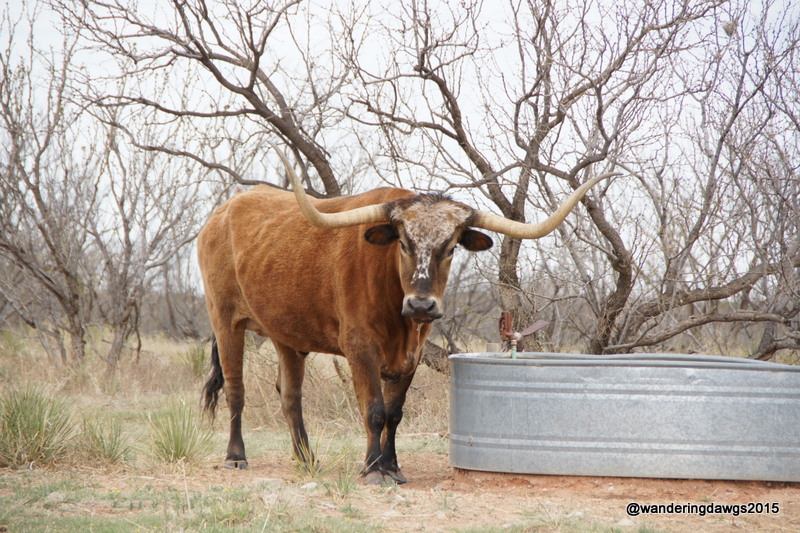
We saw T-Bone, one of the resident Texas Longhorns in the park.

T-Bone, one of the Texas Longhorns

We enjoyed our stay so much I think this is now my favorite state park!

There are several campgrounds in Palo Duro Canyon State Park with backpacking, equestrian sites, tent sites, and RV sites with water and electricity.Our site in the Sagebrush Campground had large private sitting area with a covered shelter over the picnic table and a fire ring. There are hiking, biking and equestrian trails. There are also several day use picnic areas, cabins, stables with guided horseback rides, an interpretive center, and the Trading Post Restaurant and Park store. If you would like to read my detailed campground review of this park, click here.
 

Mustang Island State Park, Texas

It rained all night our last night in Goose Island. Our 40 miles trek south to our next Gulf Coast destination included a ride on the Port Aransas ferry. After departing the ferry in Port Aransas we drove south about 12 miles to Mustang Island State Park. Despite rain, fog and overcast skies we enjoyed our stay there.

The first morning the fog was thick as pea soup when I took Blondie for a walk on the beach. After doing laundry there was still no sign of a clear sky so we decided to drive to Port Aransas. We had heard there were some good birding opportunities there and Henry needed to pick up some supplies from a hardware store so he could repair our steps (there’s always something to fix on an RV).

First stop was Charlie’s pasture, a nature preserve. I spied a lone white pelican and a couple of roseate spoonbills across the marsh. The next stop was Leonabelle Turnbull Birding Center where we hit the jackpot. Spoonbills perched in trees, many varieties of ducks, cormorants, American Coot, tri-colored heron, a green heron and many I couldn’t identify. We even saw some turtles.

The next day was still overcast and foggy but we made the drive to Padre Island National Seashore anyway. The park is 60 miles long and extends all the way to the southern tip of Padre Island. The paved road ends shortly past the Visitor’s Center. From there on vehicles must drive on hard packed sand on the beach. Camping is allowed on the beach and we saw some interesting campers as we drove along for a few miles. A picnic table at the windsurfing beach (waterfront campsites with no hookups are available here) was a perfect place for lunch.

We camped in site 17 at Mustang Island. The campground, located just behind the dunes, is a large, rectangular paved parking lot with back in sites on two sides. There is a grassy area between most sites. Each site has water and electric, a shelter with picnic table, and a grill.  There was standing water in some of the sites after a big storm the night before. The water drained overnight and everything was fine the next day. The beach access is a short walk or drive from the campground. There is a large area on the beach with picnic shelters where no driving is allowed. Driving and parking is allowed on the beach on both sides of the beach picnic area.


Magnificent Endangered Whooping Cranes

Our main reason to visit Goose Island State Park was to see the endangered Whooping Cranes. They are the tallest birds in North America and stand nearly 5 feet tall with a wingspan of about 7.5 feet. Beginning in September or October each year, the cranes migrate south about 2,500 miles from Wood Buffalo National Park in Canada to Aransas National Wildlife Refuge about 35 miles north of the state park. After wintering in Texas, they begin their migration back north to Canada about mid March each year.

In the 1940’s, the Whooping Crane population had dwindled to about 20 individuals. Today, according to the International Crane Foundation, there are about 599 (captive and wild). A survey conducted in 2013-2014 estimated about 300 of the wild population winter on and around the Aransas National Wildlife Refuge.

A few of these spectacular birds sometimes make their way to a farmer’s field near the state park. There they feed and hang out with the cattle. There were sometimes as many as 11 Whooping Cranes at one time scattered around the field. Many thanks to Ingrid over at Live Laugh RV for the heads up on where to see them.

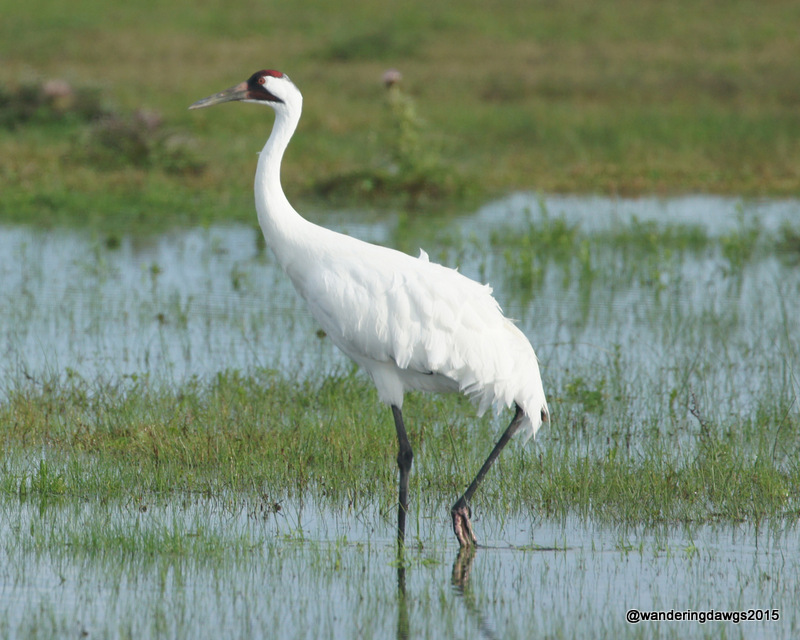
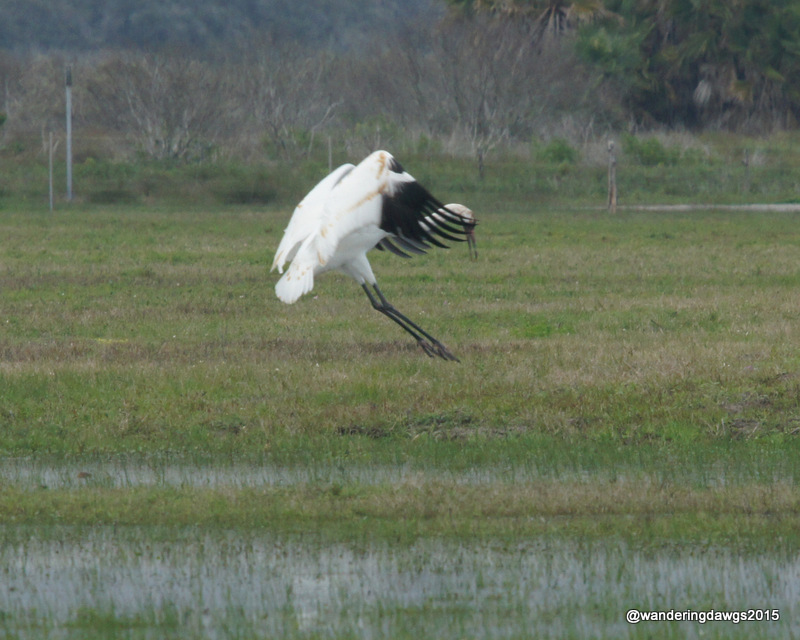
We went by the field every day to see what the Whoopers were up to.  With their large size and brilliant white feathers with a rust colored spot on their head they are easy to spot.

Whooping Crane
Whooping Crane
Whooping Cranes running and splashing
Whoopers going for a run

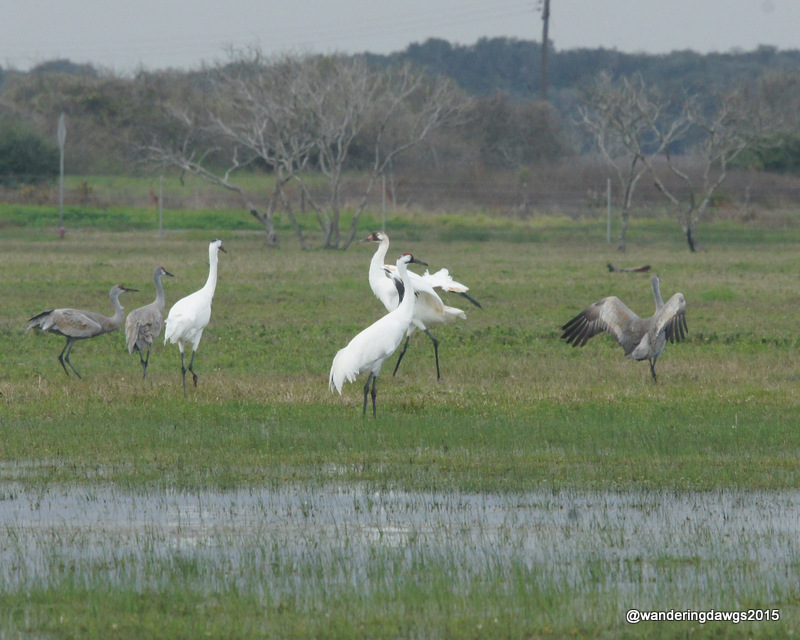
Sometimes there would be Sandhill Cranes hanging around in the field, too. They are smaller than the Whoopers and have darker feathers.

Whooping Cranes and Sandhill cranes share the field

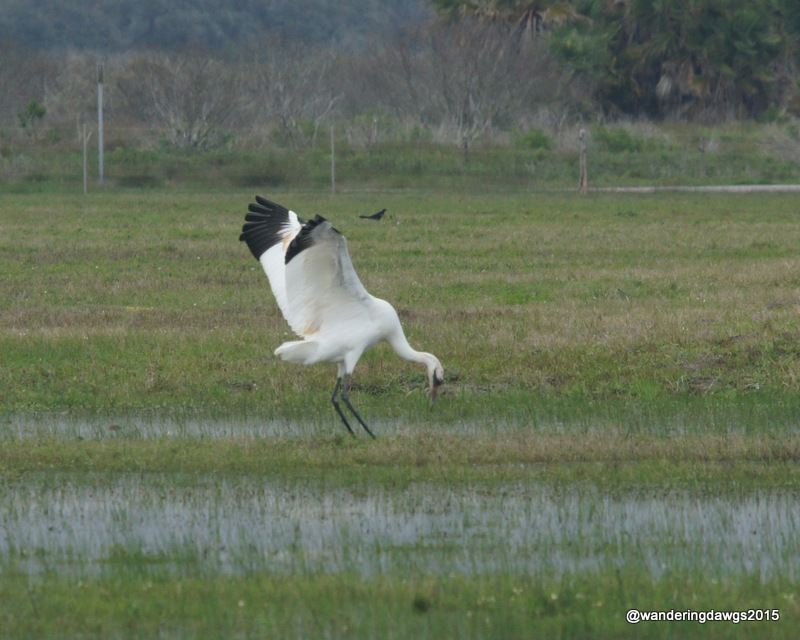
One afternoon the Whoopers kept us entertained flapping their wings and jumping around.

I though he was just eating
Ready…
Then he started to jump
Set…
High jump
Jump!
Landing
Landing
Splashing around
Splashing around
Sandhill crane flapping with a whooper watching
Whooper watches a Sandhill Crane showing off

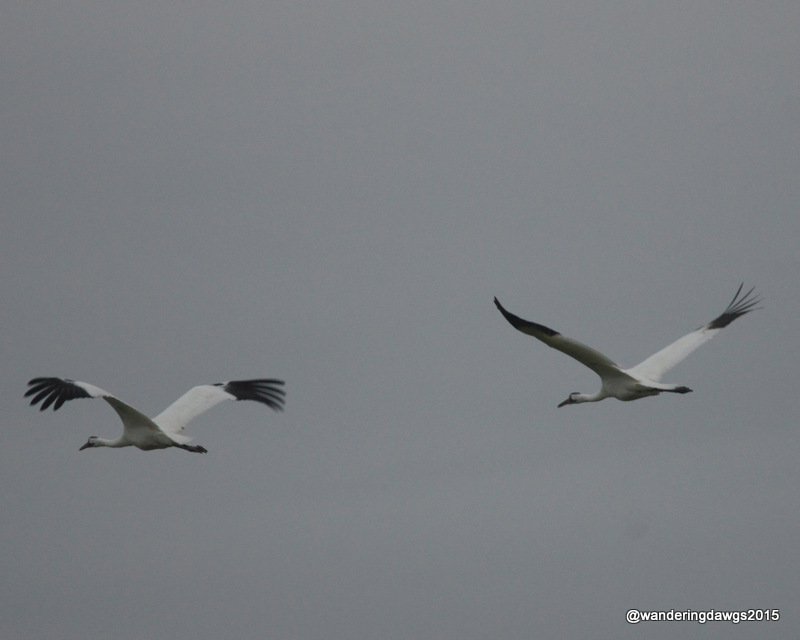
When they took off it was sad to see them go but spectacular to watch.

Whooping Cranes in Lamar, Texas
Whooping Cranes in Texas

The Whoopers were the star of the show but all around them there were a lot of other things going on in the field.

I’m happy to know that due to the work of many people, the population of these birds continues to grow. I feel privileged to be able to see them in the wild.

Whooping Crane
Whooping Crane in Texas

Goose Island State Park, Rockport, Texas

What a fabulous 3 days we had at Goose Island State Park!

We had plenty of things to see to keep us busy. The first morning I spotted these Roseate Spoonbills in the nature viewing area at the end of road in our campground.

Everything is bigger in Texas! A must see in Goose Island State Park is the Big Tree. This 1,000 year old Texas Live Oak  is the largest of its kind on public land in the state of Texas. The live oaks here are not as tall as the ones in coastal Georgia because the gulf breeze affects their height. The tree measures 11 feet across the trunk, 5 feet around, is 44 feet tall, and 89 feet across the crown.

The tree is surrounded by a fence and is well taken care of. While we were looking at the tree we met a delightful native Texan who has been coming here all her life. She remembers when her 15 year old son could climb on the tree. She also told us a story of her grandfather or great grandfather (I don’t remember which) caught a record sting ray and has  a picture of his record catch hanging in the big tree! These days no climbing on the tree is allowed.

Fishing is very popular here and we enjoyed going to the dock when the boats came in. We saw White Pelicans hanging around the docks waiting for a handout every day.

One pelican got a free lunch.

There was a lot to see in the state park.

We enjoyed seeing the sights around Rockport and Fulton. Our favorite drive was along Fulton Beach Road with homes on one side of the road with their docks jutting out into the bay on the other. Many of the homes were beach cottages with windswept oaks in the front yard. It felt like we had stepped back in time before condos and highrises became the norm along the coast.

Of course we had to try some of the local restaurants. Lunch at Moon Dogs on the docks in Rockport was fun. My fried soft shell crab salad was delicious. Our last night we had a feast of boiled crab, heads on shrimp, crawfish, sausage, potato and corn cooked with a Cajun seasoning. The servers poured it all on the butcher paper covered table like we serve our low country boil back home. Delicious and fun!

Our main reason for coming here was to see some endangered Whooping Cranes. We saw them every day and they are so spectacular they deserve their own post. Here’s a preview of those magnificent birds. Look for another post coming soon.

Pair of Whooping Cranes

We camped in site 34 of the Bay campground near the nature viewing area. There are more sites near the fishing pier The sites are on hard packed sand right on the water. Each site has water and electric hookups and a shelter with a picnic table. Many people fish right from their campsite.