Sunday Stills – World Animal Day

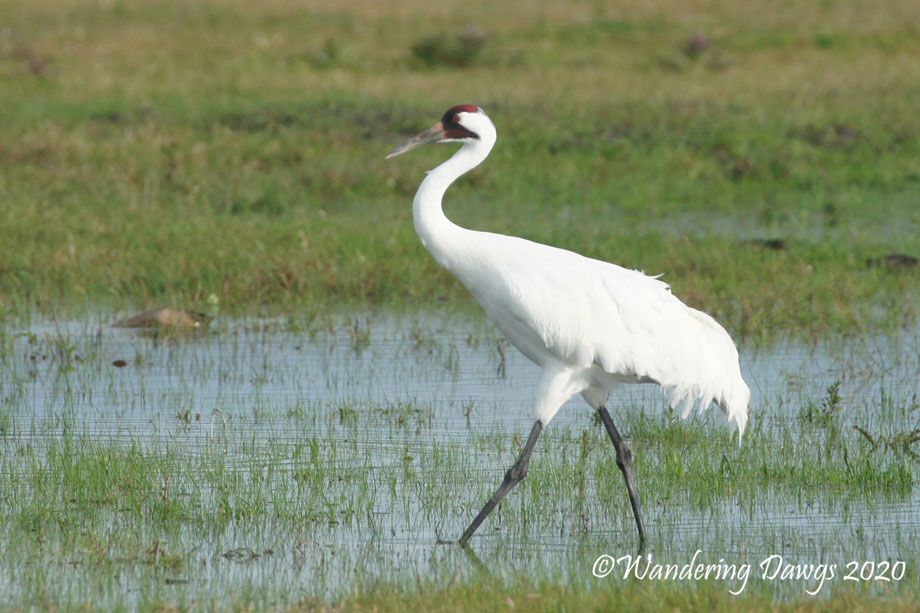
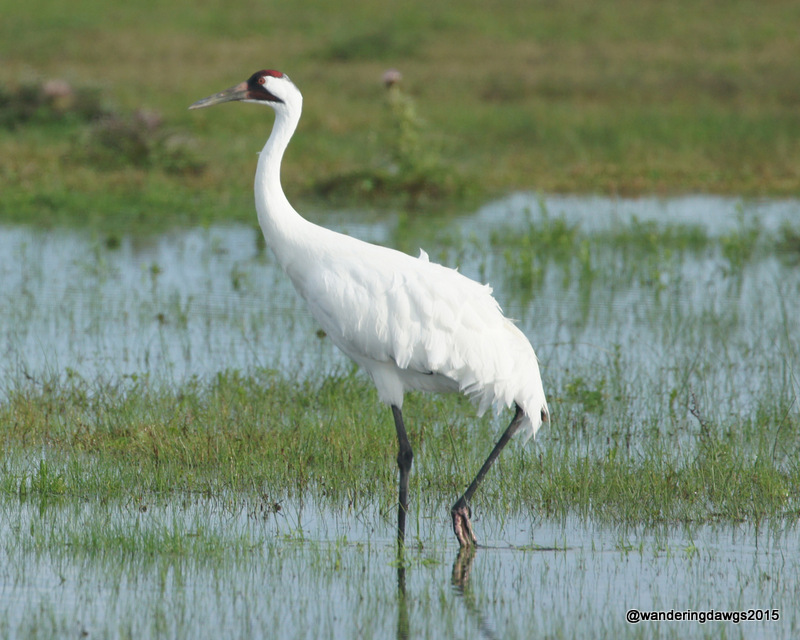
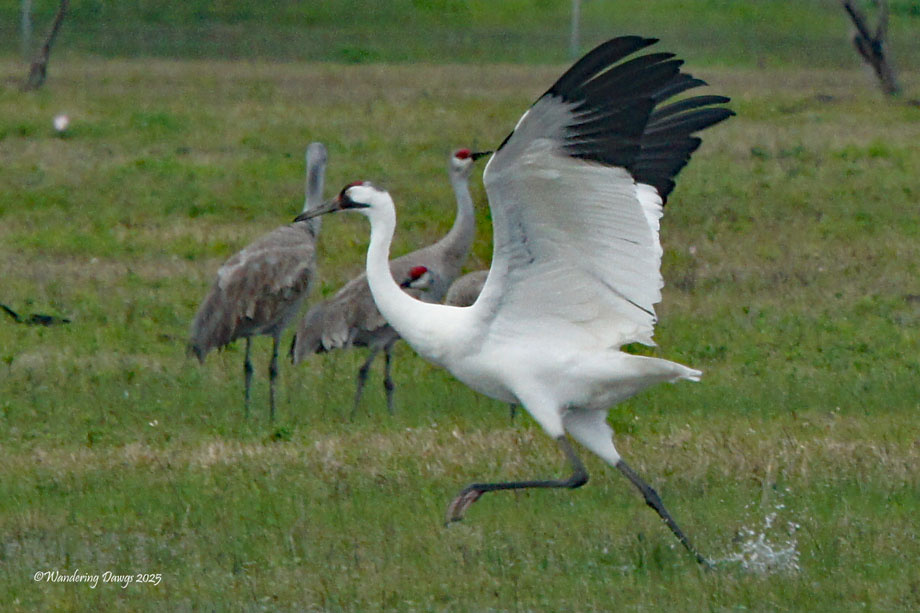
Whooping Crane, Texas

Terri’s latest Sunday Stills challenge is World Animal Day which was celebrated on October 4, 2025. Two animals that were on my bucket list were Whooping Cranes in Texas and Elk in the Great Smoky Mountains National Park. Seeing these animals in the wild was an amazing experience.

Whooping Cranes

According to the International Crane Foundation – North America, Whooping Cranes were near extinction with fewer than 20 individuals in 1941. Today, over 849 Whooping Cranes exist in the entire world.

We traveled to the Texas Gulf Coast one year hoping to see some of the Whooping Cranes who winter in and around the Aransas National Wildlife Refuge. These birds breed at Canada’s Wood Buffalo National Park and migrate to Texas every winter. Today there are more than 500 of these beautiful birds.

We found these magnificent Whooping Cranes near Goose Island State Park, south of the Aransas National Wildlife Refuge. I posted about this amazing experience at Magnificent Endangered Whooping Cranes.
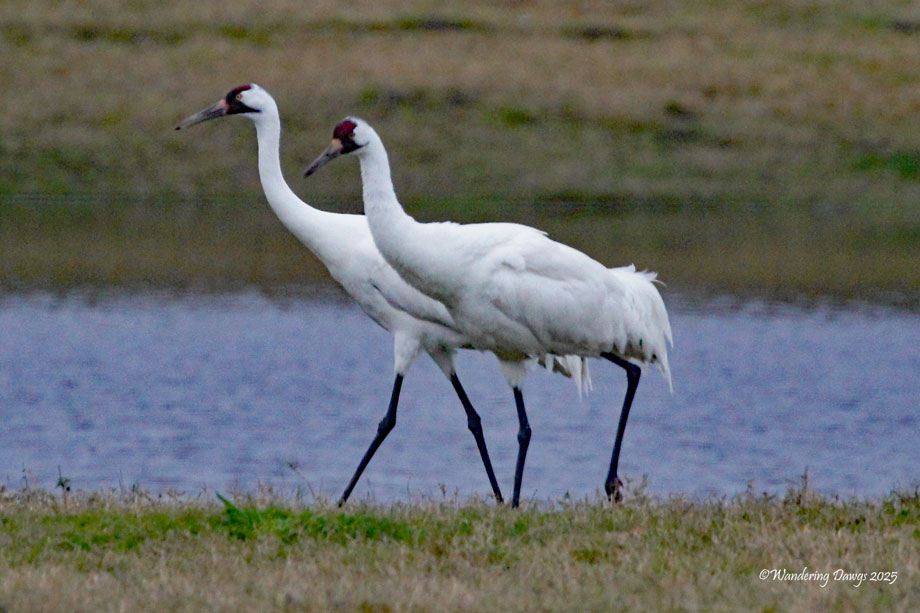
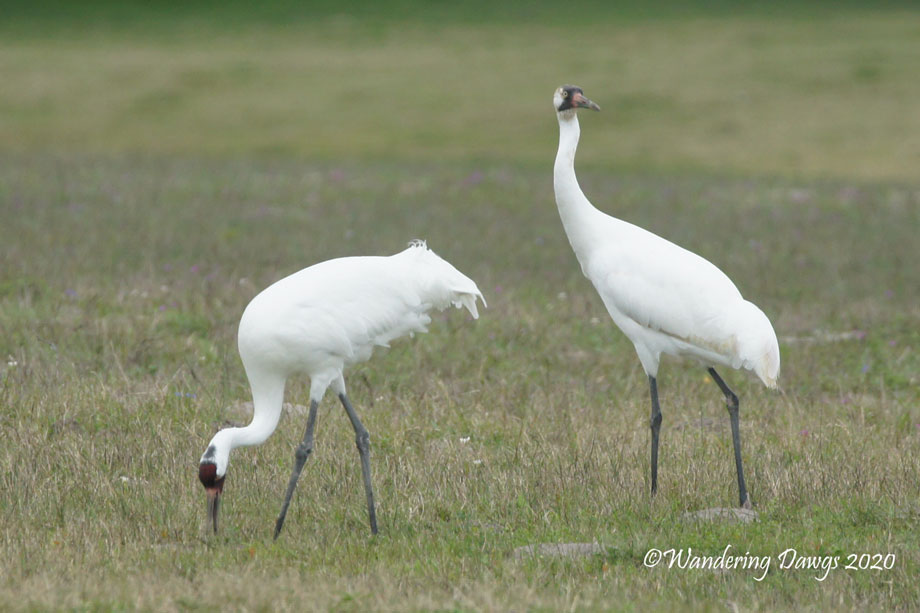
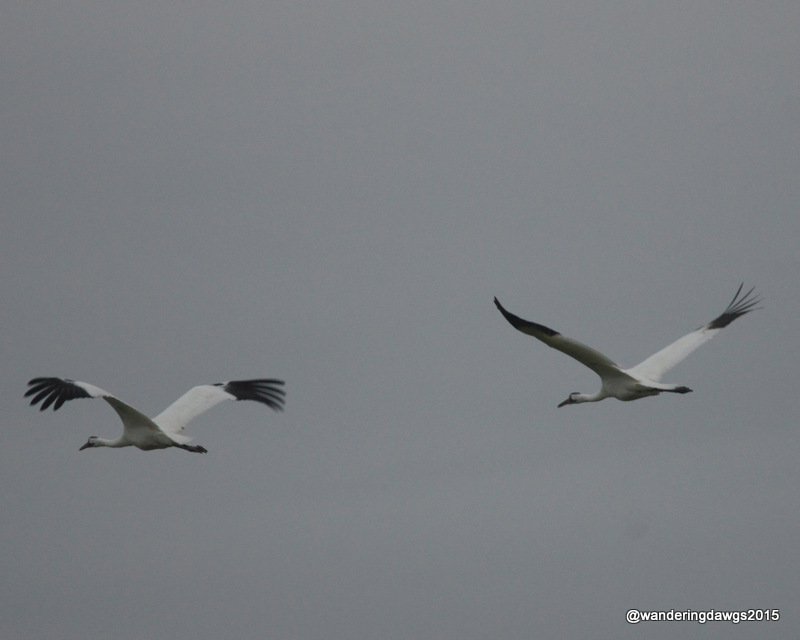
Pair of Whooping Cranes, Texas

Pair of Whooping Cranes, near Aransas National Wildlife Refuge, Texas

Cataloochee Valley Elk

One fall we traveled to Waynesville, North Carolina in search of Elk in Cataloochee Valley on the eastern side of the Great Smoky Mountains National Park. I posted about our Elk viewing adventure at Cataloochee Valley Elk.

In February, 2001, the National Park Service began an experimental reintroduction of elk into Cataloochee Valley by releasing 25 elk from the Land Between the Lakes National Recreation Area on the Tennessee-Kentucky border. Another 27 elk from Canada were released in 2002. Today there are approximately 200 elk.
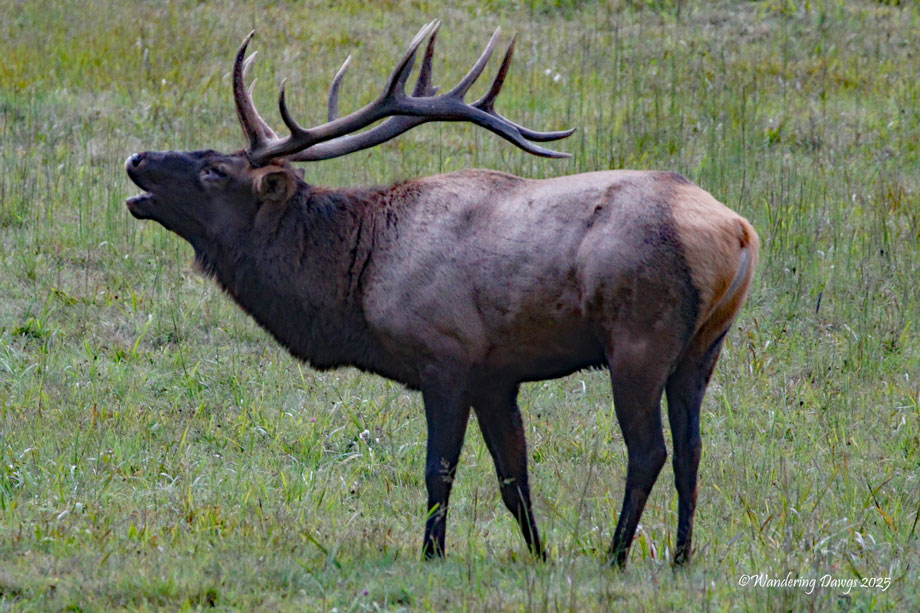
Bugling Elk, Cataloochee Valley, North Carolina

The breeding season, also known as the rutting season, is in the fall. During this time the bull elk make their bugling calls to attract females and challenge other bulls.

Female Elk, Cataloochee Valley, Great Smoky Mountains National Park, North Carolina
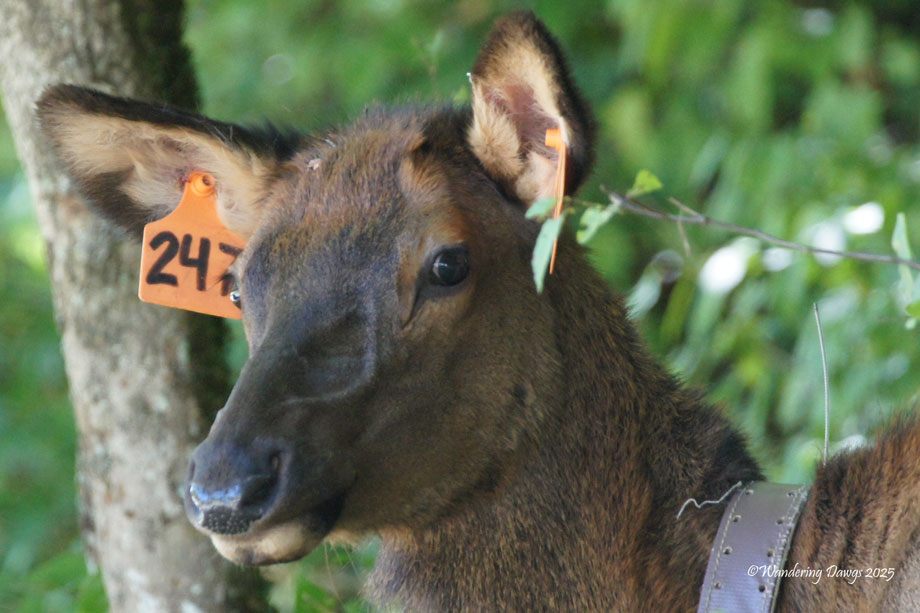
Female Elk, Cataloochee Valley, North Carolona

Many thanks to Terri for her Sunday Stills challenge World Animal Day

Bird Weekly Challenge #23: Long Legged Birds

Every year, endangered Whooping Cranes fly south from Canada to spend their winter along the Texas Gulf Coast at the Aransas National Wildlife Refuge. Sometimes some of the cranes can be seen in open fields near Goose Island State Park in Rockport.

Several years ago we spent a few days at Goose Island State Park in hopes of seeing some of these endangered Whooping Cranes. Every day we went out in search of these beautiful birds and every day we saw them. I posted about our experience at Magnificent Endangered Whooping Cranes.

Thank you Lisa. for this Bird Weekly Challenge #23: Long Legged Birds

Magnificent Endangered Whooping Cranes

Our main reason to visit Goose Island State Park was to see the endangered Whooping Cranes. They are the tallest birds in North America and stand nearly 5 feet tall with a wingspan of about 7.5 feet. Beginning in September or October each year, the cranes migrate south about 2,500 miles from Wood Buffalo National Park in Canada to Aransas National Wildlife Refuge about 35 miles north of the state park. After wintering in Texas, they begin their migration back north to Canada about mid March each year.

In the 1940’s, the Whooping Crane population had dwindled to about 20 individuals. Today, according to the International Crane Foundation, there are about 599 (captive and wild). A survey conducted in 2013-2014 estimated about 300 of the wild population winter on and around the Aransas National Wildlife Refuge.

A few of these spectacular birds sometimes make their way to a farmer’s field near the state park. There they feed and hang out with the cattle. There were sometimes as many as 11 Whooping Cranes at one time scattered around the field. Many thanks to Ingrid over at Live Laugh RV for the heads up on where to see them.

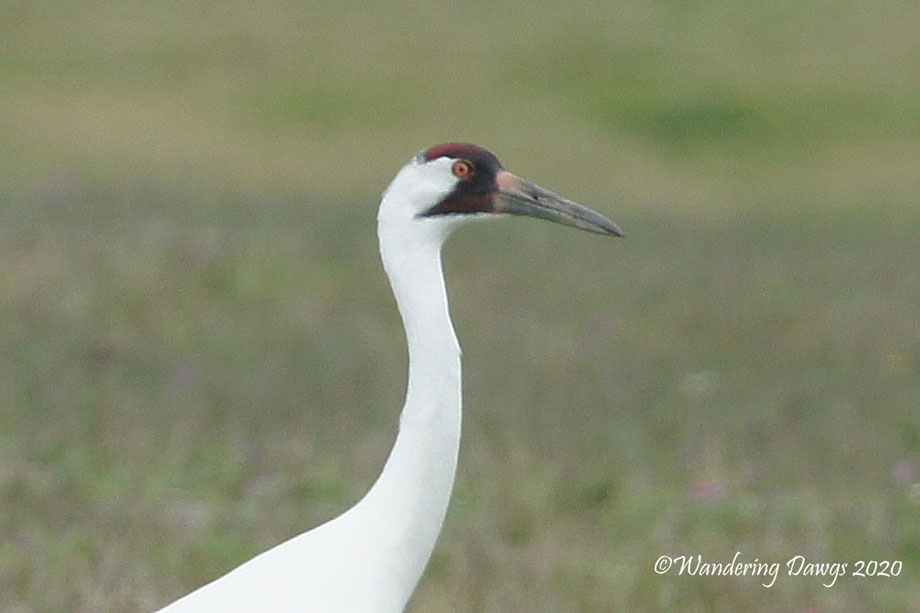
We went by the field every day to see what the Whoopers were up to.  With their large size and brilliant white feathers with a rust colored spot on their head they are easy to spot.

Whooping Crane
Whooping Crane

Whooping Cranes running and splashing
Whoopers going for a run

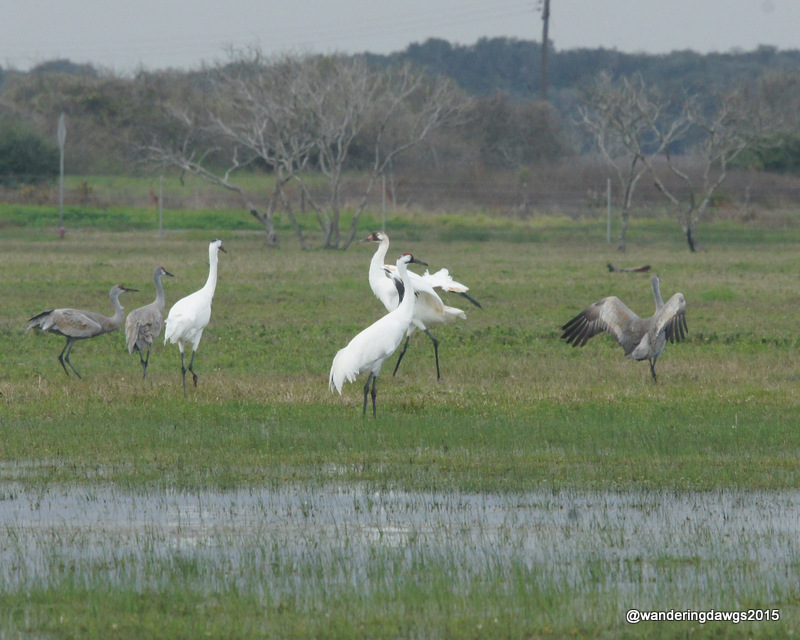
Sometimes there would be Sandhill Cranes hanging around in the field, too. They are smaller than the Whoopers and have darker feathers.

Whooping Cranes and Sandhill cranes share the field

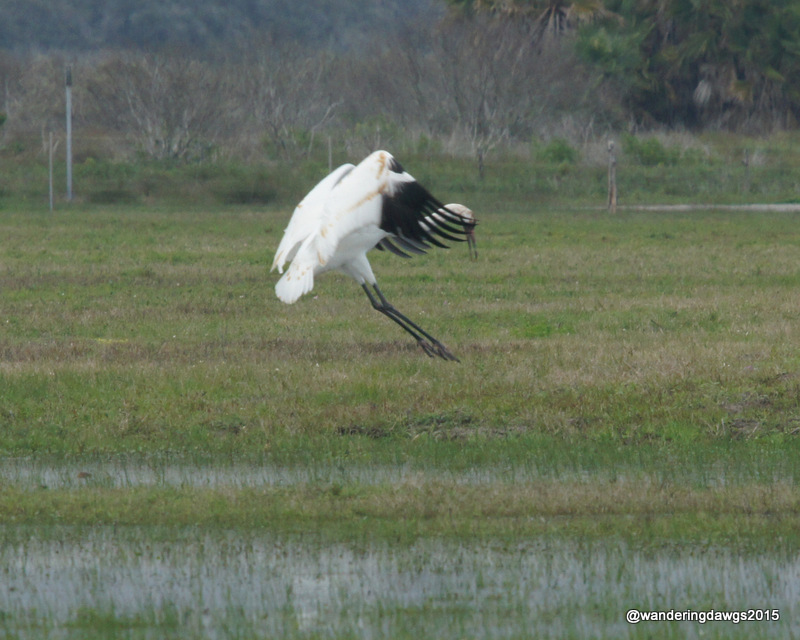
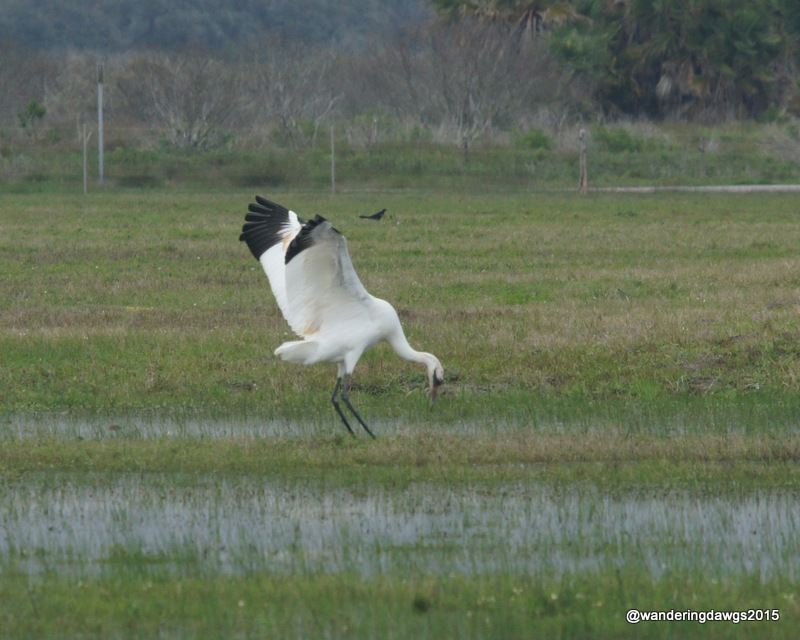
One afternoon the Whoopers kept us entertained flapping their wings and jumping around.

I though he was just eating
Ready…

Then he started to jump
Set…

High jump
Jump!

Landing
Landing

Splashing around
Splashing around

Sandhill crane flapping with a whooper watching
Whooper watches a Sandhill Crane showing off

When they took off it was sad to see them go but spectacular to watch.

Whooping Cranes in Lamar, Texas
Whooping Cranes in Texas

The Whoopers were the star of the show but all around them there were a lot of other things going on in the field.

I’m happy to know that due to the work of many people, the population of these birds continues to grow. I feel privileged to be able to see them in the wild.

Whooping Crane
Whooping Crane in Texas