Welcome to the next post in my series highlighting states we have visited throughout the years. I hope you will enjoy coming along for the ride! I will be featuring the states alphabetically and next up is
Arkansas
Arkansas became the 28th state on June 15, 1836. The capital is Little Rock.
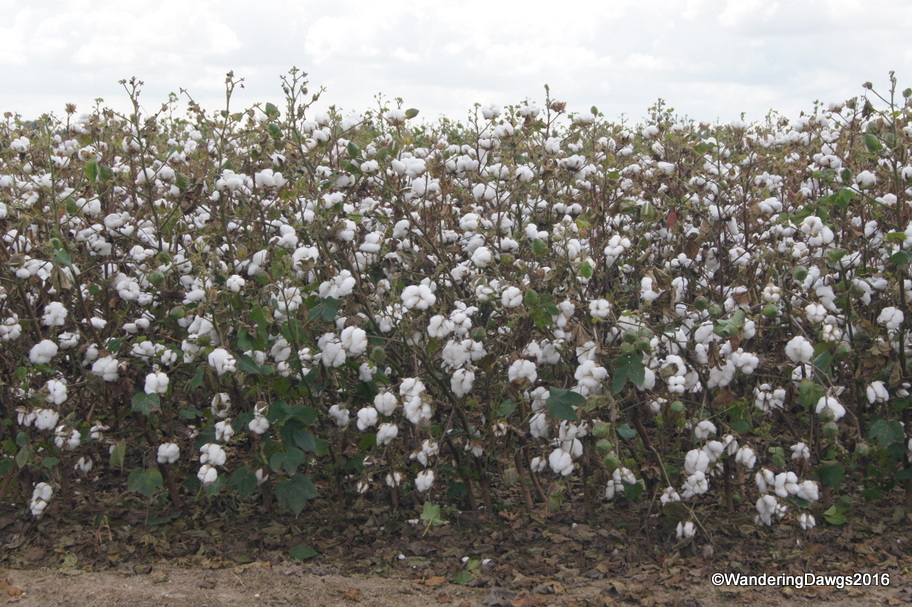
When I was in elementary school my family lived on an Air Force base in northeastern Arkansas for four years. I remember there were cotton fields as far as the eye could see outside of the base.
Henry and I have traveled through Arkansas on several of our cross country trips and we have have made it a destination more than once. The Ozark Mountains, Hot Springs National Park, Little Rock, and several places on or near the Mississippi River were some of the places we enjoyed visiting.
We strolled along Bath House Row and the Grand Promenade at Hot Springs National Park. A relaxing day in one of the original bath houses was a real treat for me.
Hot Springs
The Grand Promenade in Hot Springs National Park, Arkansas
Fordyce Bath House on Bath House Row in Hot Springs
Quapaw Baths on Bath House Row in Hot Springs
The magnolias were blooming in Hot Springs
At Fort Smith National Historic Site we toured the federal courthouse used by Judge Isaac C. Parker in the late 1800’s.
Fort Smith National Historic Site
Federal Courthousue at Fort Smith National Historic Site
The Gallows at Fort Smith National Historic Site
We loved watching the barges going by on the Mississippi River from our campsite at Tom Sawyer RV Park in West Memphis, Arkansas.
Sunrise over the Mississippi River at Tom Sawyer RV Park
We watched the barges go down the Mississippi River from our site at Tom Sawyer RV Park
Some of the barges were small
Another small barge on the Mississippi
Maumelle Campground on the Arkansas River was a great home base for attending a Georgia – Arkansas football game in Little Rock and for taking a day trip to Petit Jean Sate Park.
Ducks on the Arkansas river
Tailgating on a golf course next to War Memorial Stadium in Little Rock
Blondie and Henry at Petit Jean State Park
Canyon Overlook at Petit Jean State Park
We enjoyed the scenic drives around Mississippi River State Park and Lake Chicot State Park so much that we made two trips to each park.
Bear Creek Lake in Mississippi River State Park
Great Blue Heron at Bear Creek Lake
Cypress trees at Lake Chicot
Cotton is the number one crop in the Arkansas Delta
Egret on the fishing dock
Delta Cultural Center Depot in Helena, Arkansas
To read previous posts about the states featured in this series just click on the state name: Alabama AlaskaArizona
Way down upon de Swanee Ribber, Far, far away, Dere’s wha my heart is turning ebber, Dere’s wha de old folks stay
Florida State Song, “Old Folks at Home” by Stephen Foster, 1851
Carillon at Stephen Foster Folk Cultural Center
One our favorite Florida State Parks, we have camped here numerous times through the years. Located on the banks of the Suwanee River, the park is named for American compser Stephen Foster and features a museum with exhibits about some of his most famous songs, a 97-bell carillon, a craft square with demonstrations and a gift shop, and a historic Spring House which once brought many tourists into the town of White Springs.
The Stephen Foster Museum houses many exhibits including several dioramas representing some of his most famous songs. Two of his songs have been adapted as state songs – “Old Folks at Home” is the state song of Florida, and “My Old Kentucky Home” is the state song of Kentucky. You may recognize some of his other songs such as “Oh! Susanna”, “Beautiful Dreamer” and “Jeanie with the Light Brown Hair.”
According to The Center for American Music at the University of Pittsburgh, “Old Folks at Home” was written for a minstrel show and became the most popular song ever published at that time. Stephen Foster was never in Florida and never saw the Suwanee River. In his original draft of the song he used the name Pedee River but later changed it to Suwanee.
Diorama of “Old Folks at Home”
The road through the state park winds around the museum and carillon with ancient Live Oak trees covered with Spanish Moss all through the park. The campground is surrounded by pine forest with miles of hiking and biking trails. We love hearing the bells of the Carillon as it chimes on the quarter hour and plays Stephen Foster’s music throughout the day.
Live Oaks with Spanish Moss
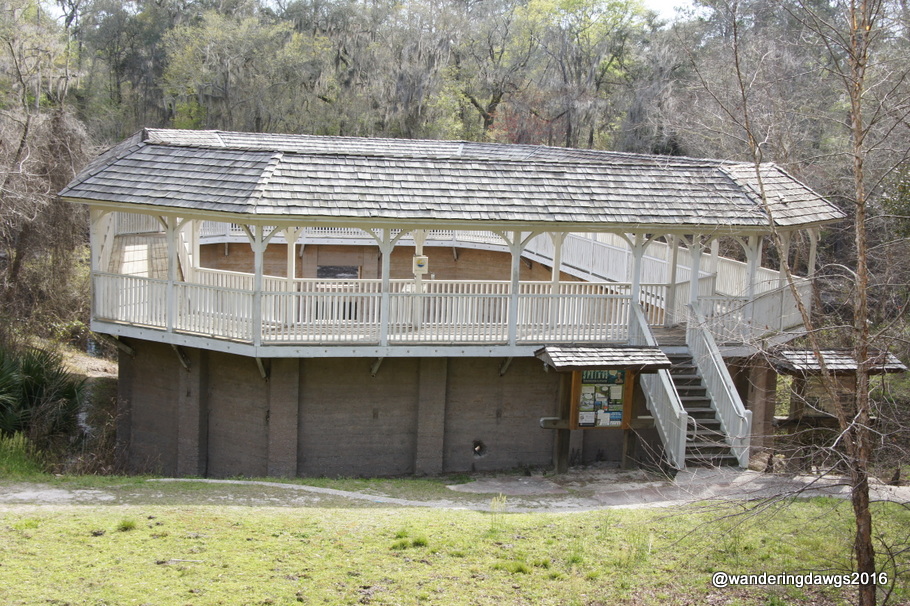
On the banks of the Suwanee River sits a Spring House which brought many tourists into the town of White Springs in the 1800’s and early 1900’s. An interpretive sign at the spring house calls it “Florida’s Original Tourist Destination”. The waters from the sulphur springs were thought to have healing powers and people flocked to the town of White Springs for the cure.
Spring House at White Springs, FloridaFlorida’s Original Tourist DestinationSwimming Pool at the Spring HouseSpring House at White Springs, FloridaCypress Trees on the banks of the Suwanee RiverAzaleas blooming in White Springs, Florida
Spring flowers were blooming all around the park and in the town of White Springs.
Flowering Dogwood in White Springs, Florida
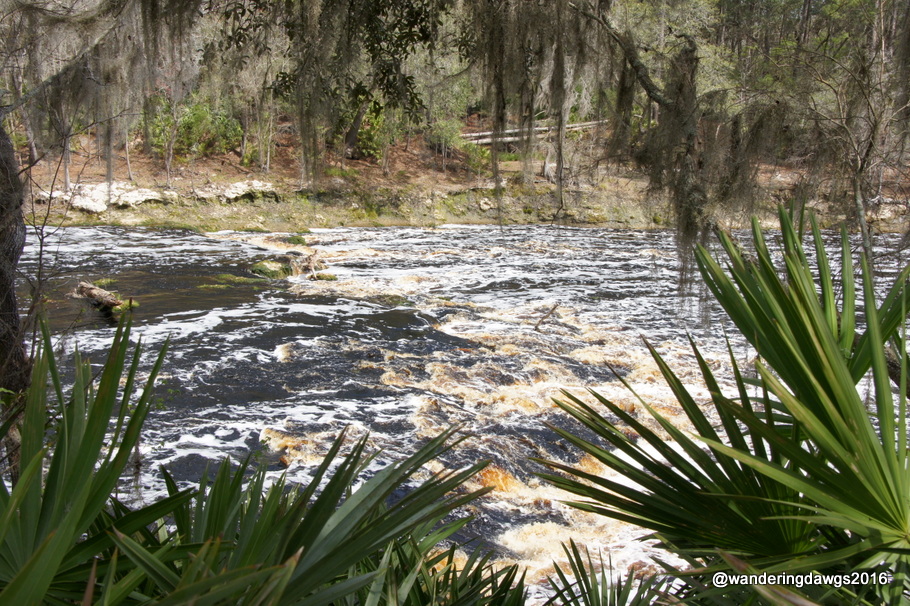
We drove to nearby Big Shoals State Park do a little geocaching and to hike along the Suwanee River. Our destination was an overlook on a bluff high above the Suwanee River to see Florida’s only Class III White Water Rapids.
Big Shoals Trail along the Suwanee RiverBig Shoals on the Suwanee River
Henry found the geocache and when he opened the container he found this little critter inside.
A surprise visitor in the geocache
Several years ago during one of our stays at the park we had a delightful lunch at the historic Telford Hotel in White Springs. In one room of the hotel were old hotel registers with signatures of some of the famous visitors to the hotel including Theodore Roosevelt and William Howard Taft in 1913. I dug out this photo of the register I took that day and you can see their signatures are the last ones on the page.
Telford Hotel Register from 1913
Sadly, the hotel is now closed and the building for sale.
From the top of the walls of Fort Pickens we could look across Pensacola Bay and see the Pensacola Lighthouse. To get there by roads, we had to drive about 45 miles, crossing bridges and driving through downtown Pensacola before arriving at the Naval Air Station Pensacola where the museum and lighthouse are located.
National Naval Aviation Museum
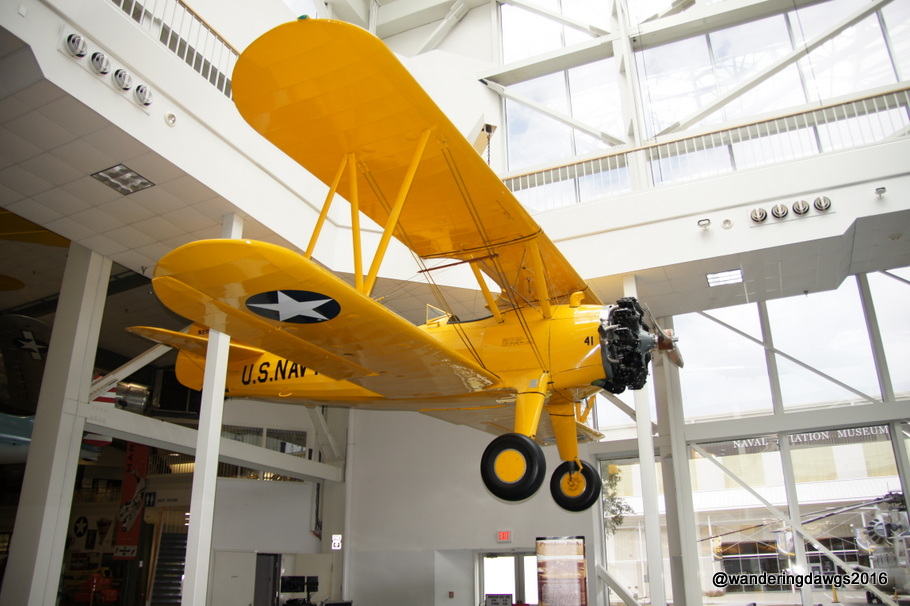
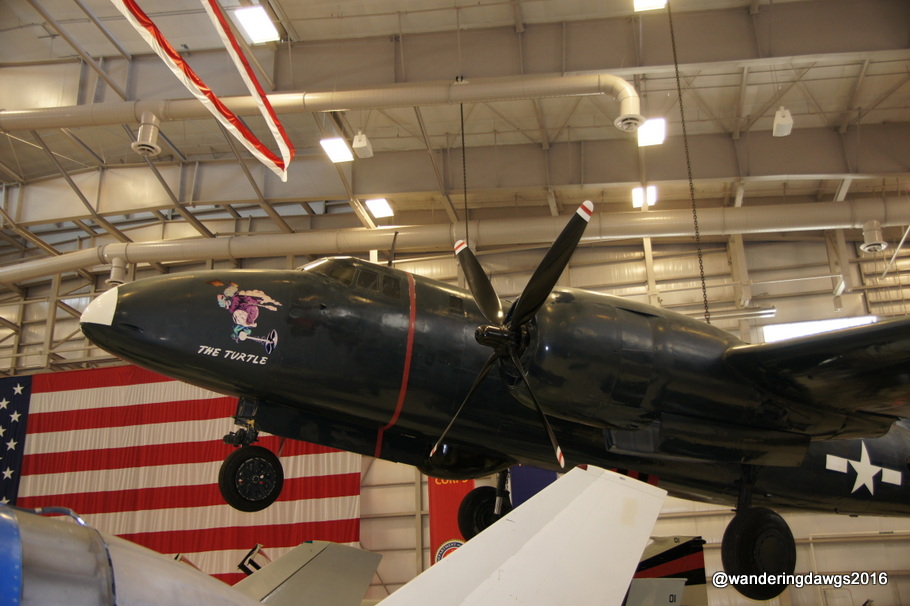
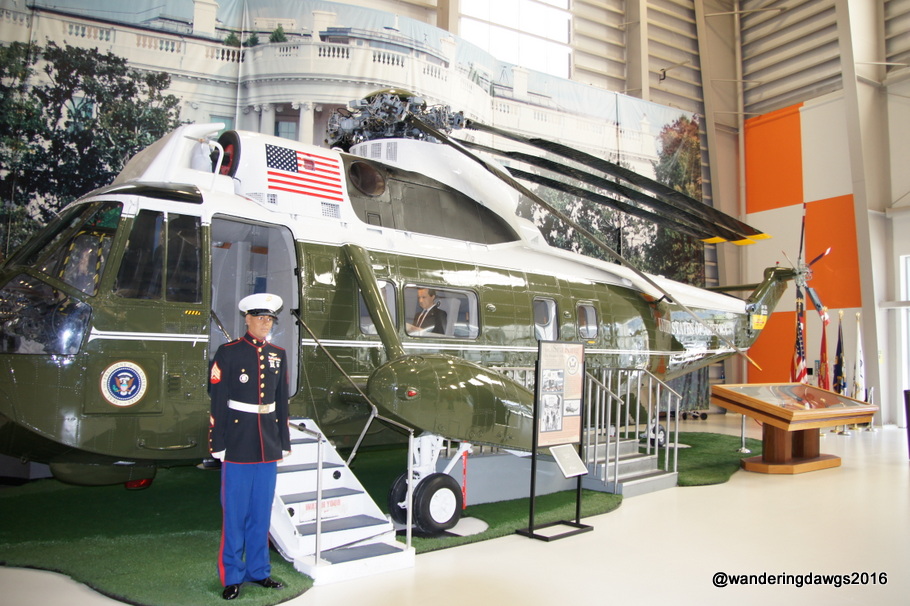
The National Naval Aviation Museum is one of the world’s largest aviation museums and has been rated by TripAdvisor as the number 12 museum in the United States. The history of U.S. Naval aviation comes alive with more than150 beautifully restored aircraft hanging from the ceiling and on display on the floor for close inspection. In addition to the aircraft there are exhibits including an Apollo Space exhibit, models of air craft carriers, flight simulators, an IMAX theater, and the Blue Angel 4D experience (great fun!).
National Naval Aviation MuseumOld U. S. Naval BiplaneOld U. S. Naval BiplaneFlying Tiger from WWIIThe TurtleHelicopter from the U. S. Coast GuardMarine 1 used by President NixonBlue Angels in the atriumUp close with one of the Blue AngelsApollo Lunar ModuleNASA Capsule
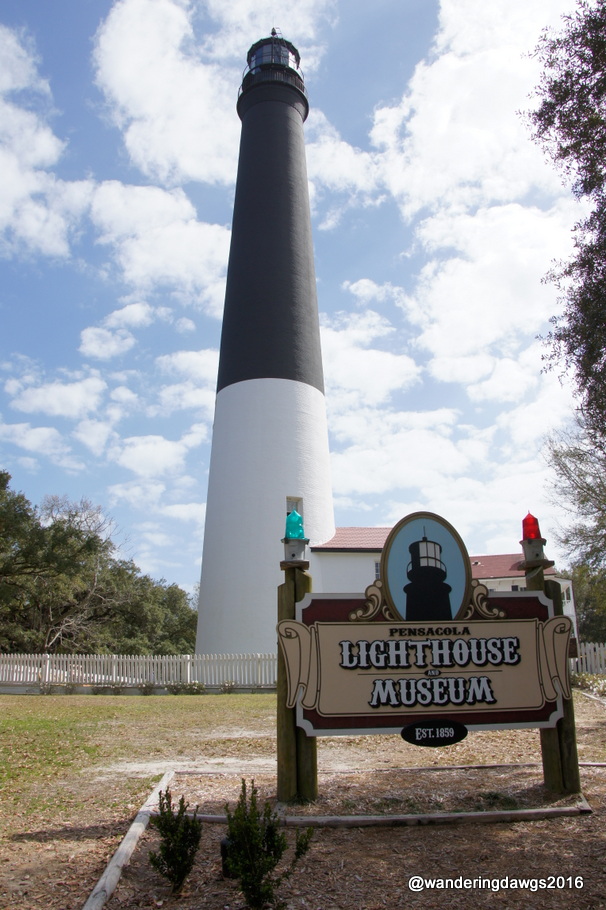
Pensacola Lighthouse
Pensacola Lighthouse
Across the road from the museum is the Pensacola Lighthouse. The lighthouse is still in use as an aid to navigation. We had planned on climbing the 177 steps to the top but the tower was closed for renovations the day we visited. We wandered around the grounds and visited the keeper’s cottage before walking across a boardwalk to the beach for a look back at the lighthouse.
We spent some time exploring Fort Pickens and some of the batteries that are located within the National Seashore.
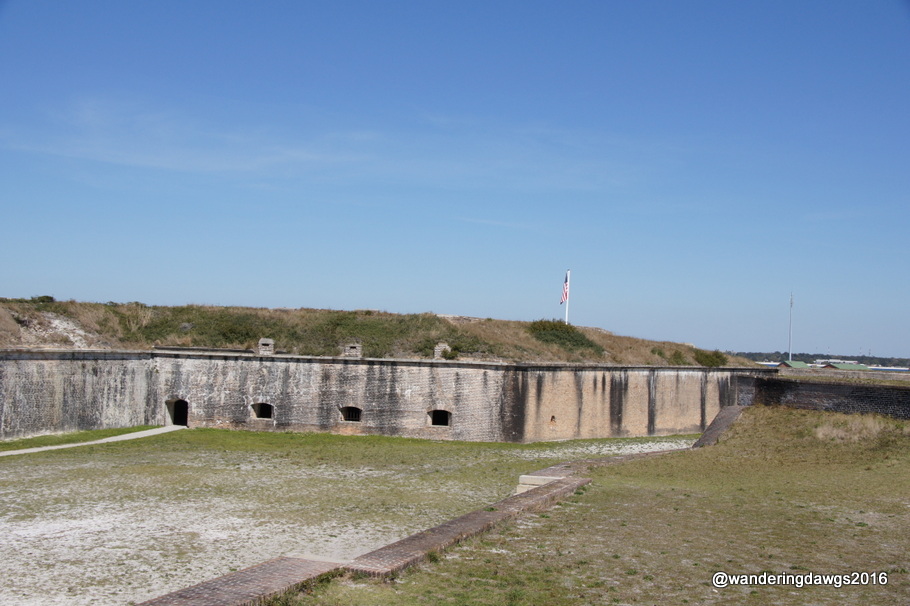
Fort Pickens was the largest of four forts built in the 1800’s by the United States Government to protect Pensacola Bay and the Naval Yard. Although it never had to be used against foreign enemies, it was used by the Union Army during the Civil War to protect against the Confederates. Ranger led tours are available but we chose to go on a self-guided tour of the huge fort.
Fort PickensFort PickensEntering Fort PickensFort Pickens
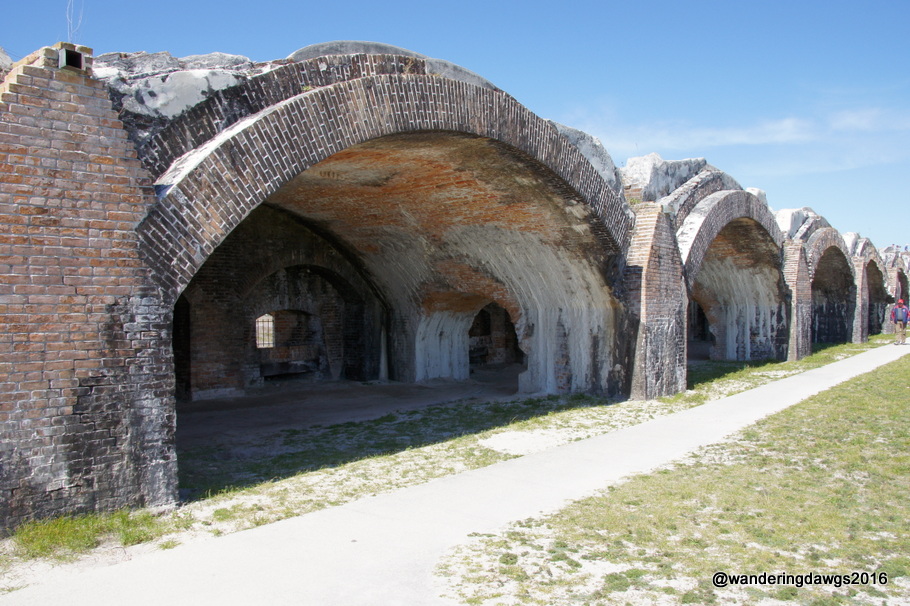
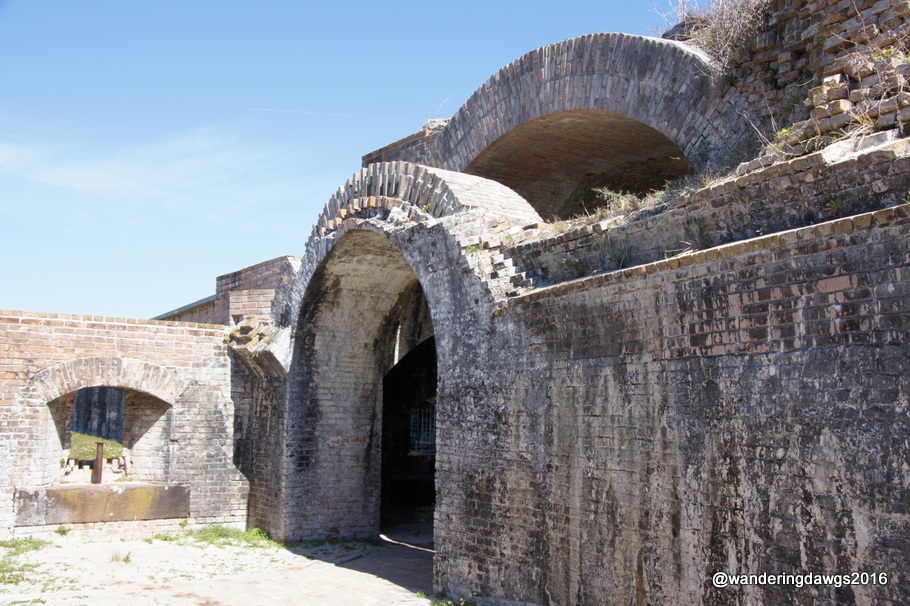
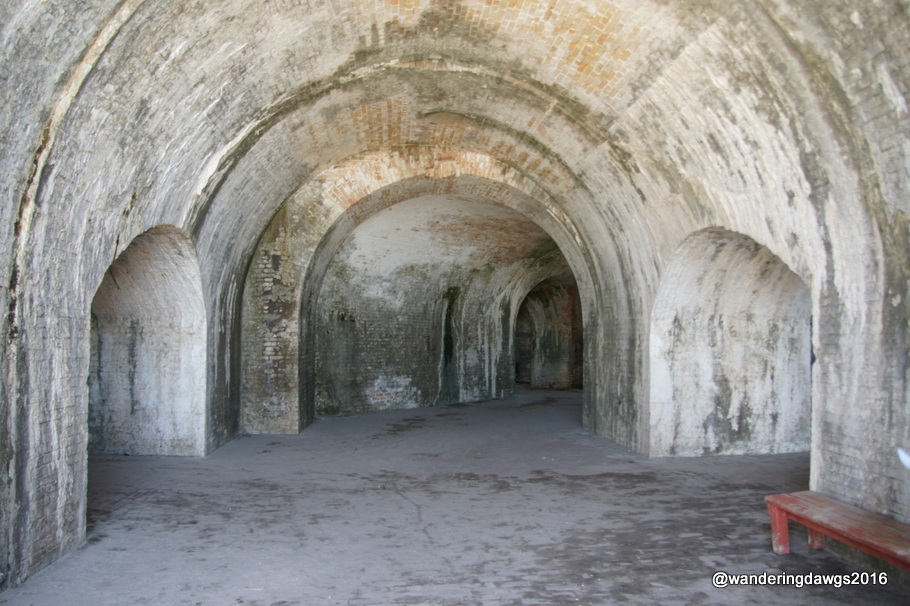
Much of the fort is built using arches.
Arches at Fort PickensArches at Fort PickensArches at Fort PickensDouble ArchAnother view of the arches at Fort Pickens
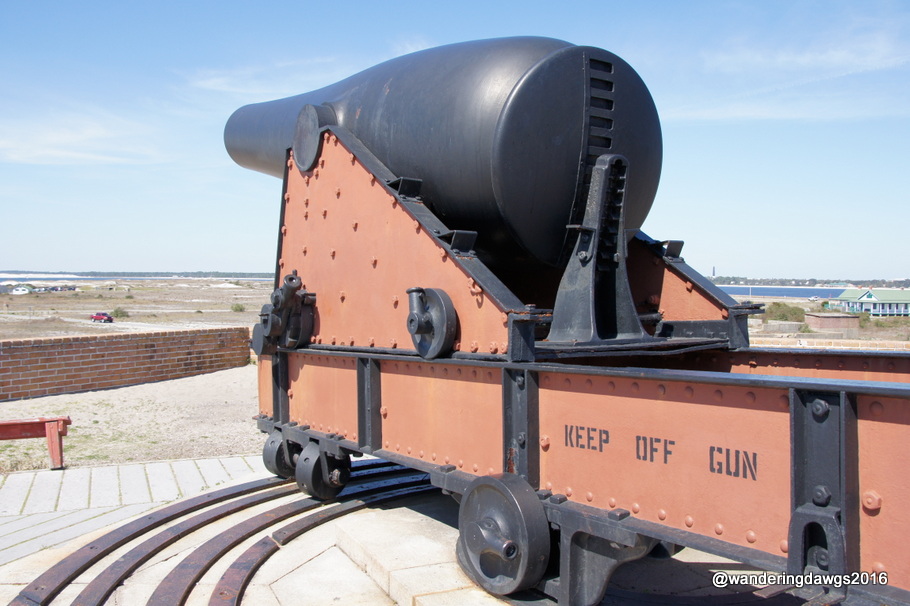
Civil War era cannons and a mortar are also on display at the fort.
One of the cannons atop Fort Pickens
The American Flag waves behind a mortar
With clear views of Pensacola Bay and the Gulf of Mexico, Fort Pickens was in a great location to protect the area.
A great view of the Pensacola Lighthouse from the top of the fort
A great view of the Gulf of Mexico from the top of the fort
There are several batteries located throughout the area. Some were built in the late 1800’s and early 1900’s.
Endicott Batteries from the 1890’s
We explored Battery Worth where huge gun pits held twelve inch mortars that could launch 700 pound projectiles 7 to 9 miles away. After World War I all but four of the mortars were scrapped. In 1942 the battery became part of the Army-Navy Harbor Defense Command Post for the Pensacola area during World War II.
Battery WorthLooking down from Battery WorthOn top of Battery Worth
There were big guns lining the shoreline ready to protect against enemy ships.
Big Guns Along the Shoreline
Aimed over the Gulf of Mexico
One of the Batteries
This gun would pop up above the wall and come back down after firing

















 Wandering Dawgs