“The sea, once it casts its spell, holds one in its net of wonder forever.” –Jacques Cousteau
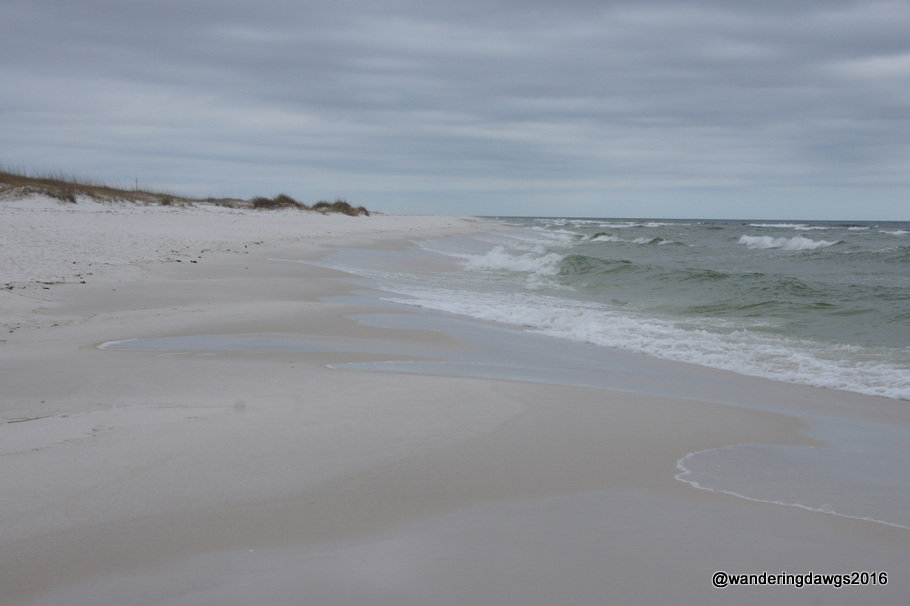
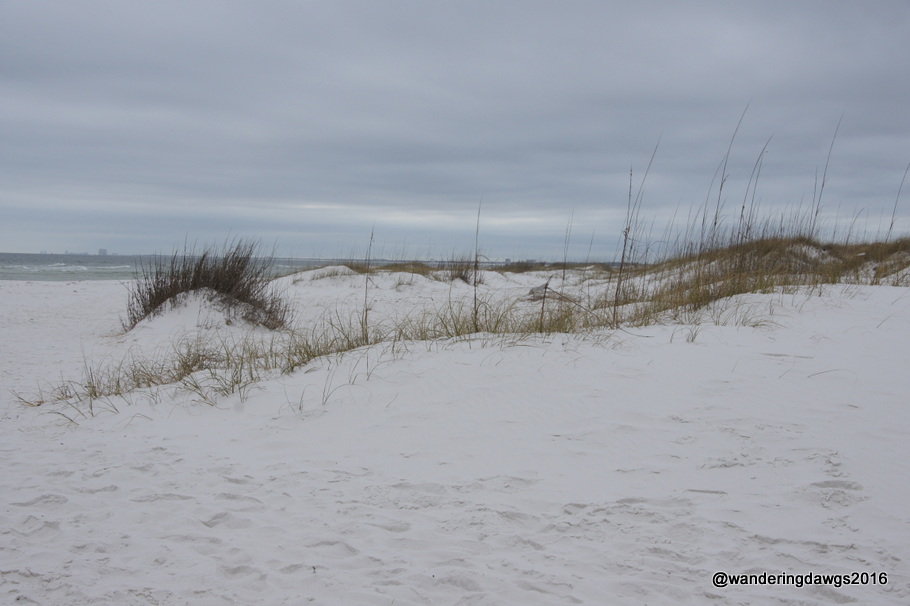
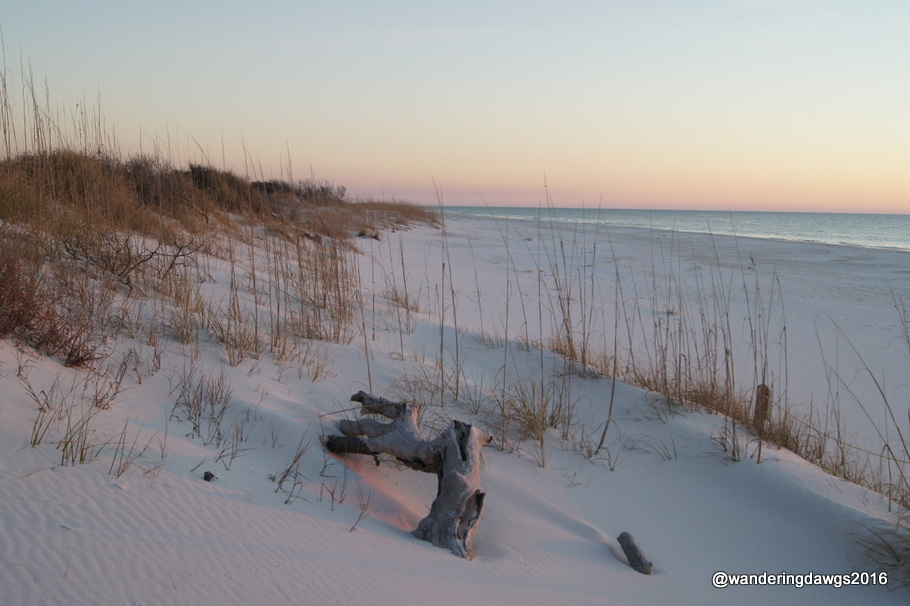
A beach with perfect sugar white sand only a five minute walk from our campsite. I think I am in heaven!
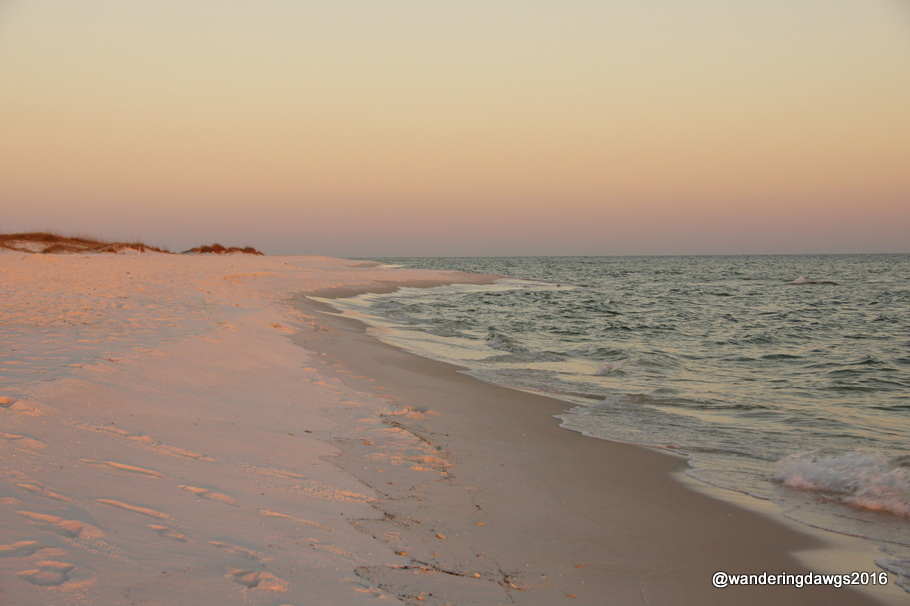
Gulf Islands National Seashore at Ft. PickensThe beach at sunsetGulf Islands National Seashore
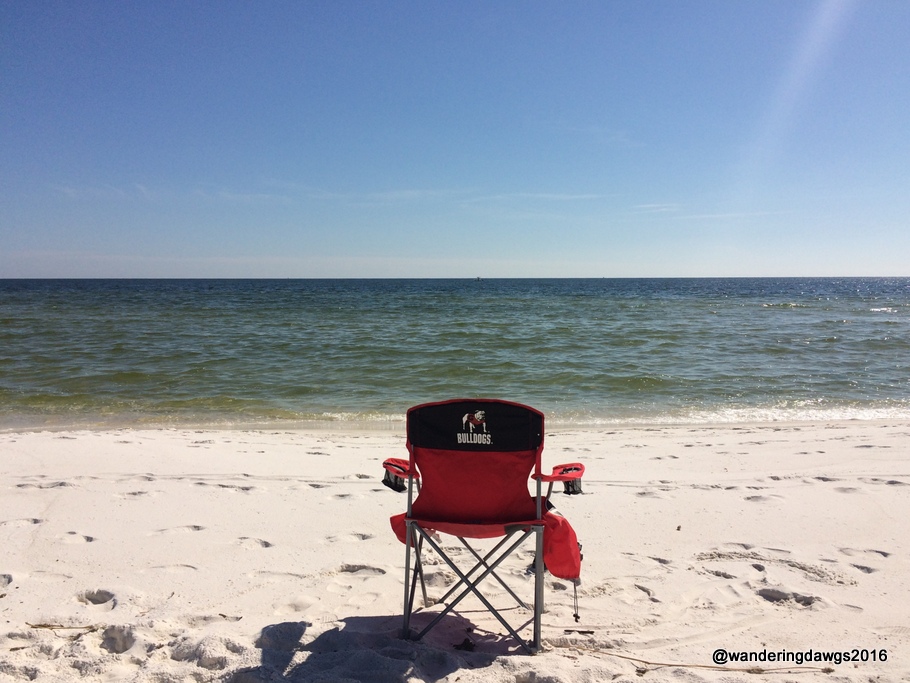
Our home for a week is Ft. Pickens Campground in Gulf Islands National Seashore on Santa Rosa Island. I’ve been doing a lot of walking on the beach and beach chair sitting.
Site A1 Ft. PickensReady for Beach Chair Sitting on the Gulf of Mexico
We’ve taken a couple of hikes on the half-mile Blackbird Marsh Nature Trail near the campground.
Along the Blackbird Marsh Nature Trail
It is nest building time for Ospreys and several nests can be seen in the area. Ospreys are frequently seen soaring over the campground and a few of the nests can be viewed close up from the nature trail.
Pair of Ospreys on the nature trailPair of Ospreys on the nature trailOsprey
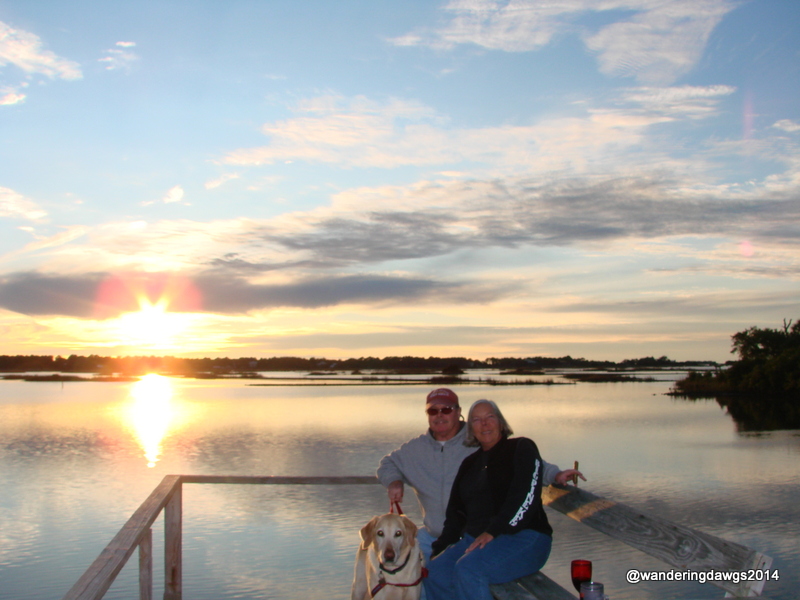
And the sunsets over the Gulf of Mexico are breathtaking!
Sunset over the Gulf of Mexico
More of the Fort Pickens area coming up in my next post.
Snowbird – one who travels to warm climes for the winter (Merriam-Webster Dictionary)
No, we’re not snowbirding this year – yet. Doctor’s appointments and household chores caused us to get a late start this year. Instead of hitting Florida during the peak snowbird season we will be arriving in Florida in early March just before spring break.
While we have been home, I’ve been thinking about all the places in Florida we have enjoyed. Here are just a few highlights from our snowbirding adventures from past years.
We had white sandy beaches almost completely to ourselves at St. Joseph Peninsula State Park.
The beach at sunset at St. Joseph Peninsula State Park
Watching the sunset was a perfect way to end the day at Cedar Key.
Cedar Key Sunset
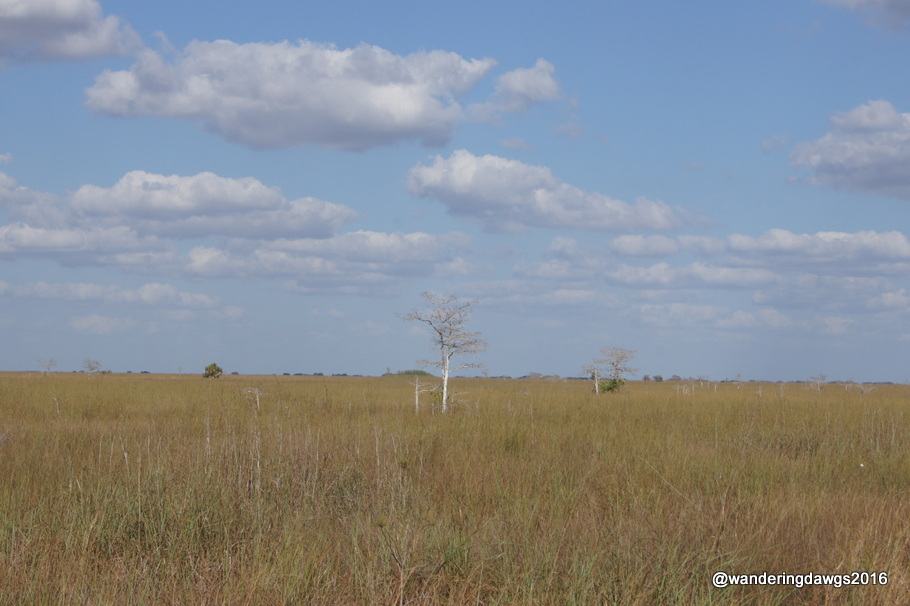
We loved Everglades National Park and camped at the Flamingo Campground twice.
Pa-Hay-Otee Overlook in Everglades National Park
There was a lot of bird watching in Cedar Key.
White Pelicans and Cormorants at Cedar Key
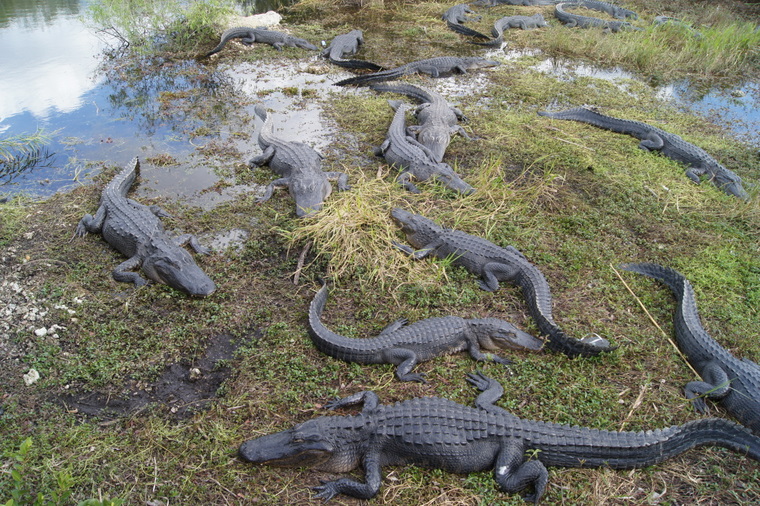
And lots of alligators in Everglades National Park.
Alligators along the Anhinga Trial, Everglades National Park 2012
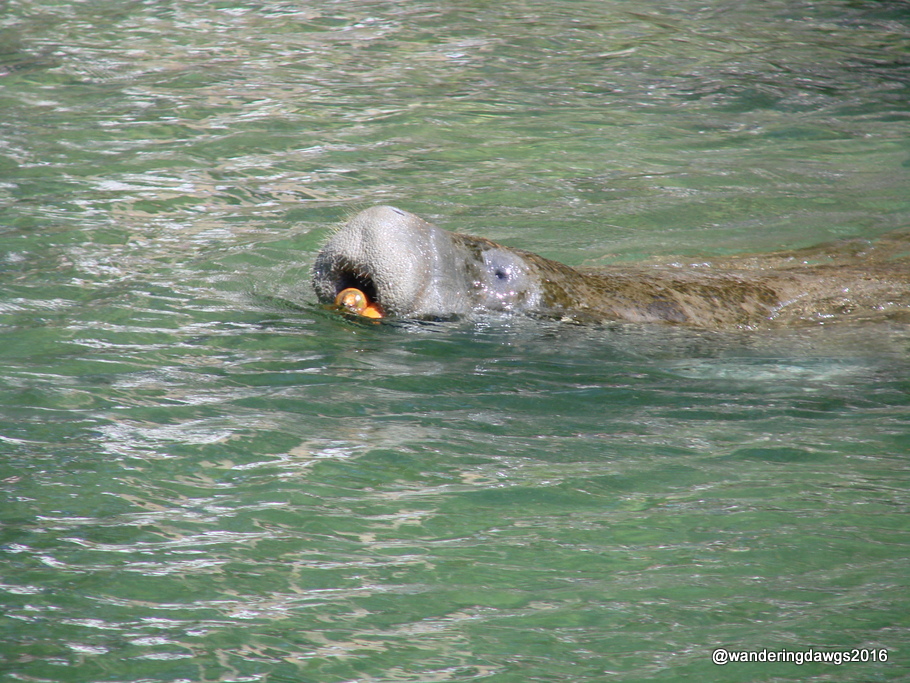
It was fun seeing manatees at Homossassa Springs Wildlife State Park.
Manatee in Homossassa Springs
This Gopher Tortoise walked across our campsite at Silver River State Park (now Silver Springs State Park).
Gopher Tortoise at our campsite Silver River State Park
We rode the Fort Gate Ferry across the St. John’s River near Salt Springs Recreation Area.
Waiting to cross the St. John’s River on the Fort Gates Ferry
And of course we went for boat rides.
Went for a boat ride in the Salt Springs Run
We ate our fill of stone crab claws and other fresh seafood.
Delicious Stone Crab Claws in Everglades City, Florida
Soon we will be hitching up the fifth wheel to do a little late snowbirding this year. We are going to a few new places and returning to a couple of favorites. Stay tuned to see where we wander next!
After a great stay in Virginia we headed south to the Smokies in North Carolina in search of bugling elk. I’ve seen elk in many different places but never thought I would be able to experience the sound of a bull elk bugling without traveling all the way to Yellowstone or the Rocky Mountains. I was wrong. There are elk in the Great Smoky Mountains.
Great Smoky Mountains National Park is the most visited national park in America. We’ve traveled there several times over the years but I had never heard about the elk in Cataloochee Valley until my friend Holly posted last year about the Bugling Elk in Cataloochee Great Smoky Mountains NP.
Elk were once abundant in the southern Appalachian Mountains. Over hunting and habitat loss caused the elk to be eliminated from North Carolina many years ago.
In February, 2001, the National Park Service began an experimental reintroduction of elk into Cataloochee Valley by releasing 25 elk from the Land Between the Lakes National Recreation Area on the Tennessee-Kentucky border. Another 27 elk from Canada were released in 2002.
Getting to Cataloochee Valley
Cataloochee Valley is located on the eastern side of the Great Smoky Mountain National Park. The nearest towns are Maggie Valley and Waynesville.
Getting to the valley involves an 11 mile drive on Cove Creek Road. This is a road that is not for the faint of heart. The turnoff to Cove Creek Road is only about a mile from Interstate 40 and the first part of the drive is on a narrow, curved paved road that passes by homes tucked away on the side of the mountain. After a few miles, the pavement is replaced by gravel. All along the way are few guardrails, many switchbacks, blind curves, and hairpin turns. As we continued on the road I felt like we were millions of miles away from civilization.
We stopped at an national park overlook for a spectacular view before continuing into the valley.
Hairpin Turn Cove Creek Road
Blind Curve Cove Creek Road
Cataloochee Valley Overlook Great Smoky Mountains
Cataloochee Valley Overlook Great Smoky Mountains
Cows on first day
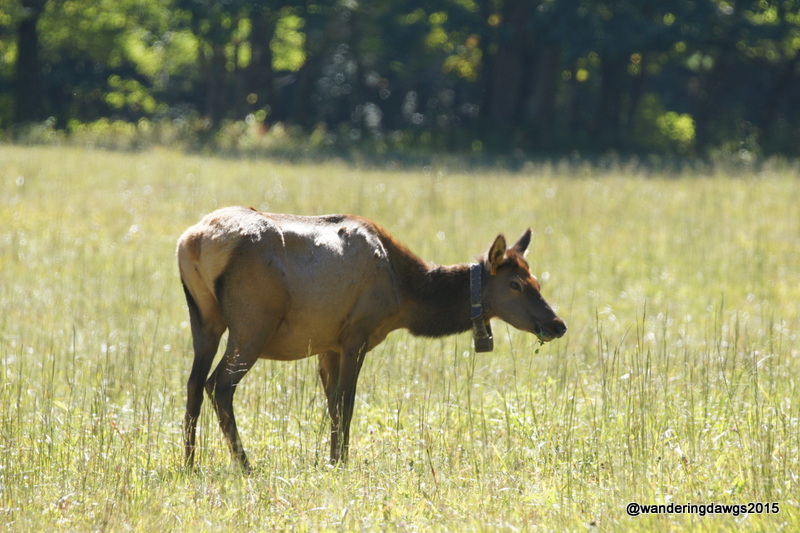
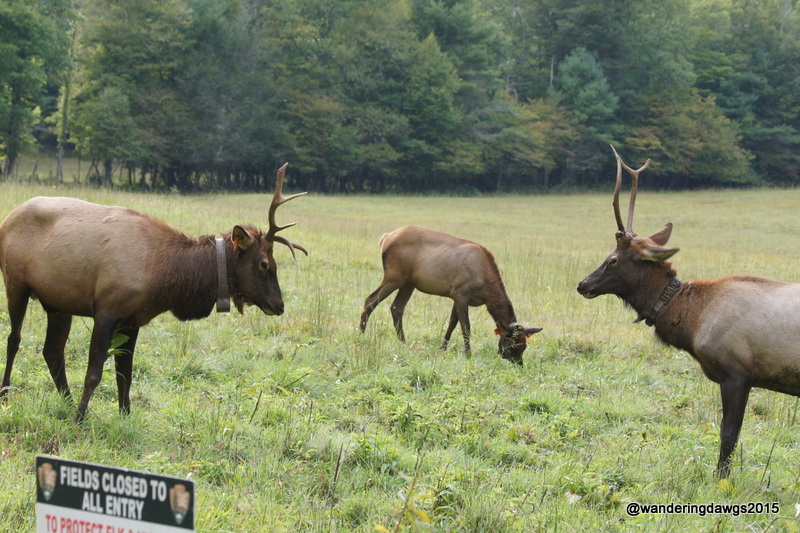
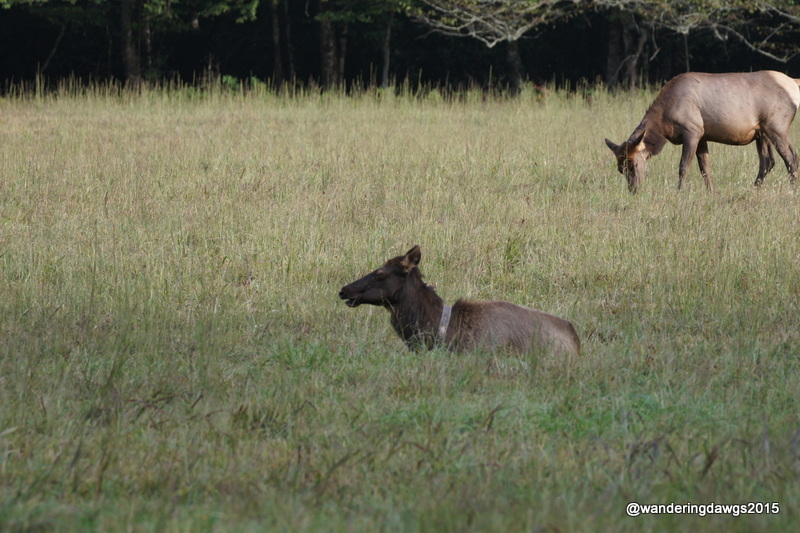
We made two trips into Cataloochee Valley. On our first visit we were thrilled to see elk by the first field. A young elk was grazing in the field with a large cow in the woods across the road. We stopped to watch a large bull elk at the far end of another field and had another bull cross the road in front of the truck. Alas, I wasn’t able to get pictures of them.
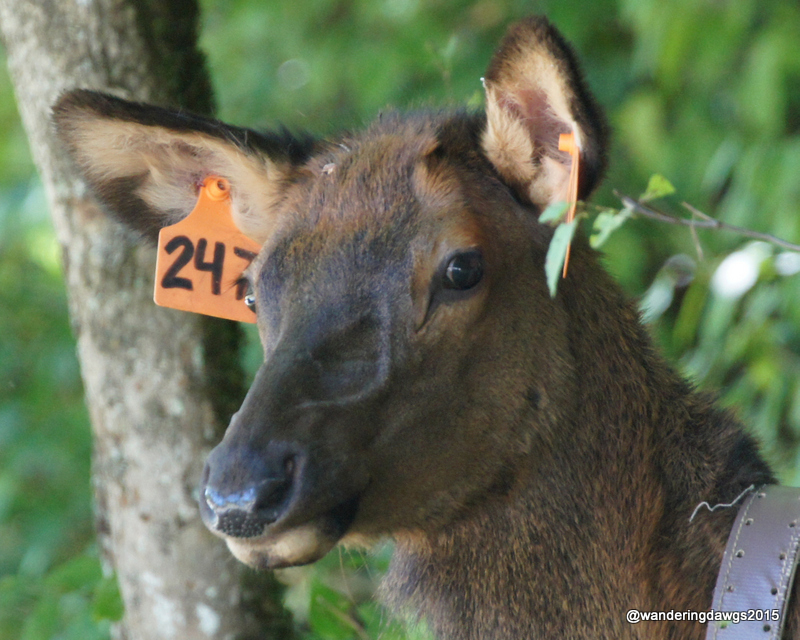
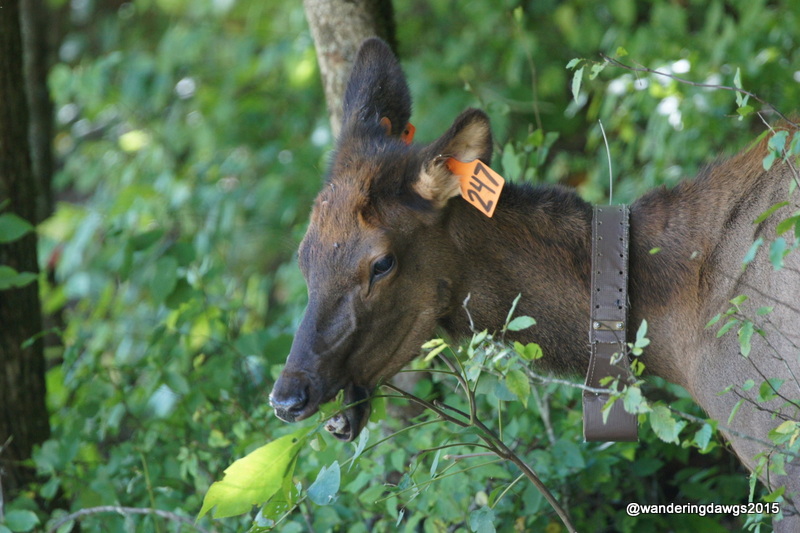
Cow Elk in Cataloochee ValleyCow Elk in Cataloochee ValleyYoung elk in Cataloochee Valley
Bugling Bulls
The breeding season, also known as the rutting season, is in the fall. During this time the bull elk make their bugling calls to attract females and challenge other bulls. We ventured down Cove Creek Road again a second day in hopes of seeing and hearing some bugling bulls.
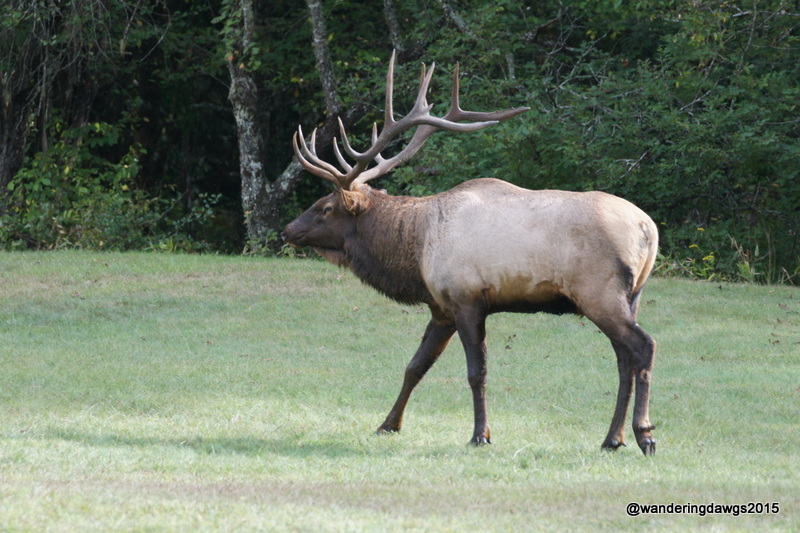
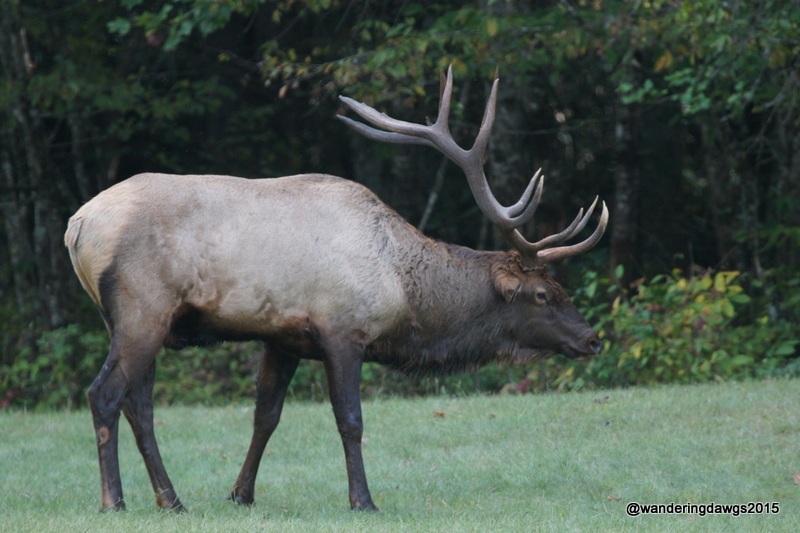
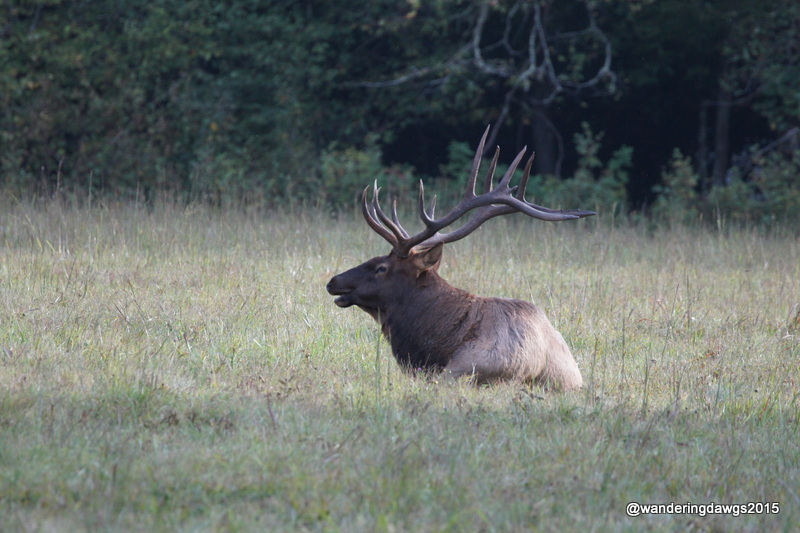
The best time to view elk is late in the afternoon before sunset so we arrived later in the afternoon than we had the first day. We weren’t disappointed. There were several elk in the first field we came to and as we continued down the road a lone bull stood in a small field. As we pulled off the road and rolled down the windows we watched him raise is head and we heard him make his bugle sound. We could hear more bugliing far off in the distance.
Bull Elk in Cataloochee ValleyBull Elk in Cataloochee Valley
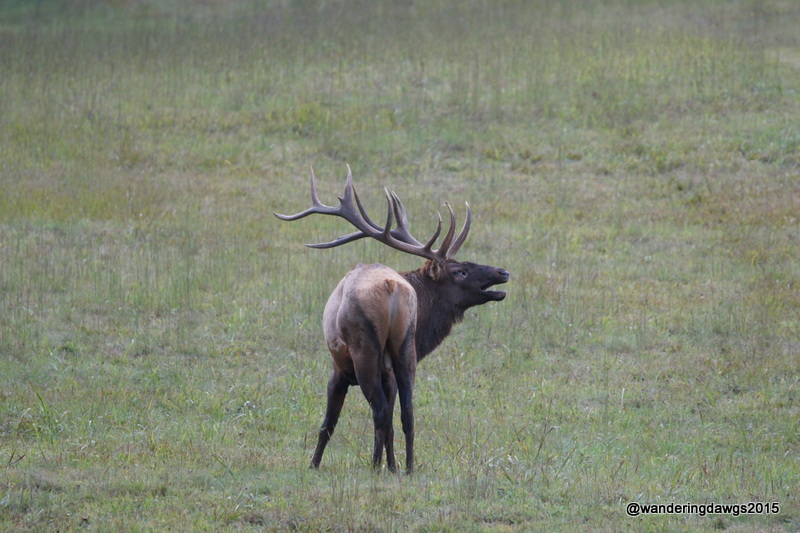
Later on we came across another bugling bull. We think he was trying to attract a female we saw in the woods. She wasn’t paying any attention to him.
Bull Elk Bugling in Cataloochee ValleyBull Elk in Cataloochee Valley
Young elk
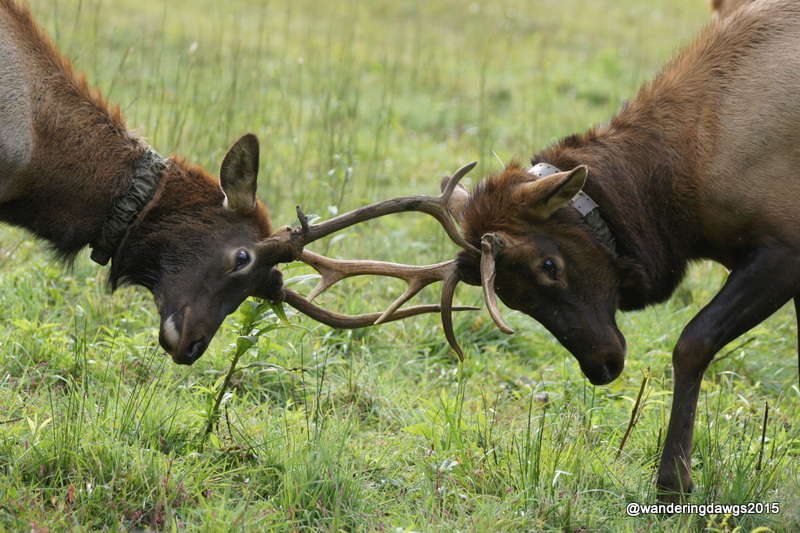
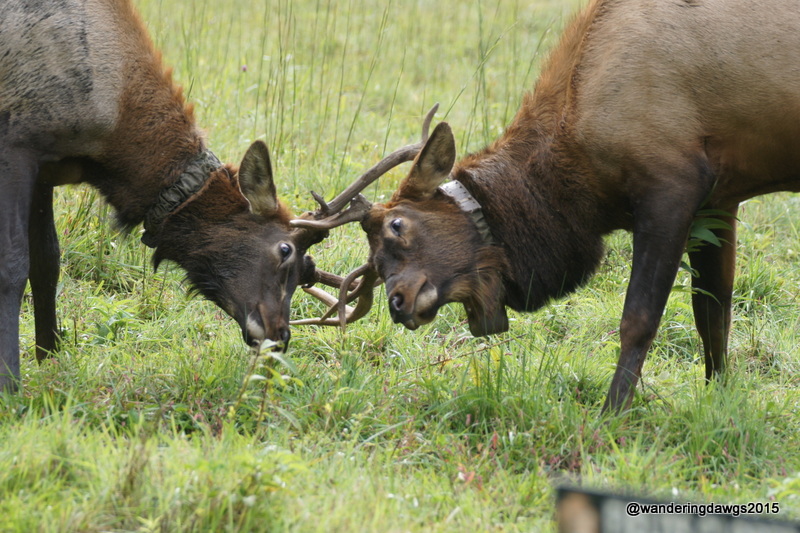
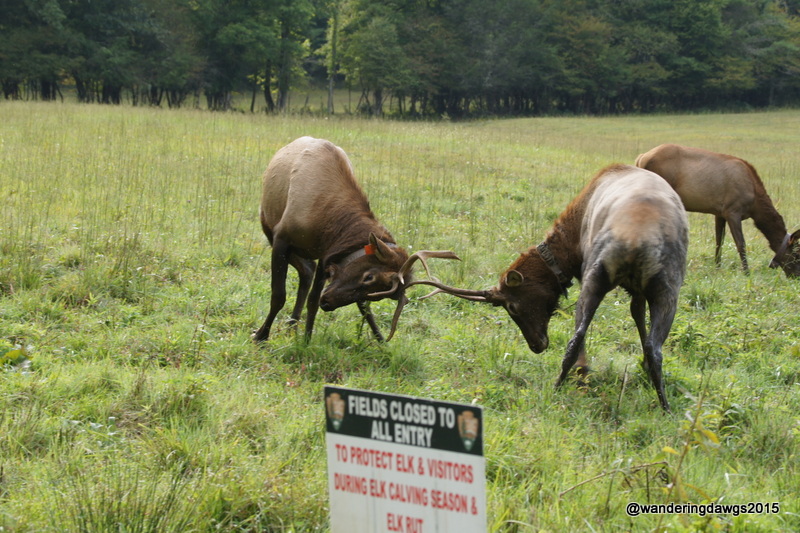
We didn’t witness any large bulls sparring but we did enjoy watching two young elk locking antlers right beside the truck. After a few minutes, they went back to grazing.
Two young male elk lock antlers in Cataloochee ValleyTwo young male elk lock antlers in Cataloochee ValleyTwo young male elk lock antlers in Cataloochee ValleyFace OffElk in Cataloochee Valley
History of Cataloochee
The first people to visit Cataloochee Valley were Native Americans who fished and hunted but did not settle there permanently. In the early 1800’s white settlers moved into the valley.
By the early 1900’s Cataloochee was the largest settlement in the Smokies with almost 200 buildings. Today a few of the remaining buildings can be seen as you drive through the valley and others are accessible by one of the many trails.
By 1938, most of the families had moved out of the valley after selling their land to the government for the creation of the Great Smoky Mountains National Park.
Caldwell Place in Cataloochee Valley
Old Barn in Cataloochee Valley
Start of one of the trails in Cataloochee Valley
Bridge at the beginning of one of the trails in Cataloochee Valley
We camped at Creekwood Farm RV Park in Waynesville, NC. The campground is less than a mile from the turnoff to Cove Creek Road.












 Wandering Dawgs