Have a happy and safe 4th of July!

Every Day is a Gift!
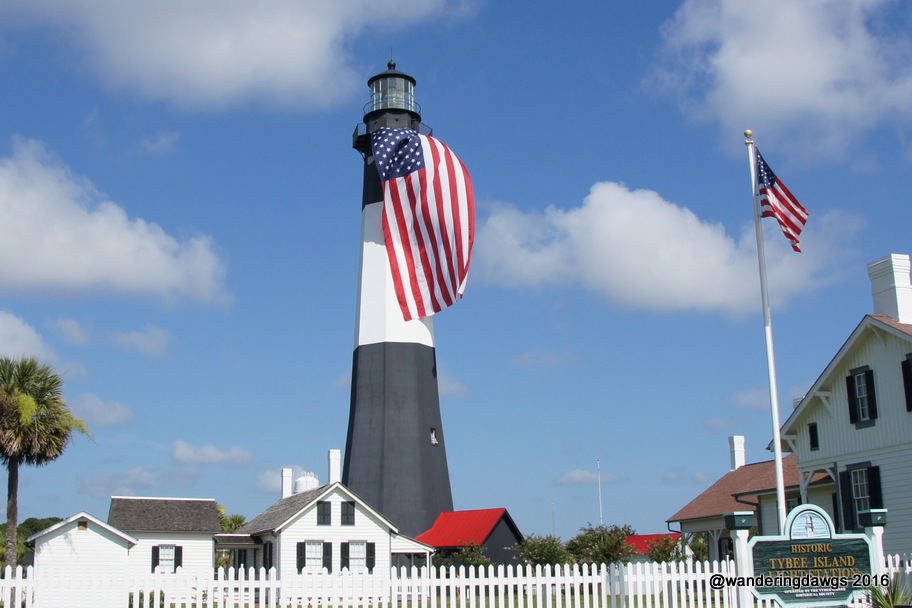
Have a happy and safe 4th of July!
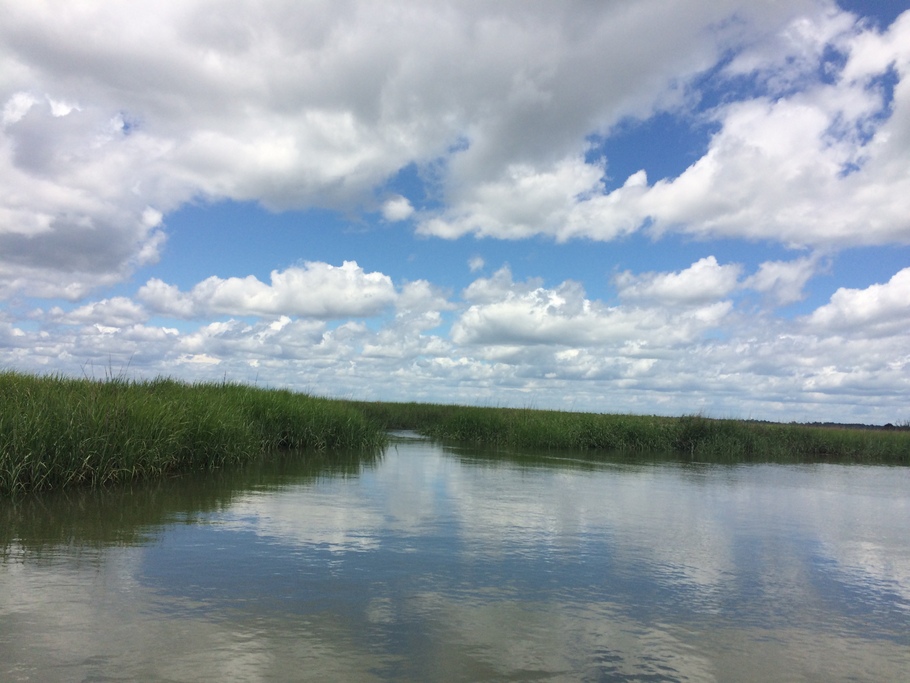
One of the greatest joys as a grandparent is seeing our grand children’s excitement as they experience new adventures.
Our daughter is visiting us this week with her two children. At 12 and 10, they are our two oldest grandchildren. They live 400 miles away, surrounded by the Appalachian mountains, so coming to visit Nana and Papa near the beach is always an adventure for them.

On Memorial Day, we beached our boat on a deserted barrier island after a boat ride through rivers and narrow winding creeks surrounded by salt marsh. The adventure brought back fond memories for our daughter and made new memories for the grandkids. It is a ride we took on many weekends when our daughter was growing up and we are so happy we could share the experience with her children.
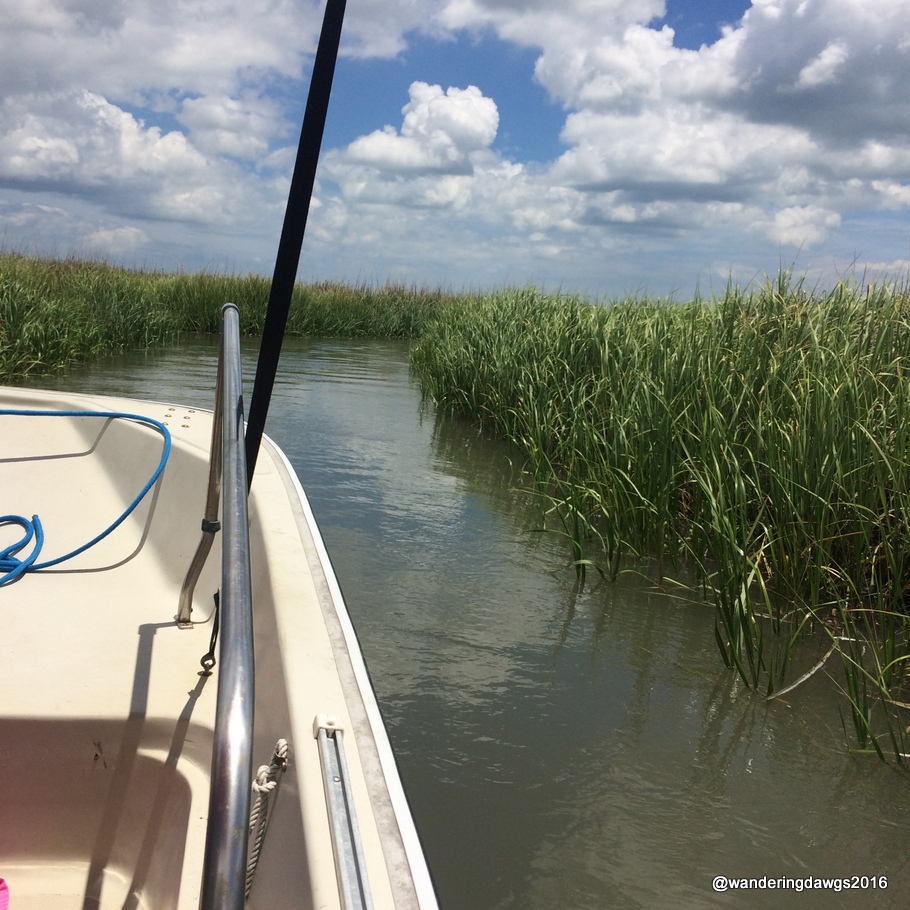

This is my contribution to the WordPress Weekly Photo Challenge: Adventure

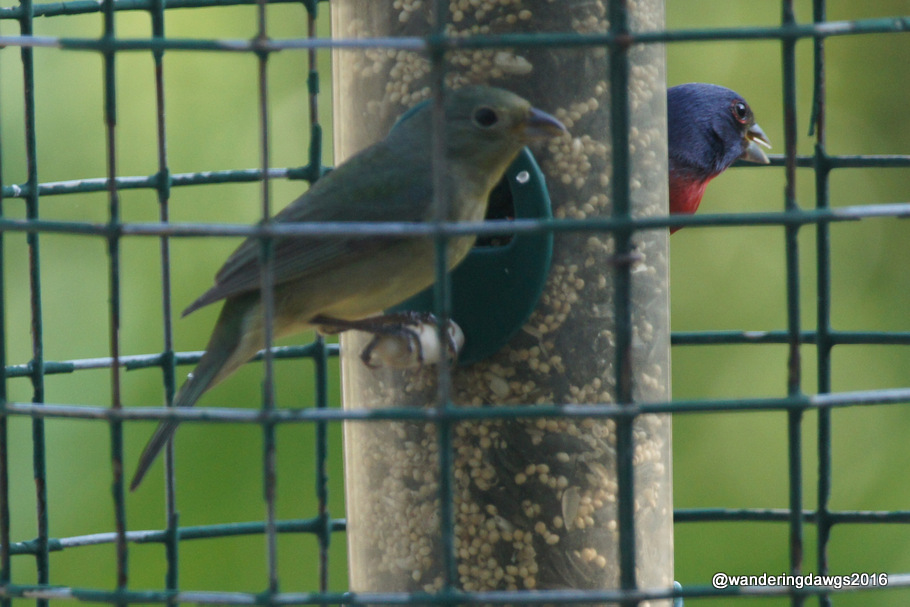
We’ve been watching painted buntings come to our feeder in the back yard for the last couple of weeks. For several days every time I set up my camera to capture these beautiful birds I scared them away. They are very skittish and fly off when they sense the slightest movement.
I never gave up trying and my patience finally paid off when I was able to get a few shots of a pair at the feeder.


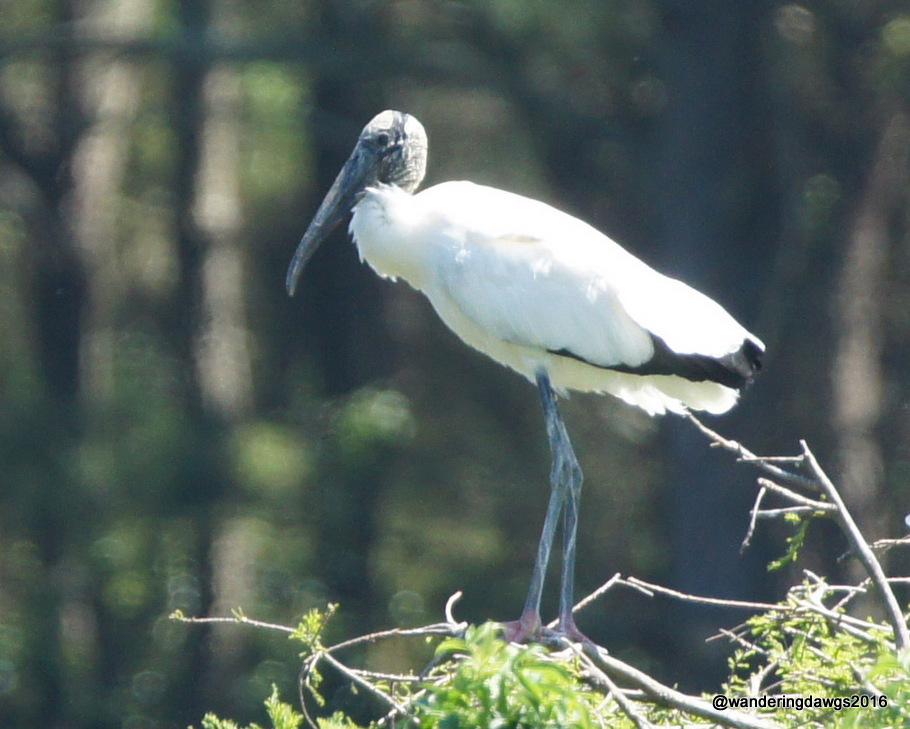
Wood storks, egrets, and herons build their nests every spring in the trees of Woody Pond at the Harris Neck National Wildlife Refuge. Located in Georgia just a few miles from I 95 in between Savannah and Brunswick, it is a great day trip from our home.

Wood storks were placed on the Endangered Species list in 1984. After almost 30 years of conservation efforts to increase the wood stork population, their status was upgraded to Threatened in June, 2014.
A path along the dike beside Woody Pond provides a great place to view the birds. The wood storks and egrets shared the trees.


Many of the wood storks were working on their nests. None of their eggs had hatched yet.
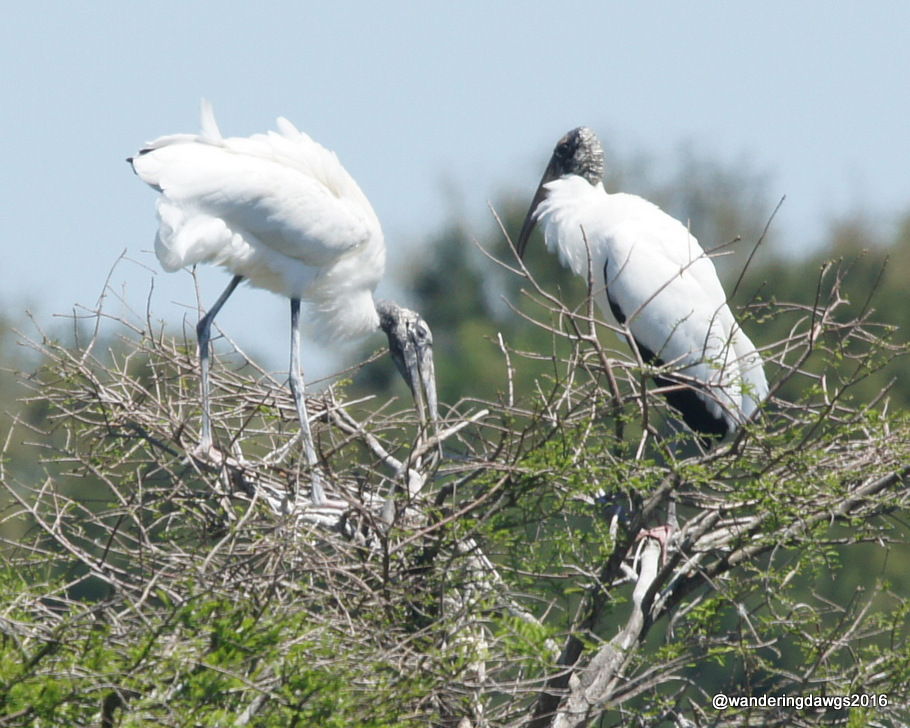

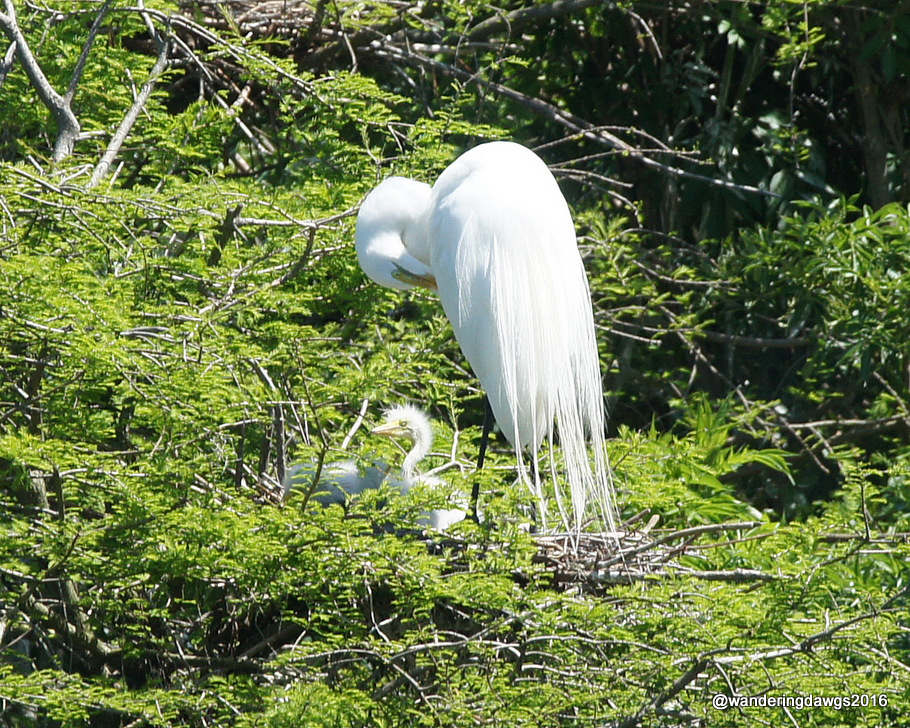
As I took photos, Henry used the spotting scope and pointed out a mother egret with chicks that I would have never seen. The nests were a long way from where we were so the picture isn’t the best but it gives you an idea of the size of the baby egret.
In the shallow water at the edge of the pond a tri-colored heron entertained us as he searched for food.


After leaving the refuge we stopped at the Smallest Church in America to take a look and do a little geocaching.

An arsonist burned this church in November, 2015. The church is being rebuilt through the efforts of volunteers and the work is almost complete.


After finding the geocache hidden near the church we headed for home.

We enjoyed walking around the marina and going on the nature trail at Stephen C. Foster State Park in the Okefenokee National Wildlife Refuge but we wanted to be in a boat to really experience the swamp. On one of our visits a few years ago we rented a canoe to paddle into the swamp and another time we rented a boat to venture even farther into the swamp. On our most recent trip in early spring we decided to take a ranger guided boat tour.
As we glided through the man made canal our guide pointed out the baby alligators and their mother Sophie who was keeping a close watch on her babies. Her mate Zeke was no where to be found.
As the boat exited the canal we entered the big water of Billy’s Lake where we were about six miles from the headwaters of the Suwanee River. The water here gets up to six feet deep, much deeper than the average depth of two feet.
It was a beautiful day to be on the water and we saw a few other people out on the water.
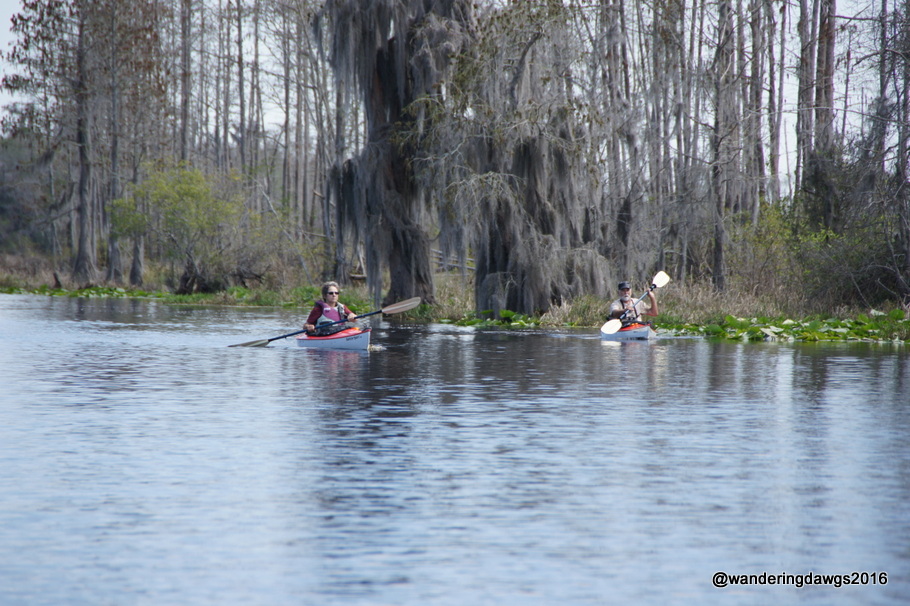
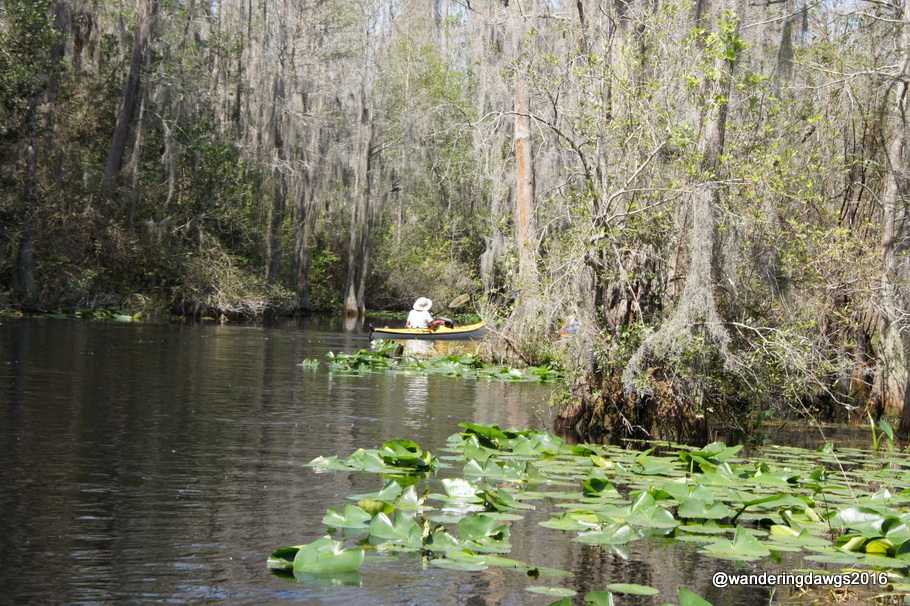
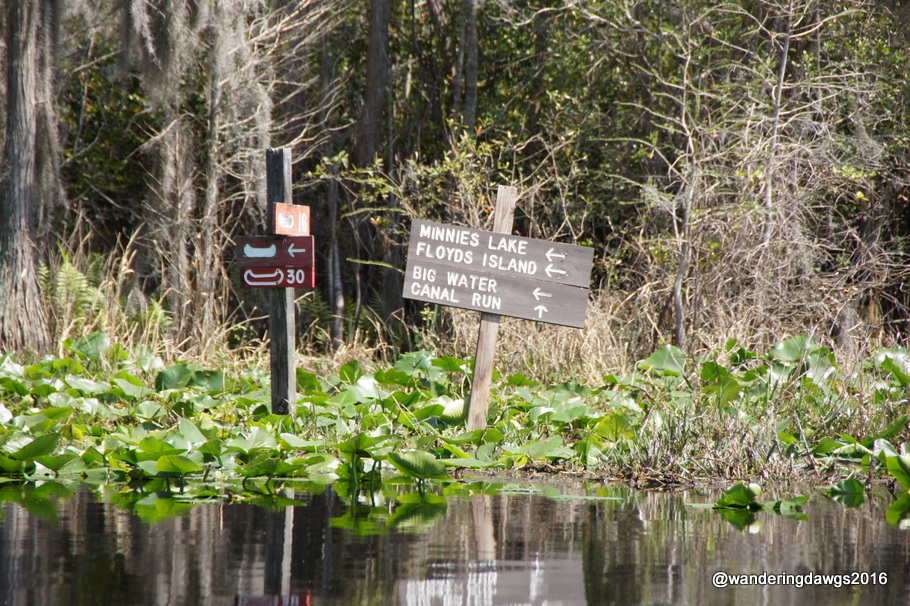
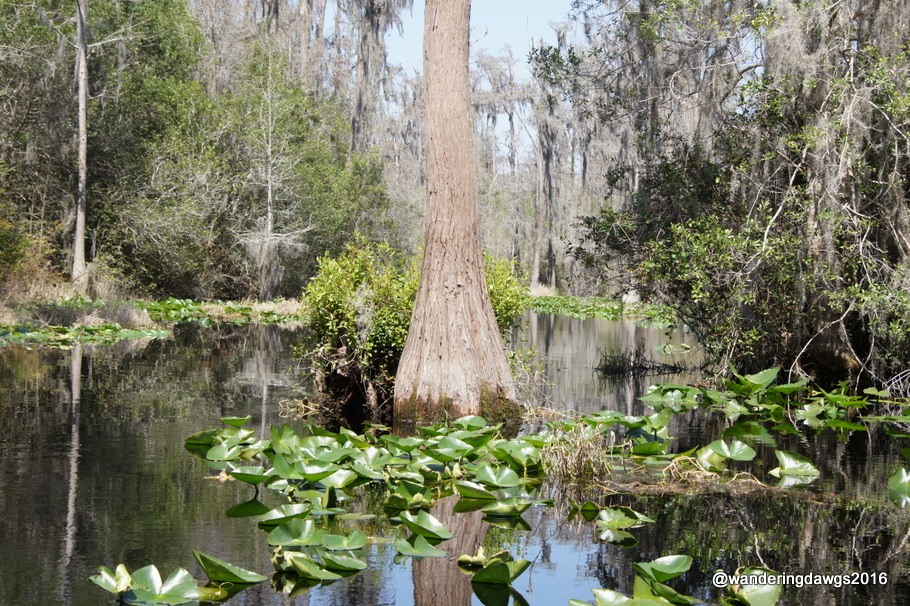
Our guide took us through the narrow waterway toward Minnie’s Lake. In some places the water was barely wide enough for the 24 foot Carolina Skiff. As we ventured farther into the swamp it was as if we had stepped back in time to a prehistoric age. We were miles from civilization in this incredibly wild place.
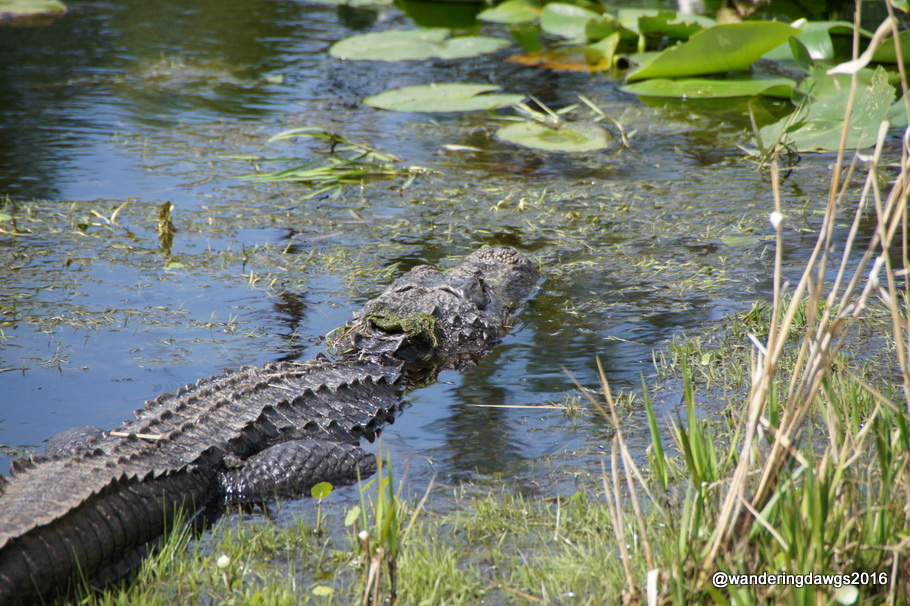
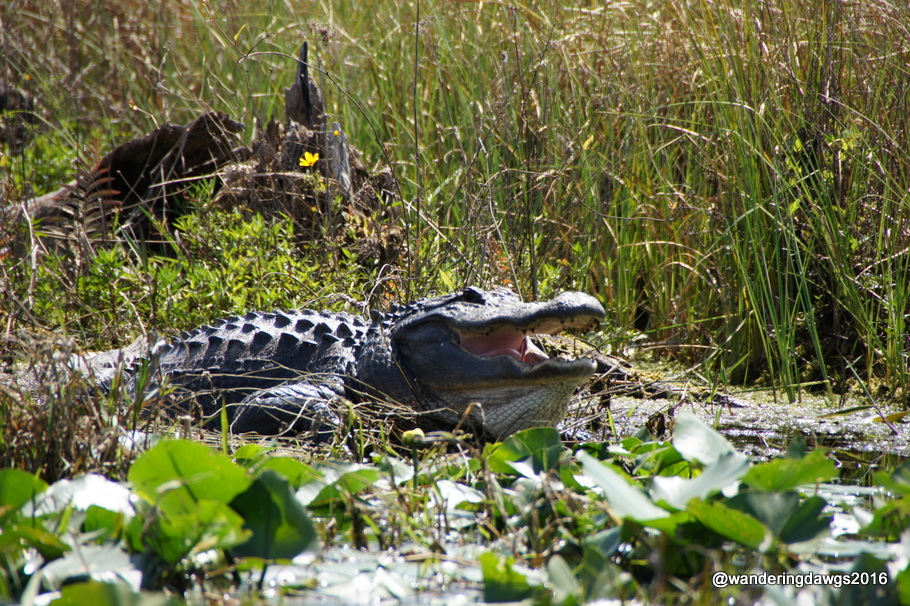
It is estimated that the alligator population in the swamp is about 20,000. We saw quite a few as we went along. It was mating season and I wondered if this gator was trying to attract a mate.
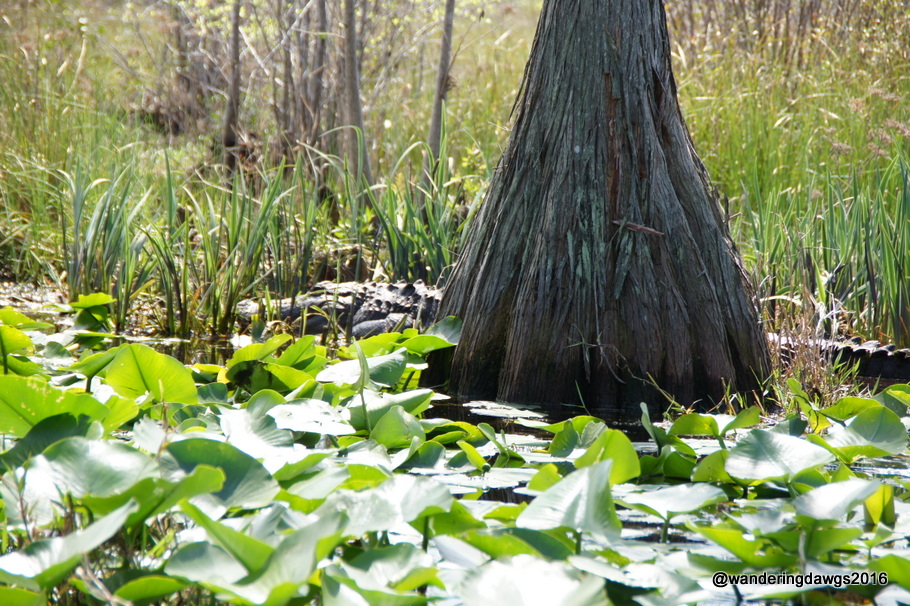
Another gator was behind a huge cypress tree.
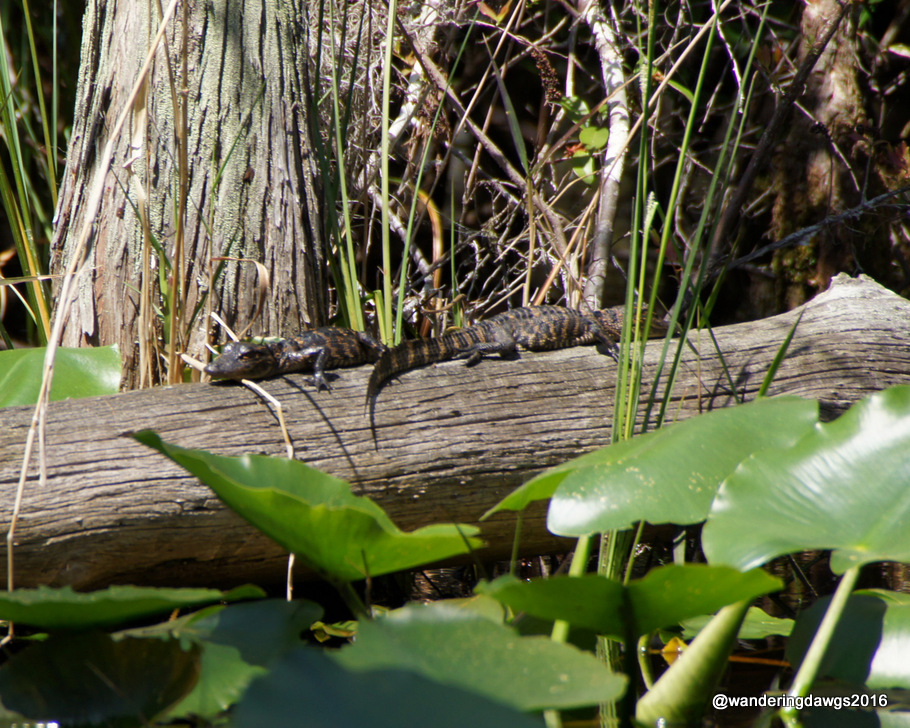
And there were young ones sunning on a log.
There are many species of wildlife besides alligators. While we didn’t see any raccoons, opossums, turtles, or bears, we did see a few birds out searching for food.
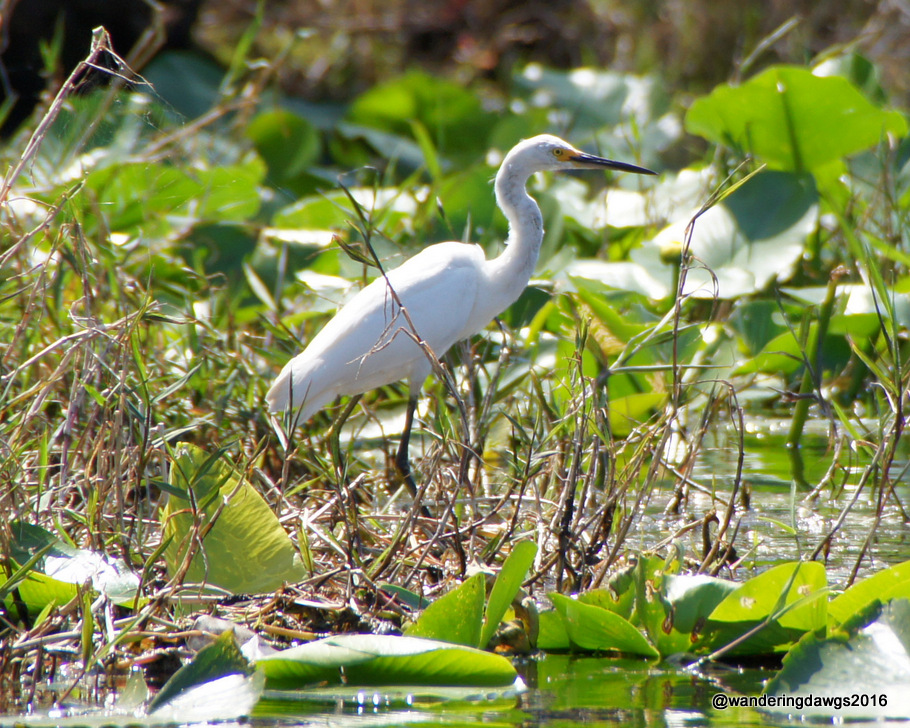
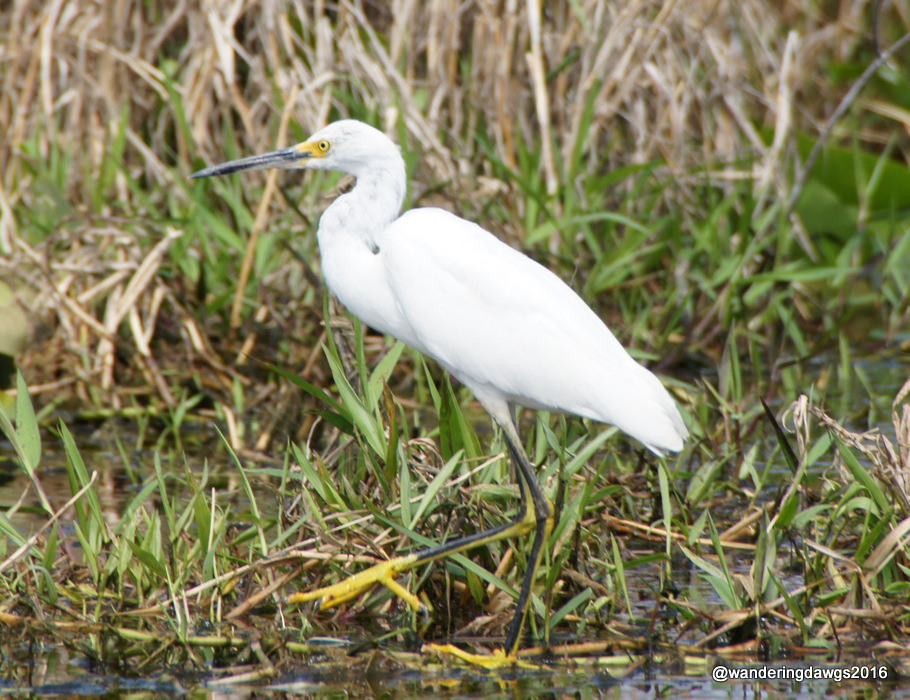
After our incredible few days in the Okefenokee it was time to return back to civilization and the real world.
 Wandering Dawgs