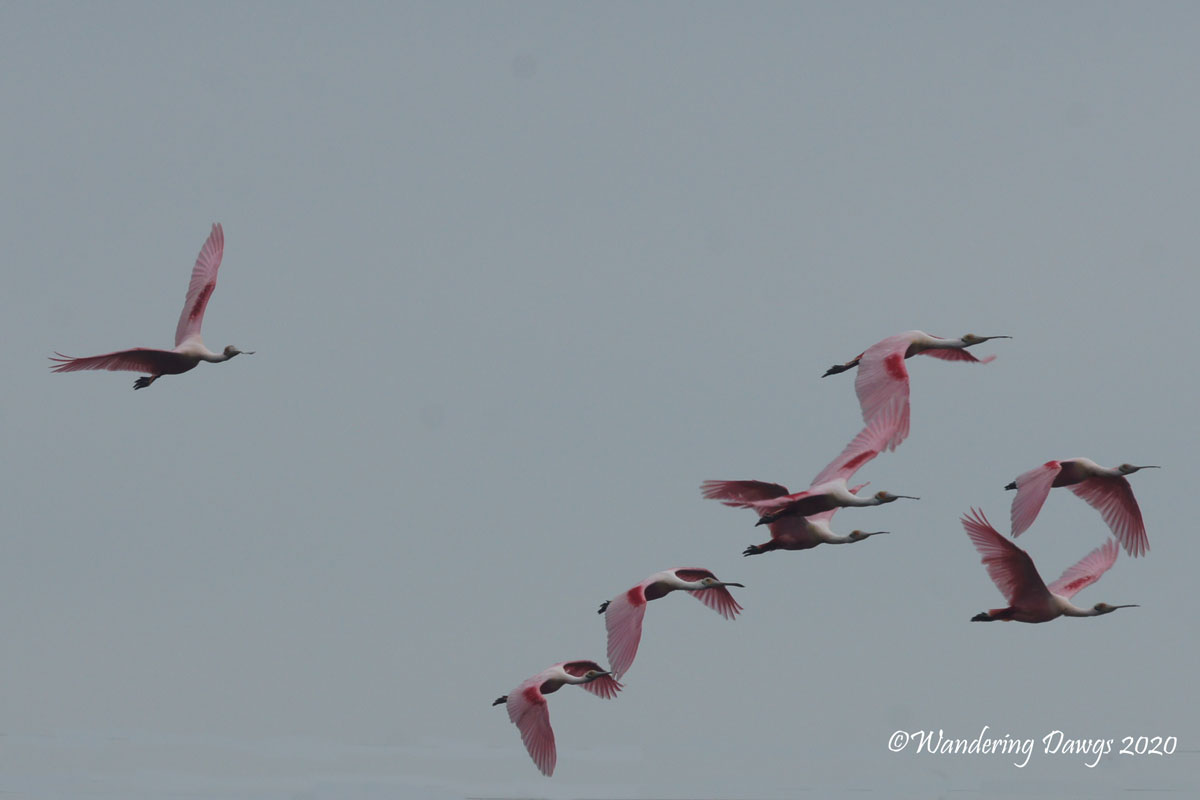
For this week’s Bird Weekly Challenge Lisa has asked us to show flocks of birds. The above image is of a flock of Roseate Spoonbills on the Texas Gulf Coast.
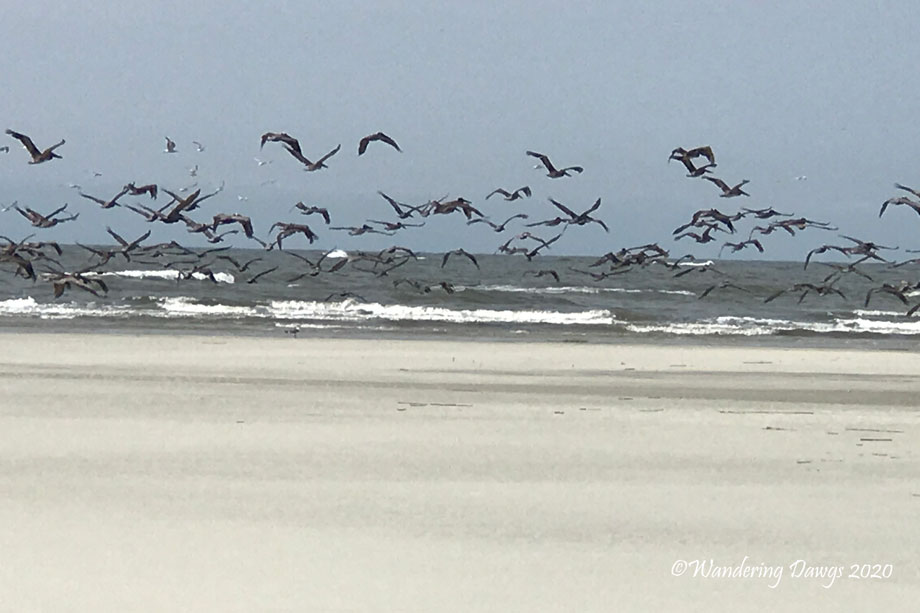
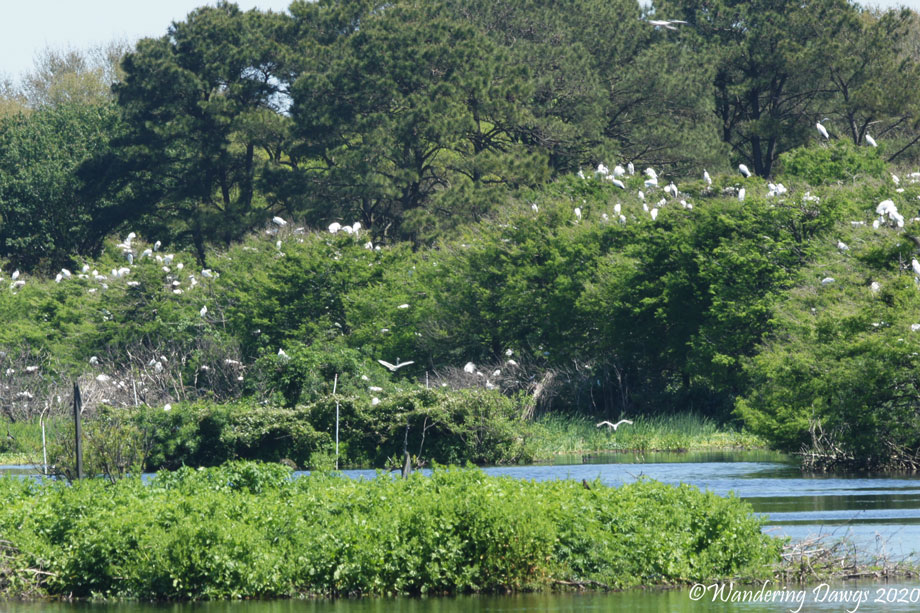
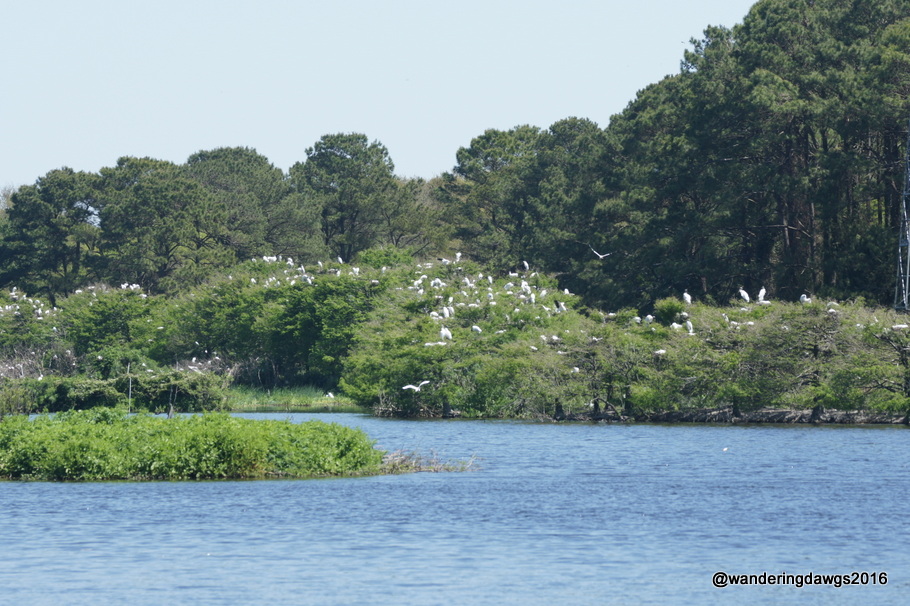
Flock of Great Egrets with two Spoonbills in Everglades National ParkFlock of Brown Pelicans in Coastal GeorgiaFlocks of nesting Egrets and Wood Storks at Harris Neck National Wildlife Refuge, Georgia
It seems like we’ve been going non stop since we returned from our trip to Ireland and Scotland on May 23. Once I got caught up on laundry and got over the jet lag, I’ve been able to enjoy the summer.
With very little rain while we were on our trip, my garden was suffering when we got home. After a few days of digging in the dirt and a little watering, it is now thriving.
Zinnia
Daylily
Fiddler Crab on milkweed
Zinnias in the butterfly garden
Zinnia
Some days are perfect for a boat ride.
High tide in the Georgia Salt Marsh
Driftwood on a Georgia sandbar
The hummingbirds come by each day and a painted bunting bunting pair and other small birds come by the feeder regularly. Wading birds are frequent visitors in the neighborhood.
The next stop on our winter RV journey was Saint Augustine, Florida. We had a beautiful campsite in Anastasia State Park to call home for a few days. The weather was lousy most of the time but we picked a perfect sunny day to do some sightseeing.
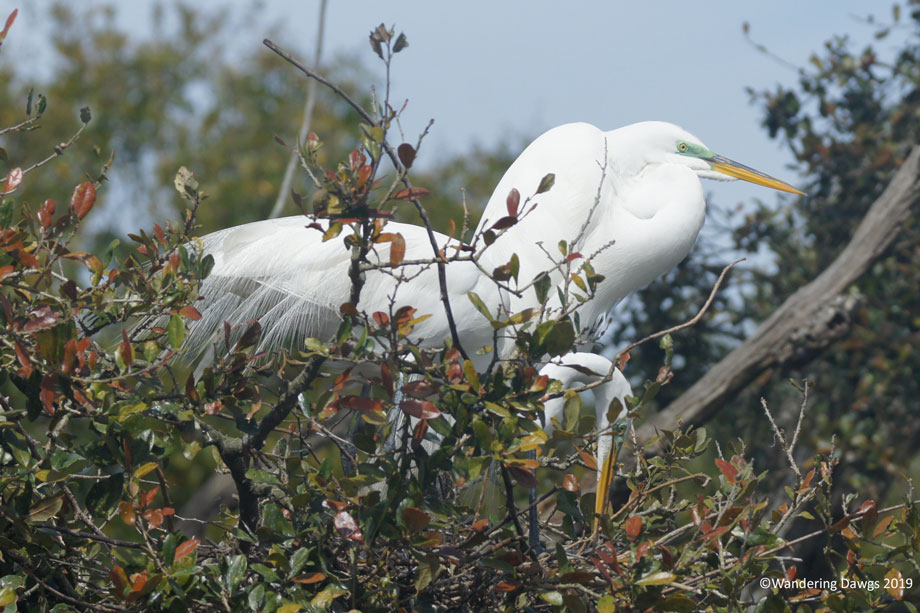
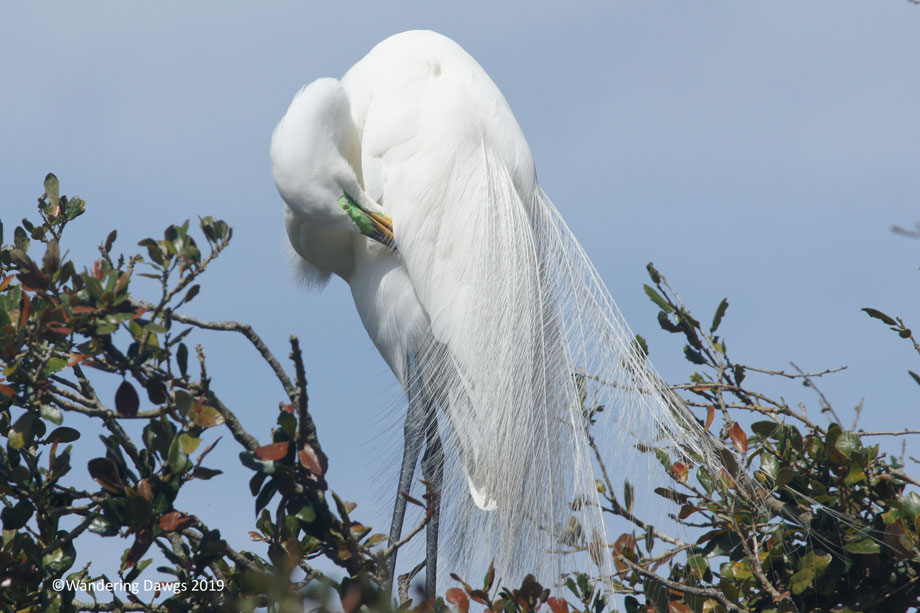
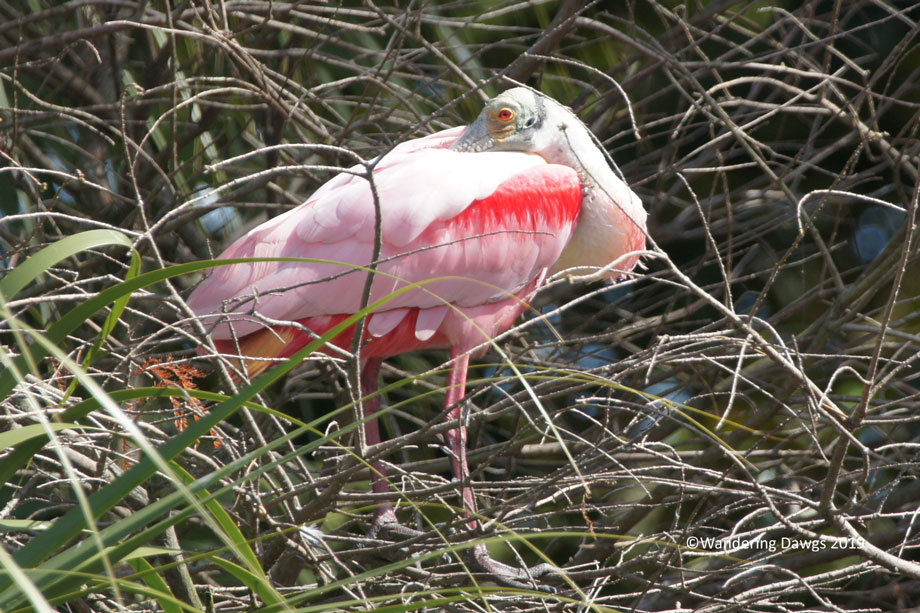
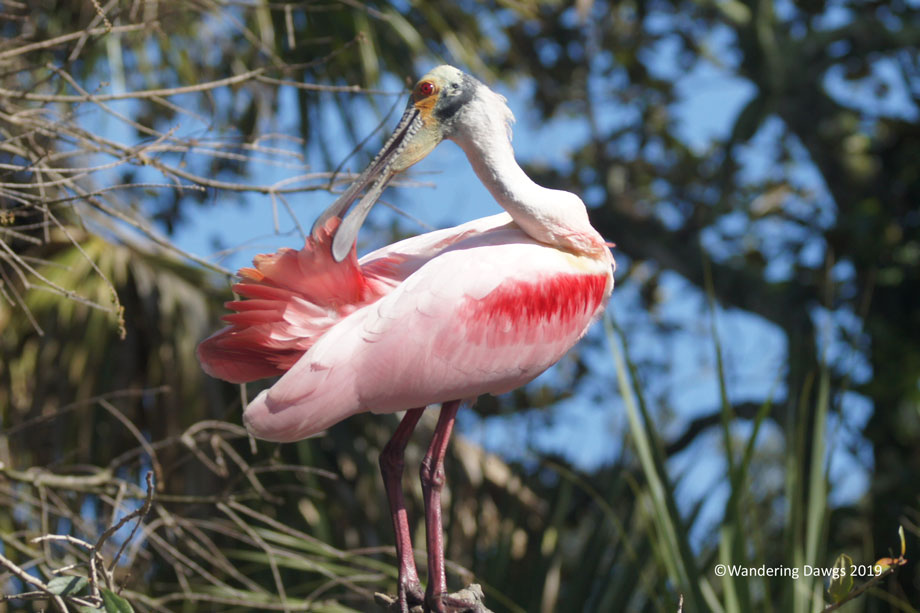
At the top of my to do list was visit the Saint Augustine Alligator Farm Wading Bird Rookery. During nesting season wading birds come to nest in the trees in the Native Swamp at the Alligator Farm. The birds who nest here are wild and can come and go as they please. Although it was a little early in the nesting season there were a lot of great egrets and roseate spoonbills wearing their breeding plumage and some pairs were starting to build their nests.
The trees surround a swamp area filled with alligators. A boardwalk winds around the swamp giving visitors close up views of the alligators in the water and the birds in the trees.
A bird gathering at the St. Augustine Alligator Farm Rookery
Roseate Spoonbills
Boardwalk through the Saint Augustine Alligator Farm Native Swam and Rookery
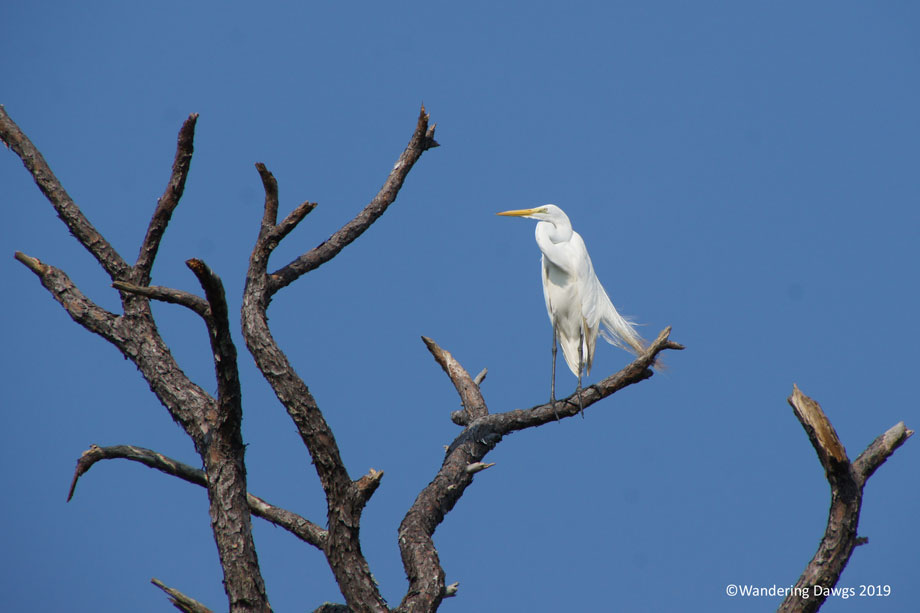
The Great Egrets showed off their breeding plumage and pairs worked on their nests.
Great Egret with breeding plumage at St. Augustine Alligator Farm Rookery
Pair of egrets working on their nest
Pair of great egrets at St. Augustine Alligator Farm Rookery
Egrets at the St. Augustine Alligator Farm Rookery
You can take my picture now
Great Egret Breeding Plumage
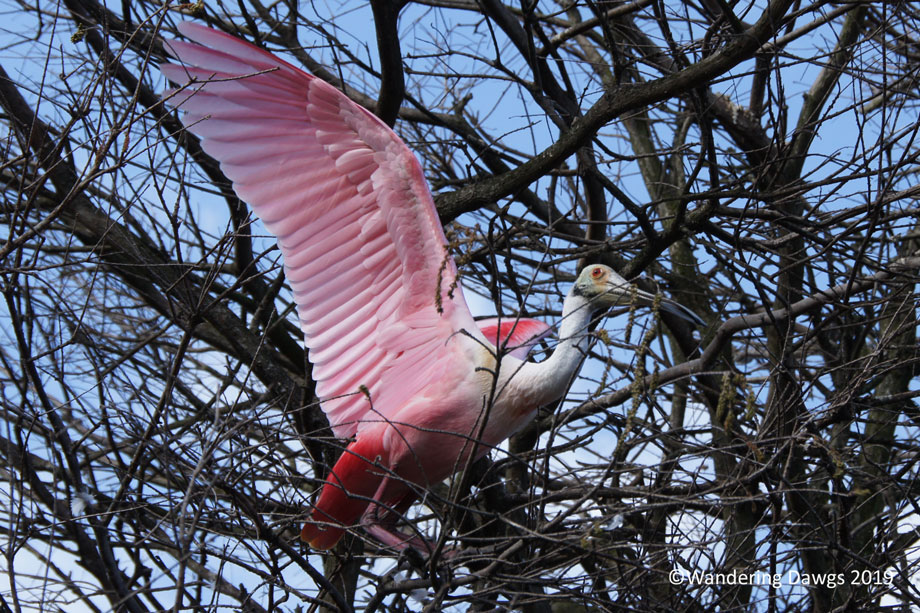
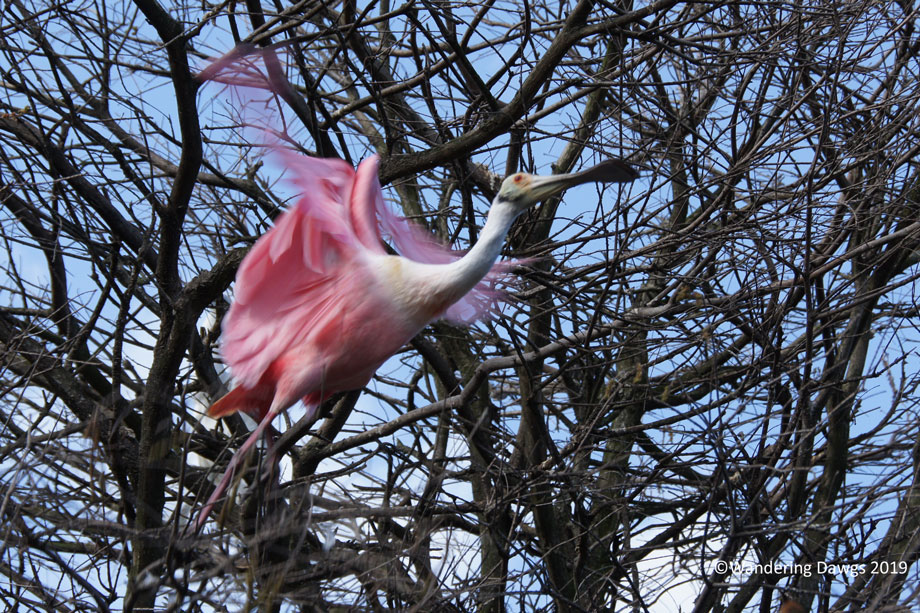
The Roseate Spoonbills were my favorite.
Roseate Spoonbill at Alligator Farm
Roseate Spoonbill at Alligator Farm Rookery
Roseate Spoonbill at Alligator Farm Rookery
Roseate Spoonbill at Alligator Farm Rookery
Roseate Spoonbill at Alligator Farm Rookery
Roseate Spoonbill at Alligator Farm Rookery
Roseate Spoonbill at Alligator Farm Rookery
Roseate Spoonbill at Alligator Farm Rookery
Coming up next, more about our St. Augustine adventure including other critters at the Alligator Farm.
When the tide is just right and the minnows in the water are plentiful, wading birds gather in the salt marsh in search of food. White Ibis, Egrets, Herons, and Wood Storks can often be seen feeding side by side in the marsh.
This morning my husband got my attention to show me a long line of white birds lined up on the railing of our neighbor’s dock. By the time I got my camera ready many of the birds had flown down into the marsh but there were still a few white ibis and great egrets surveying the area before diving in to eat.
White Ibis searching for breakfast in the salt marsh
Great Egret
White Ibis
Great Egret
It’s always entertaining to watch the white ibis as they feed. Usually there is a large group of them poking their long beaks under the water to capture fish. Suddenly, all of them will start wading through the water in the same direction in search of more food. They don’t stay long in any one place. Eventually, they tire of the area and fly off in search of better fishing grounds.
Ibis dining in the salt marsh
White Ibis dining in the salt marsh
I never know when I’m going to stumble across flocks of birds in the marsh but it’s always a treat when I see them. I was lucky to see them this morning and was glad to have my camera nearby.
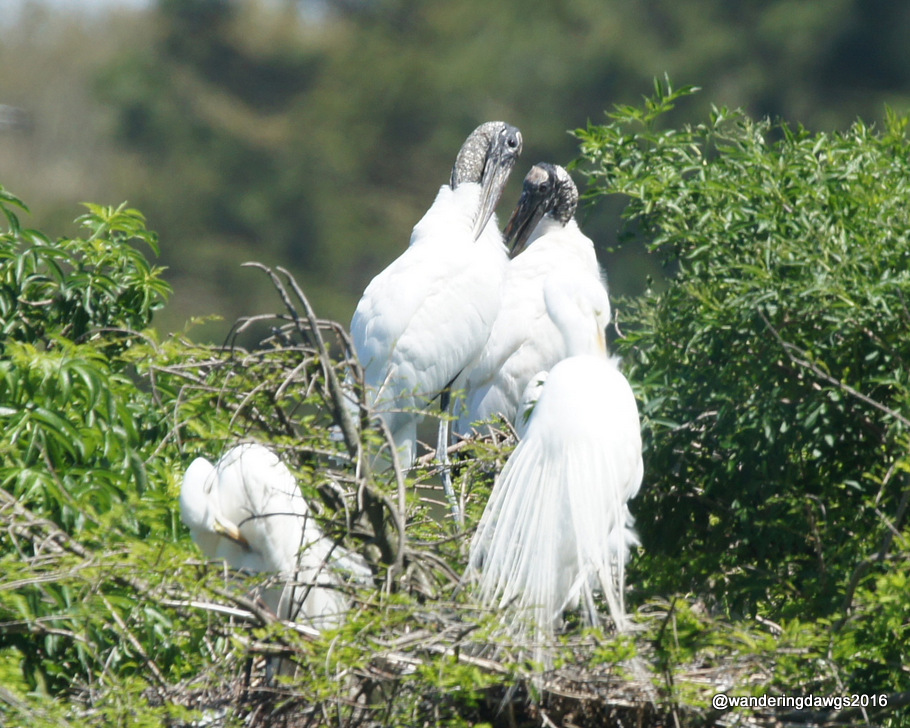
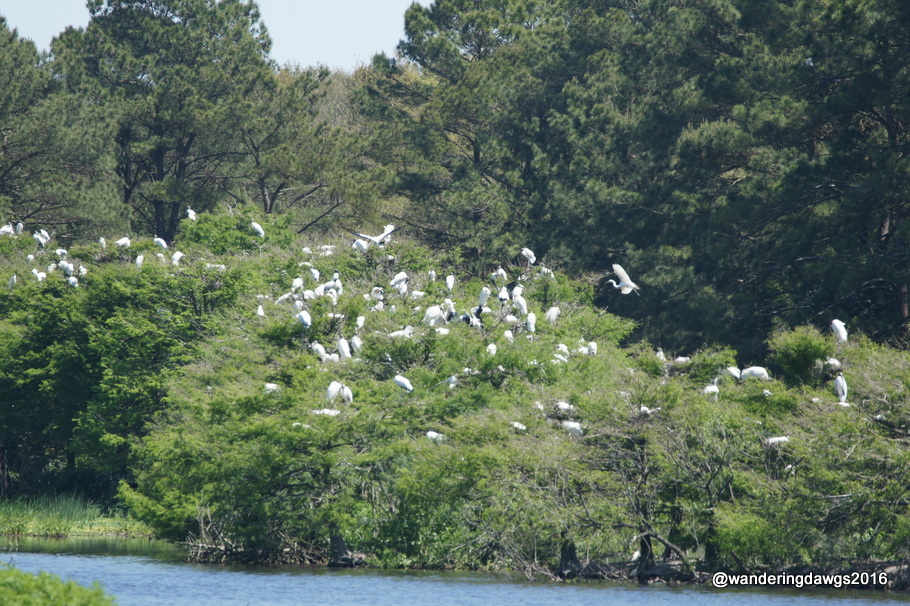
Wood storks, egrets, and herons build their nests every spring in the trees of Woody Pond at the Harris Neck National Wildlife Refuge. Located in Georgia just a few miles from I 95 in between Savannah and Brunswick, it is a great day trip from our home.
Woody Pond at Harris Neck National Wildlife Refuge
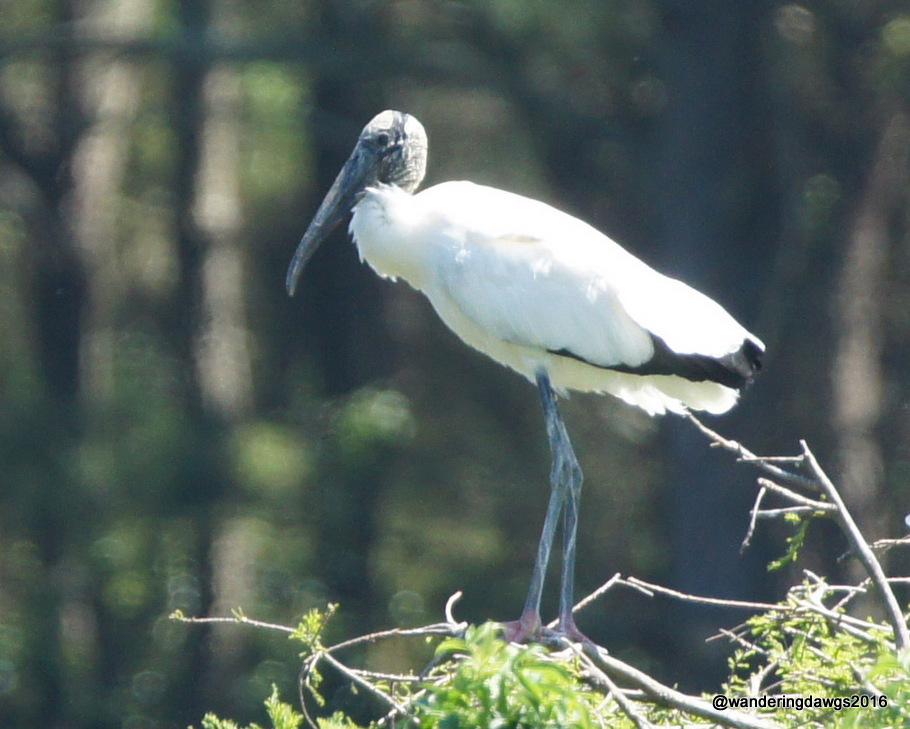
Wood storks were placed on the Endangered Species list in 1984. After almost 30 years of conservation efforts to increase the wood stork population, their status was upgraded to Threatened in June, 2014.
A path along the dike beside Woody Pond provides a great place to view the birds. The wood storks and egrets shared the trees.
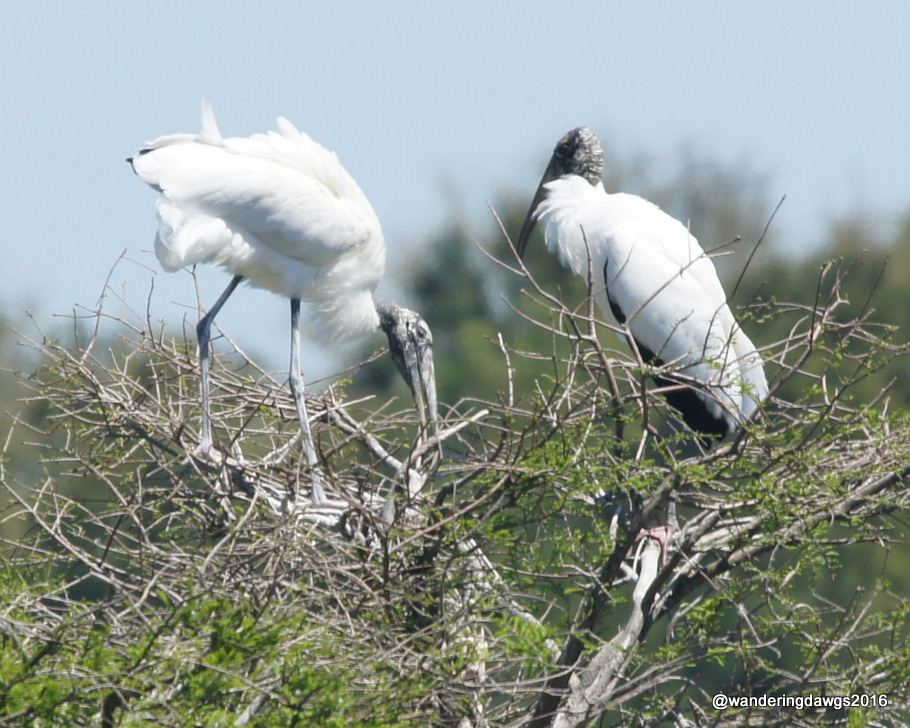
Wood Storks and Great Egrets
Nesting Wood Storks and Great Egrets at Woody Pond
Many of the wood storks were working on their nests. None of their eggs had hatched yet.
Wood Storks building a nest
Wood Stork on nest
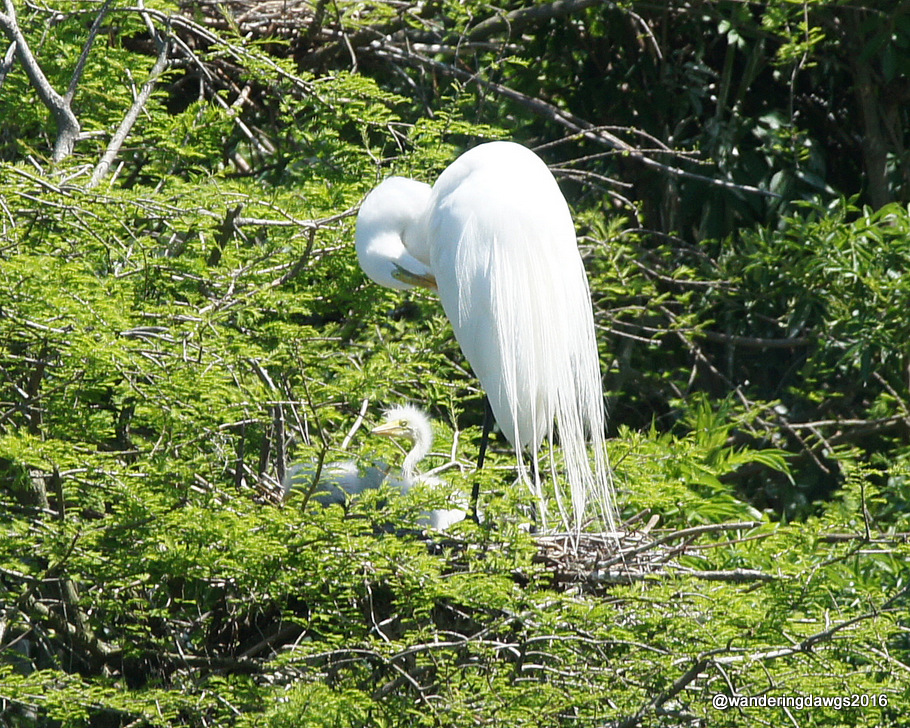
As I took photos, Henry used the spotting scope and pointed out a mother egret with chicks that I would have never seen. The nests were a long way from where we were so the picture isn’t the best but it gives you an idea of the size of the baby egret.
Great Egret with chicks
In the shallow water at the edge of the pond a tri-colored heron entertained us as he searched for food.
Tri colored heron
Tri Colored Heron gets his catch
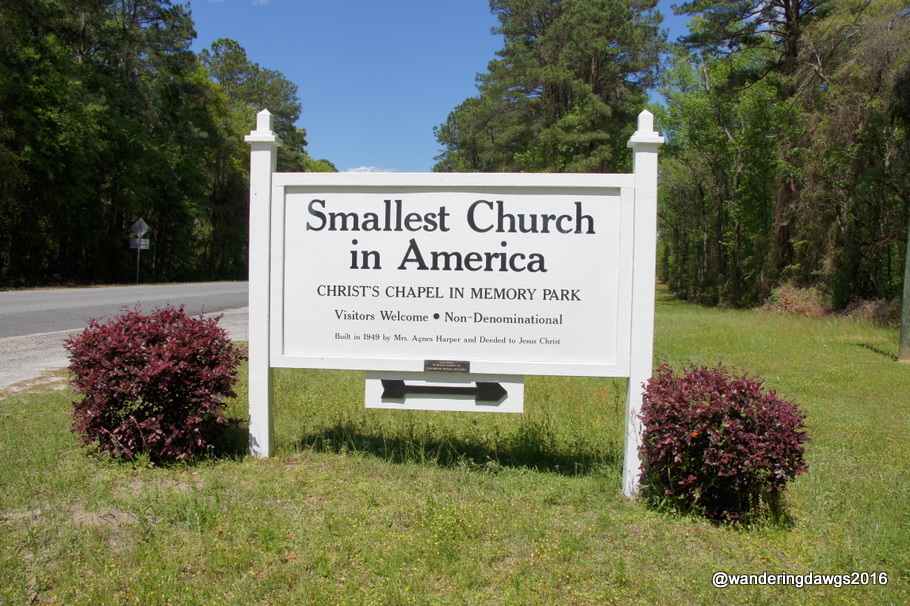
After leaving the refuge we stopped at the Smallest Church in America to take a look and do a little geocaching.
Smallest Church in America
An arsonist burned this church in November, 2015. The church is being rebuilt through the efforts of volunteers and the work is almost complete.
Smallest Church in America, Townsend, Georgia
Smallest Church in America
Smallest Church in America
Smallest Church in America
After finding the geocache hidden near the church we headed for home.

















 Wandering Dawgs