This week, our guest host Xenia of Tranature has chosen Sanctuary for our challenge. She reminds us that “Sanctuary can be found and created in a garden, a park, a field of wild flowers and by the sea …… watching wildlife, listening to birdsong …… along the forest trails and in the mountains.” She has asked us to show where we find it or how we create our calm and healing.
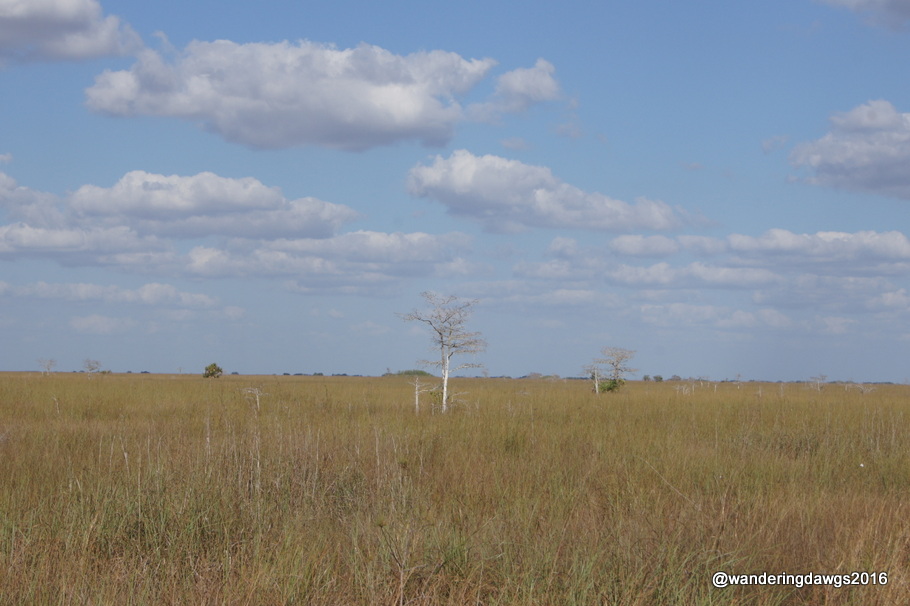
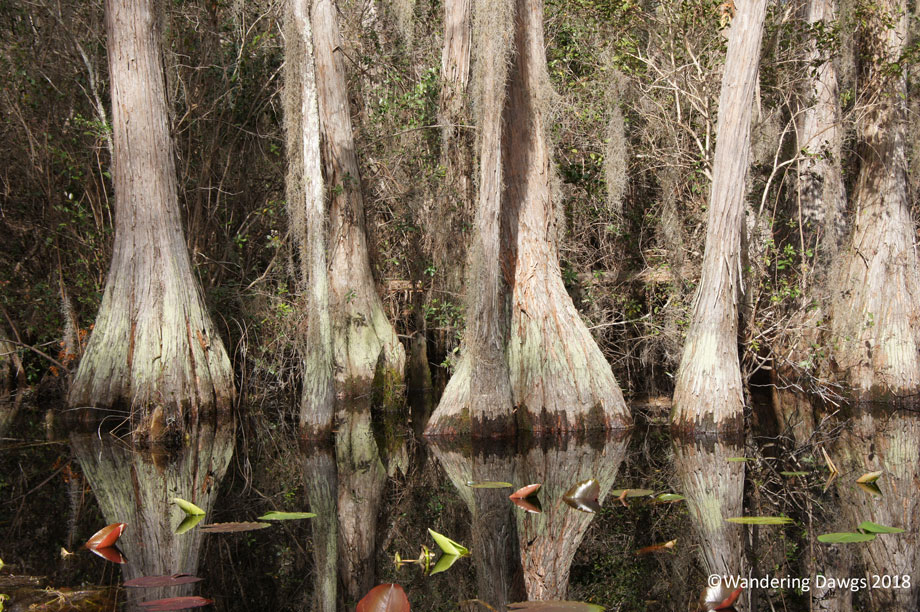
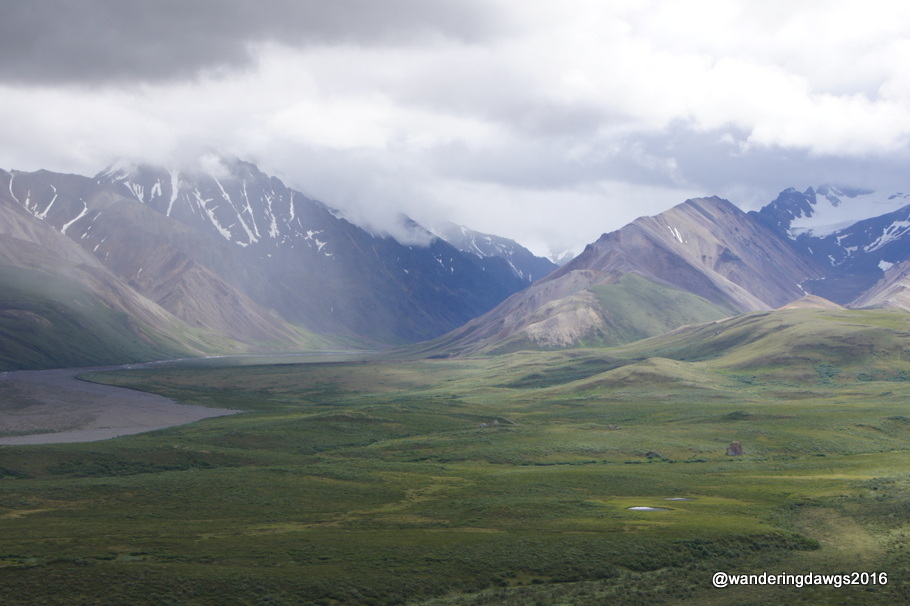
America’s National Parks and Wildlife Refuges are national treasures and wonderful places to find sanctuary.
Pa-Hay-Otee Overlook in Everglades National ParkCypress Trees in the Okefenokee National Wildlife RefugePolychrome Overlook, Denali National Park, Alaska
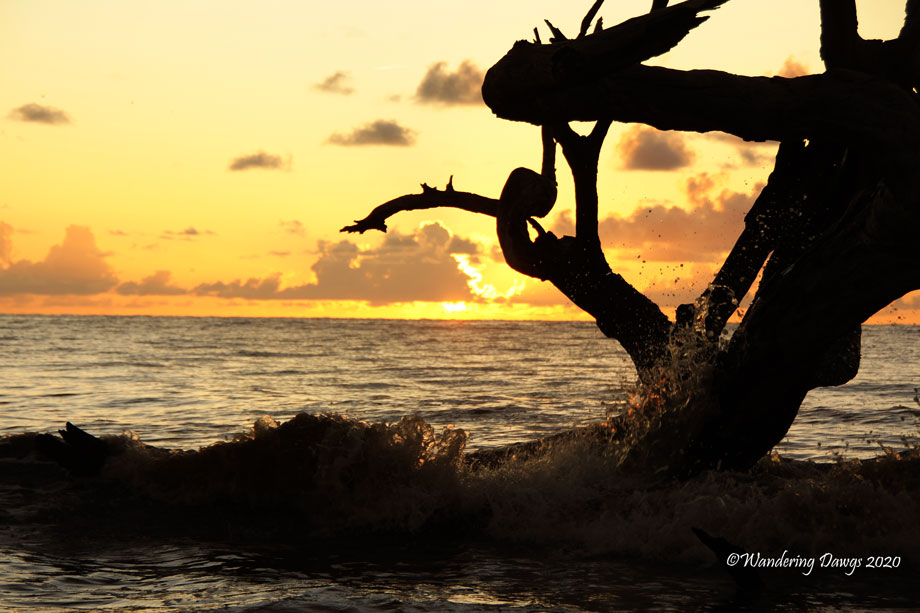
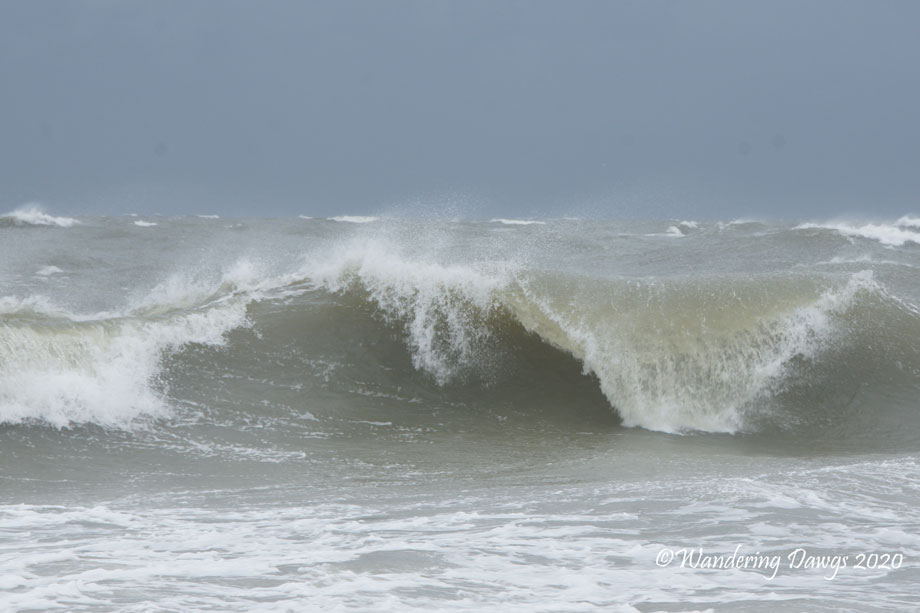
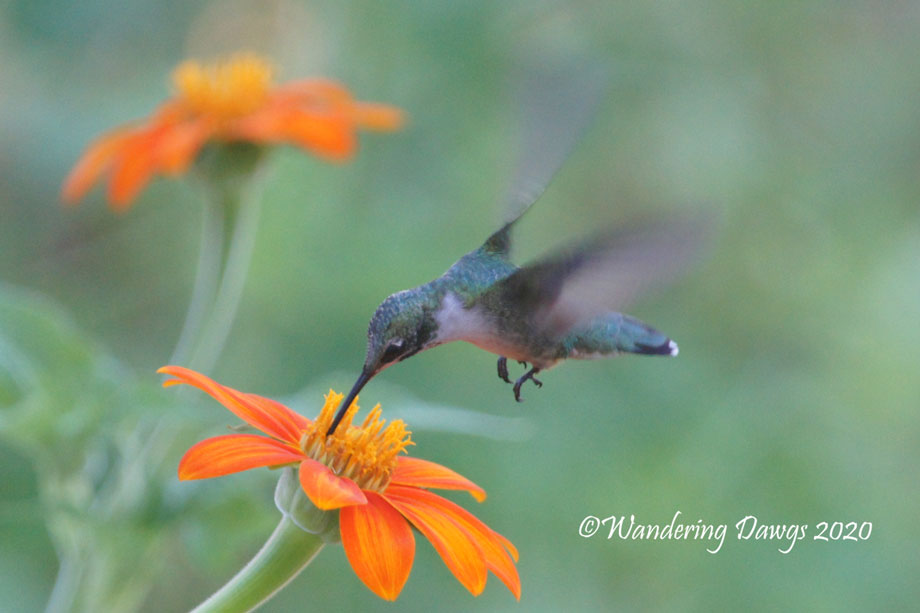
Closer to home, I can find my sanctuary watching the sun rise over the Atlantic Ocean on one of Georgia’s barrier islands (image at the top of the page), walking on the beach, or watching the birds and butterflies in my backyard butterfly garden.
What better way to begin our winter southern adventure than a stop in one of our favorite state parks, Stephen C. Foster State Park in the Okefenokee National Wildlife Refuge.
Much of the swamp is covered with thick peat deposits. The early Native Americans named the area Okefenokee which means “land of trembling earth” because they felt the movement of the peat beneath their feet as they walked.
There were deer in the campground every day. One day we took a walk on the boardwalk nature trail near the marina and watched an egret searching for food.
White Tailed Deer in the Okefenokee
Egret in the Okefenokee
The Okefenokee Swamp is one of North America’s most unspoiled natural wilderness areas. According to the U. S. Fish and Wildlife Service Okefenokee National Wildlife Refuge web page, “the Okefenokee National Wildlife Refuge has 353,981 acres of National Wilderness Area within the refuge boundaries.
We always enjoy going out in a boat to explore the swamp. On our last visit we enjoyed our ranger guided boat tour so much we decided to go on another tour. While waiting for the tour to begin we wandered around the boat ramp and discovered Mama gator Sophie lounging by the ramp with some of her babies hanging out nearby.
Mama Sophie by the boat ramp with her babies nearby
Young alligators
Young alligators
Young alligator
As we rode through the man made canal into the swamp we spied more young gators on the bank enjoying the warm day.
Young alligators on the bank
A large gator checked us out as we exited the canal into the swamp.
Alligator in the Okefenokee
After a few days of cloudy skies and chilly days the sun was starting to warm things up. The warmer weather brought out plenty of wildlife.
Okefenokee Swamp
Cormorant in the Okefenokee
Alligator in the Okefenokee
Alligators enjoying some warm weather
Turtle in the swamp
Hanging out in the Okefenokee
The water winds through ancient cypress trees and water lilies.
Welcome to our third annual “Wandering Dawgs best campgrounds of the year” list.
Our 2016 wandering took us on a short trips to Florida, Georgia, Alabama, Arkansas and Mississippi.
We prefer staying in state and federal parks and this year our top three all fall into one of those categories.
Number 3: Oak Mountain State Park, Pelham, Alabama
Tranquility Lake was just a short walk from our campsite
We stopped at Oak Mountain on our way to Mississippi and enjoyed it so much we returned to the same site (A28) on our way back home to Georgia.
Our site was spacious with full hook ups and nothing but woods behind us. This large state park has a golf course, archery range, equestrian camping and horse stables, nature and hiking trails, lake front beach, mountain bike trails, and scenic drives. The road through the park is a popular place for bicyclists. Nearby Pelham and Birmingham have restaurants and shopping.
Number 2: Stephen C. Foster State Park in the Okefenokee National Wildlife Refuge, Fargo, Georgia
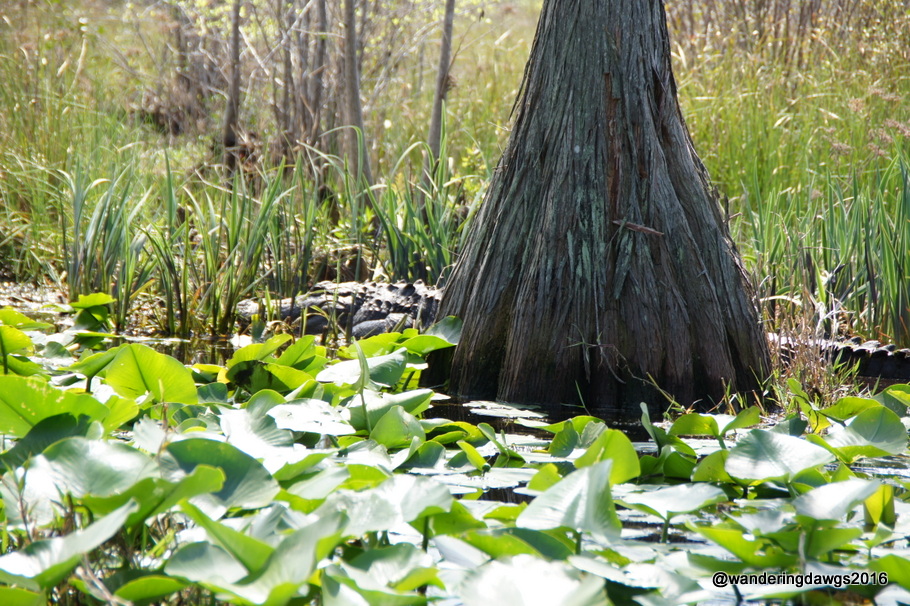
Do you see the alligator behind the Cypress tree?
We love this place so much we have camped here numerous times in past 10 years. Our most recent trip was in March, 2016.
Just getting to the campground is an adventure. After turning off the highway, seventeen miles of driving through pine forests and palmettos takes you into the Okefenokee National Wildlife Refuge. It is remote, quiet, and wild.
We camp in one of the large premium pull through sites. It is a short walk or bike ride from the campground to the marina where you can go on a guided tour of the Okefenokee Swamp, rent a boat or canoe, launch your own boat, or take a walk on the nature trail through the swamp. Alligators are often seen around the marina but we’ve never seen one in the campground.
Number 1: Fort Pickens Campground, Gulf Islands National Seashore, Florida
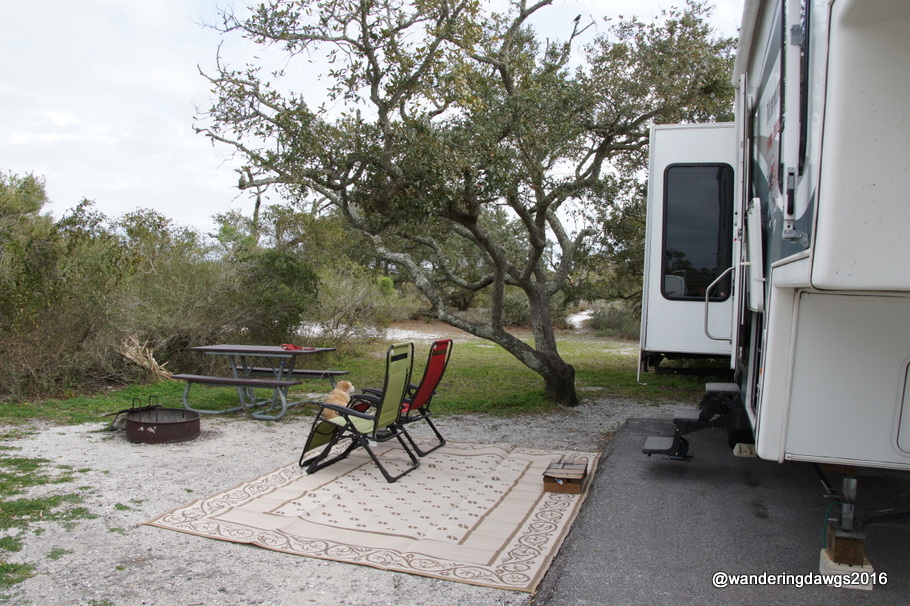
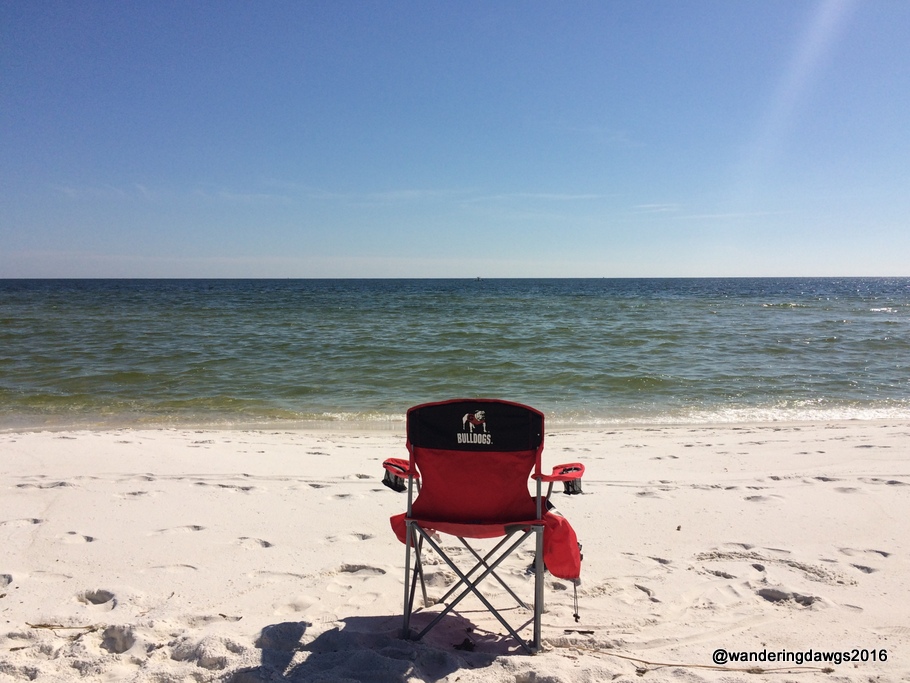
Ready for Beach Chair Sitting on the Gulf of Mexico
Miles of white sugar sand beach in Gulf Islands National Seashore within walking distance from our campsite, an historic fort to explore, a nice campsite, nature trails, beautiful sunsets, fresh seafood, fishing pier, museums and a lighthouse nearby – what’s not to love?
We returned to Mississippi River State Park in Marianna, Arkansas, our “Best Campground of the Year – 2014“. I left it out of the top three to make room for three new campgrounds
Stephen Foster Folk Culture Center, White Springs, Florida
Eastbank Corps of Engineers Campground, Bainbridge, Georgia
Where do you think we will wander next year? Stay tuned…
We enjoyed walking around the marina and going on the nature trail at Stephen C. Foster State Park in the Okefenokee National Wildlife Refuge but we wanted to be in a boat to really experience the swamp. On one of our visits a few years ago we rented a canoe to paddle into the swamp and another time we rented a boat to venture even farther into the swamp. On our most recent trip in early spring we decided to take a ranger guided boat tour.
As we glided through the man made canal our guide pointed out the baby alligators and their mother Sophie who was keeping a close watch on her babies. Her mate Zeke was no where to be found.
” Sophie the Mama Gator
As the boat exited the canal we entered the big water of Billy’s Lake where we were about six miles from the headwaters of the Suwanee River. The water here gets up to six feet deep, much deeper than the average depth of two feet.
It was a beautiful day to be on the water and we saw a few other people out on the water.
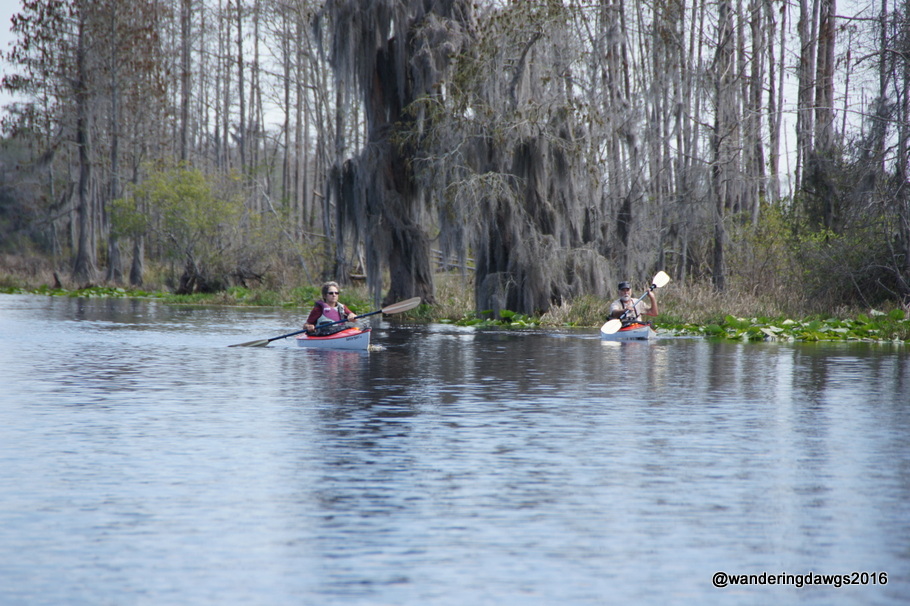
It was a beautiful day for kayaking
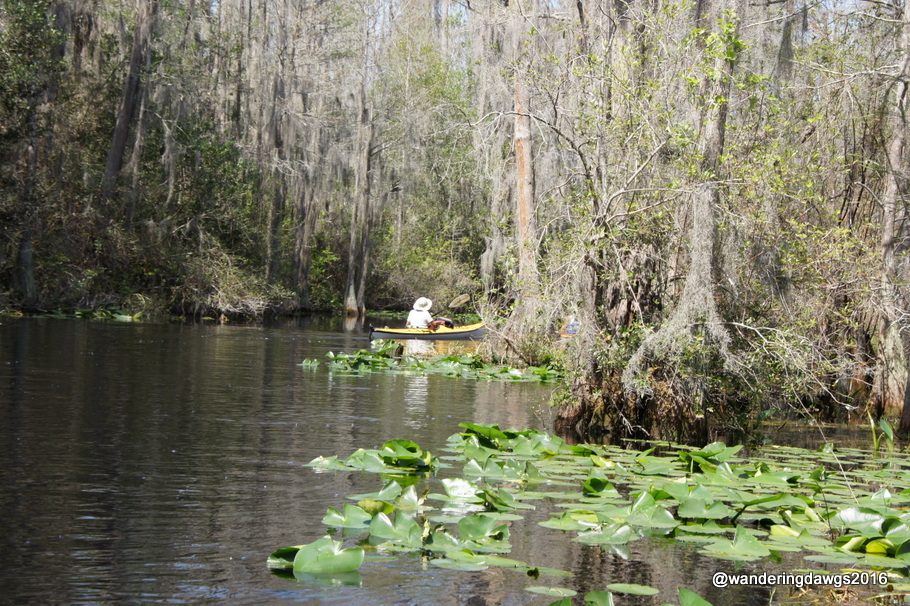
A kayaker goes around the bend deeper into the swamp
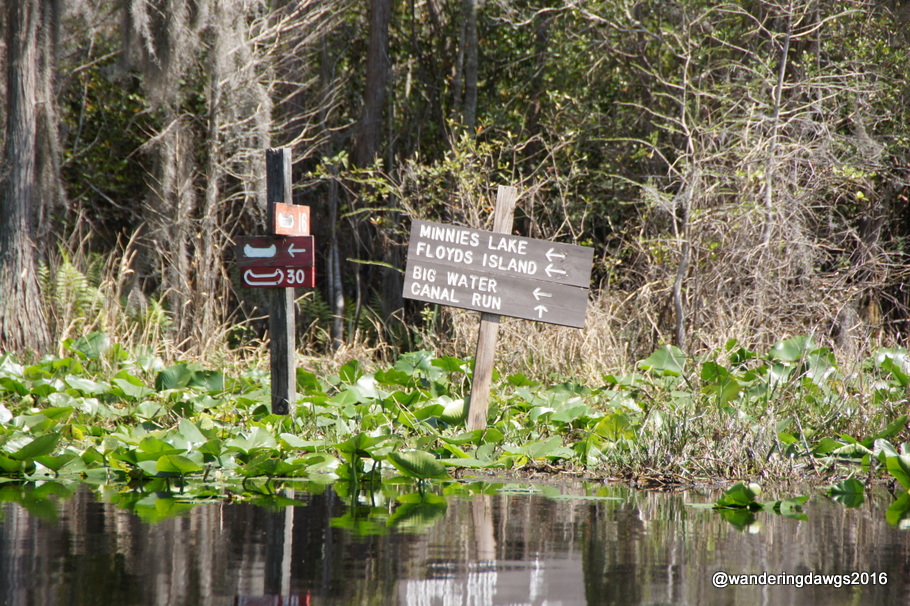
Which way do we go?
Our guide took us through the narrow waterway toward Minnie’s Lake. In some places the water was barely wide enough for the 24 foot Carolina Skiff. As we ventured farther into the swamp it was as if we had stepped back in time to a prehistoric age. We were miles from civilization in this incredibly wild place.
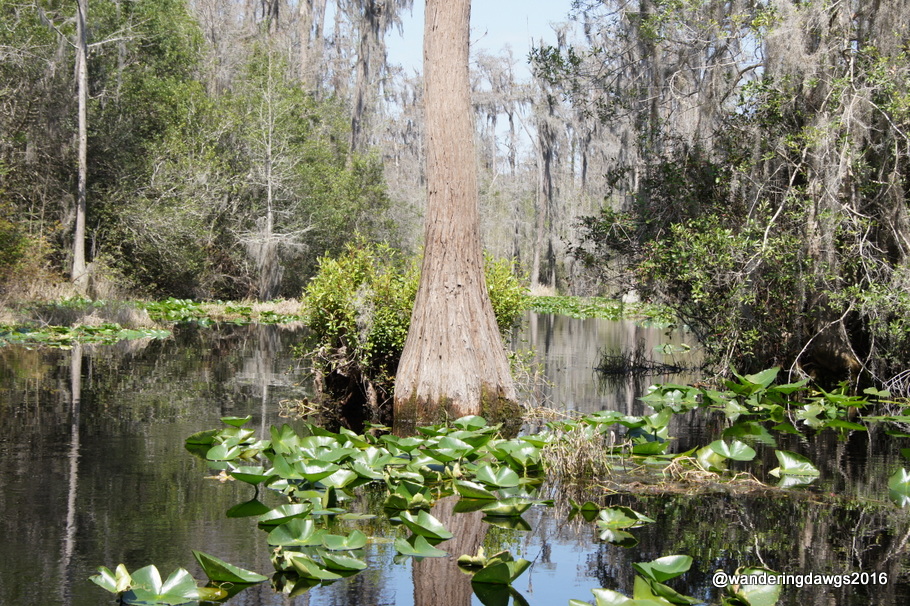
Boats had to navigate around this cypress tree
It is estimated that the alligator population in the swamp is about 20,000. We saw quite a few as we went along. It was mating season and I wondered if this gator was trying to attract a mate.
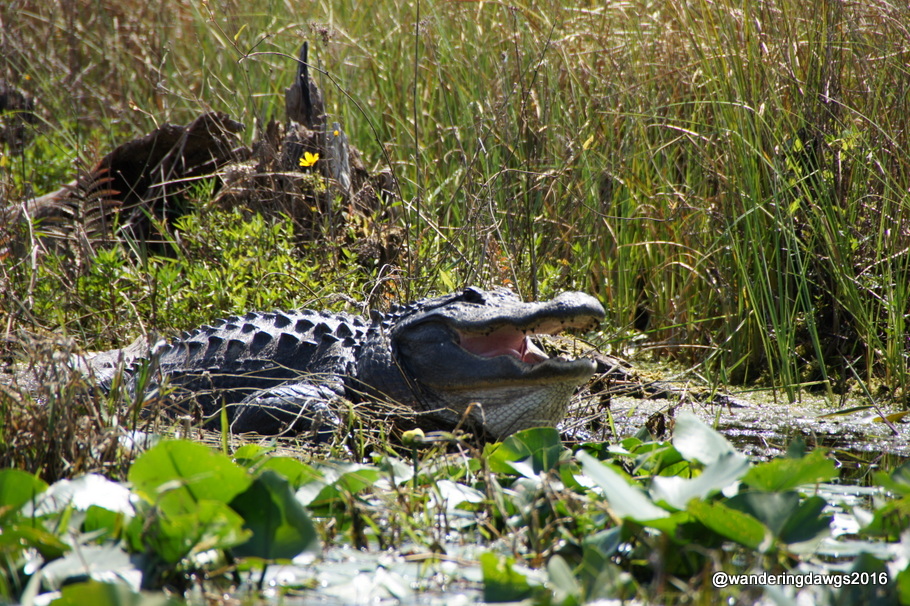
Huge alligator showing us his teeth
Another gator was behind a huge cypress tree.
Do you see the alligator behind the Cypress tree?
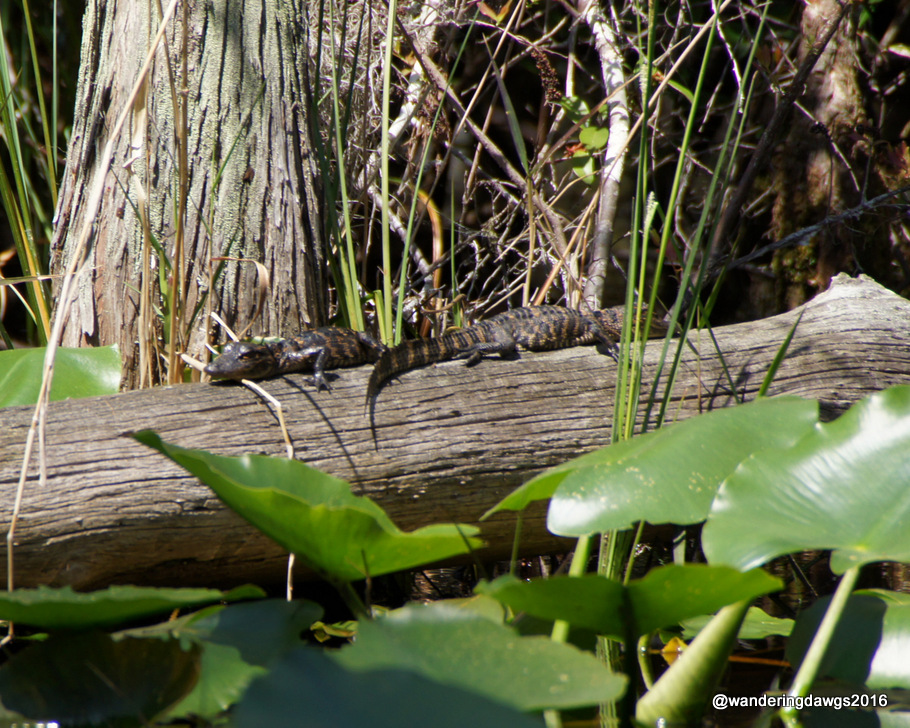
And there were young ones sunning on a log.
Young gators enjoying the sunshine
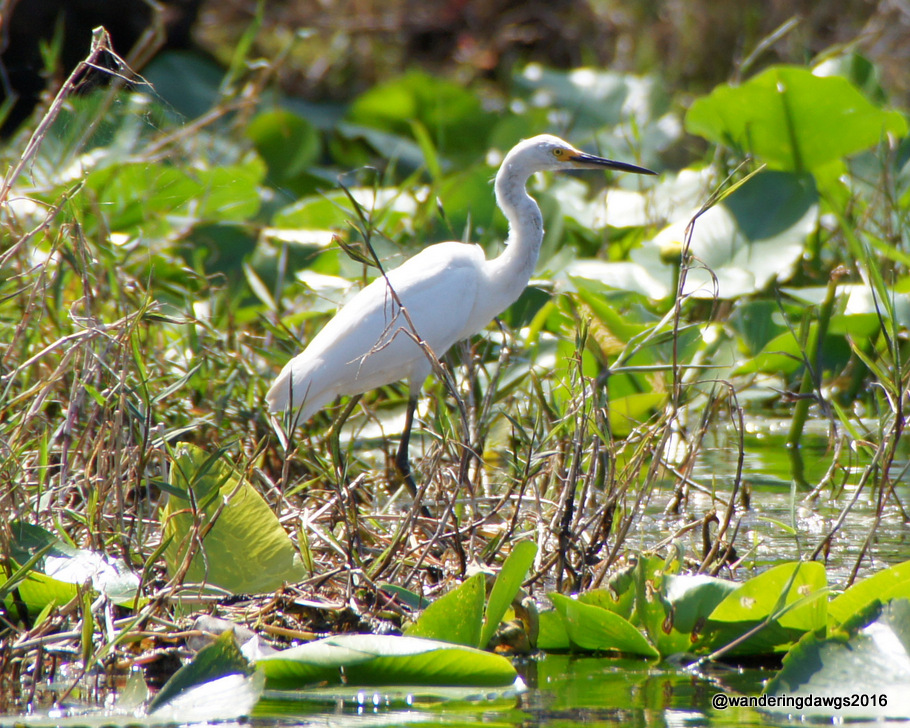
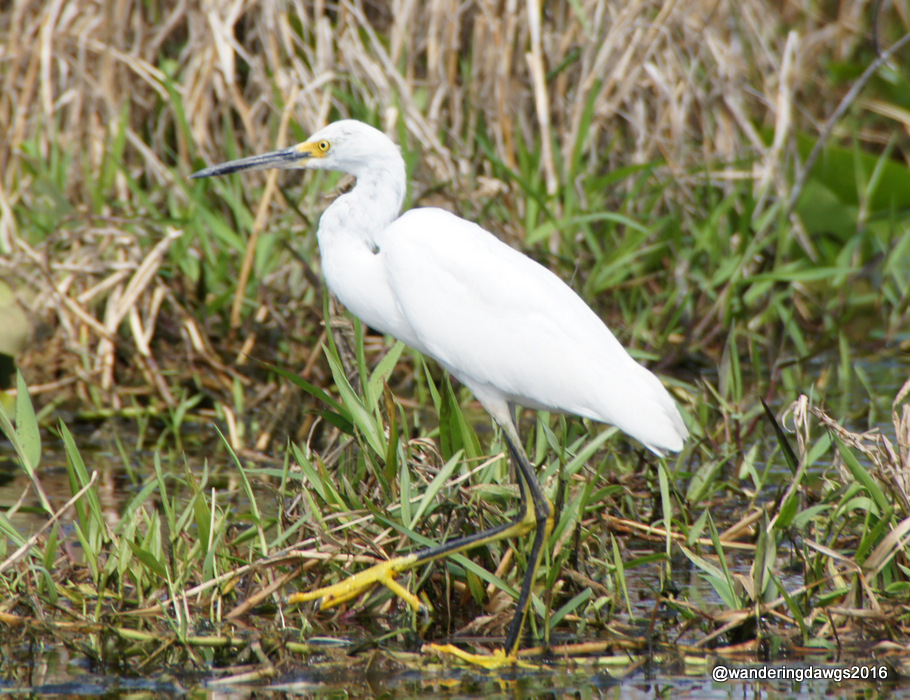
There are many species of wildlife besides alligators. While we didn’t see any raccoons, opossums, turtles, or bears, we did see a few birds out searching for food.
Egret in the Okefenokee
Snowy Egret in the Okefenokee
After our incredible few days in the Okefenokee it was time to return back to civilization and the real world.
On St. Patrick’s Day we left Stephen Foster Folk Culture Center in White Springs, Florida and drove about 50 miles to another park named after the famous composer. At the end of the road 17 miles from the nearest highway, Stephen C. Foster State Park in Fargo, Georgia is located in the Okefenokee National Wildlife Refuge .
This is one of our favorite Georgia state parks and one we have returned to over and over through the years. There is just something I love about being surrounded by nature miles away from civilization.
The Okefenokee Swamp is one of North America’s most unspoiled natural wilderness areas. According to the U. S. Fish and Wildlife Service Okefenokee National Wildlife Refuge web page, “the Okefenokee National Wildlife Refuge has 353,981 acres of National Wilderness Area within the refuge boundaries. In addition, the refuge is a Wetland of International Importance (RAMSAR Convention – 1971) because it is one of the world’s largest intact freshwater ecosystems.”
Indians who once lived in the area called it Okefenokee which roughly translated means “Land of Trembling Water.” The headwaters of the Suwanee River is located in the Okefenokee Swamp.
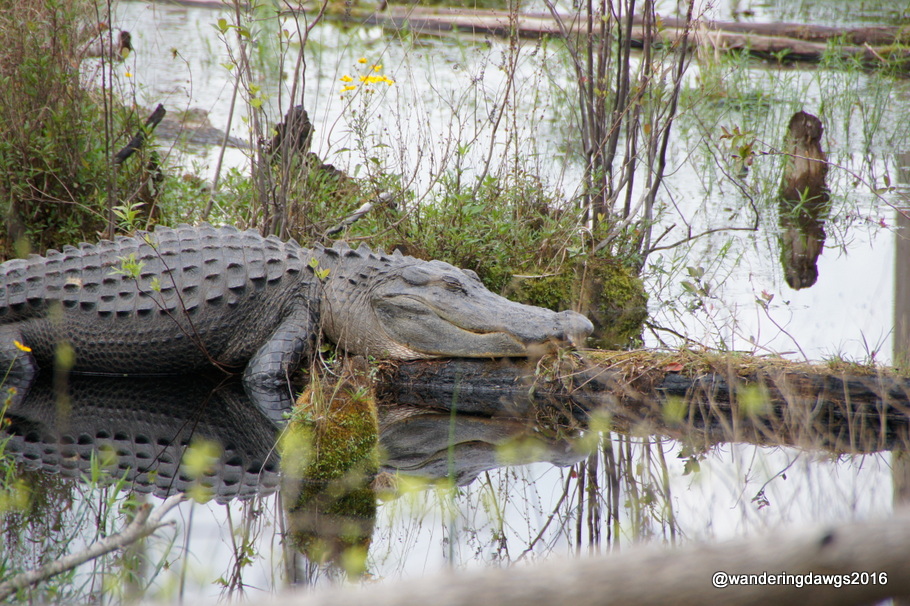
Going out in a boat is a great way to see the swamp but there is also plenty to see from land. All the photos in this post were taken as we walked around the campground, marina and on the Trembling Earth Nature Trail which starts at the marina. One section of the trail is a boardwalk through the swamp. This huge gator was sunning on a log beside the boardwalk.
Giant gator beside the boardwalk trail
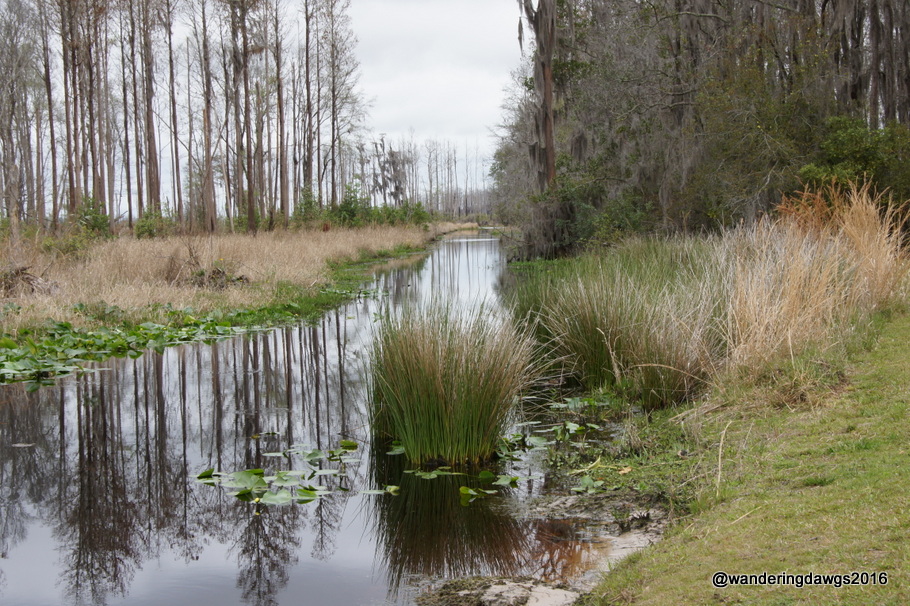
The only man made waterway in the park is this canal which leads to the open water of the Okefenokee Swamp.
Canal leading into the Okefenokee Swamp
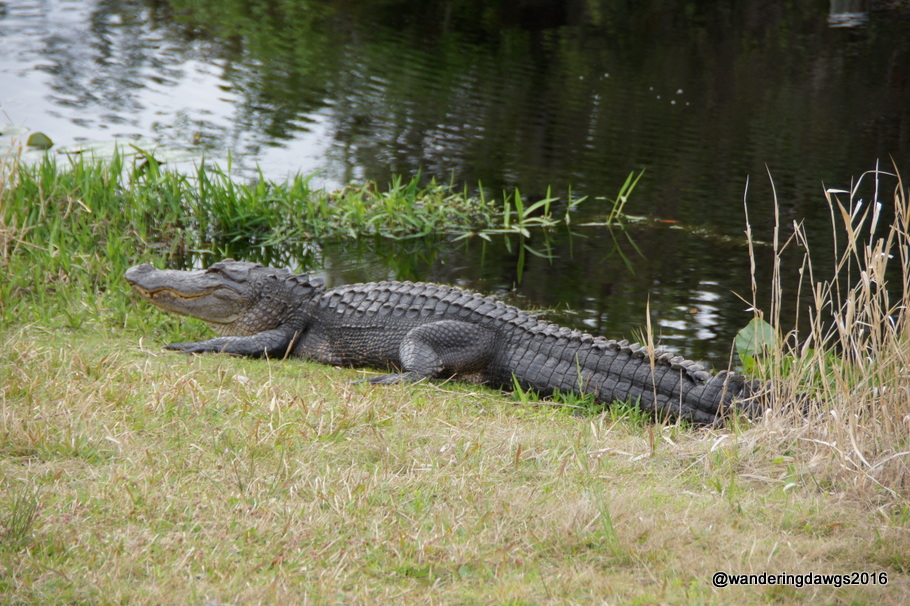
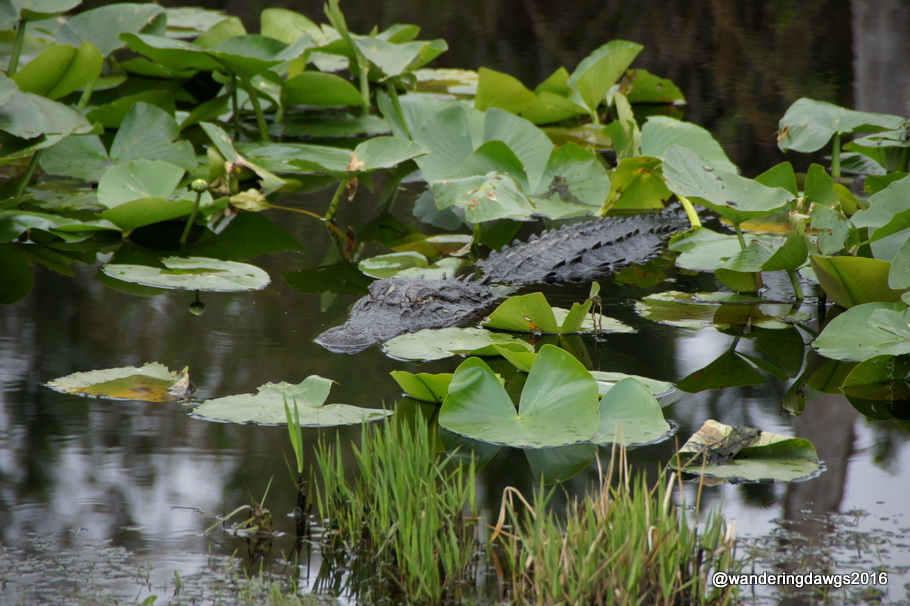
The canal runs beside the road and alligators are frequently seen sunning themselves on the bank or chilling in the water.
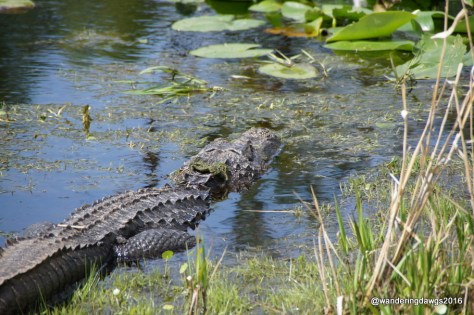
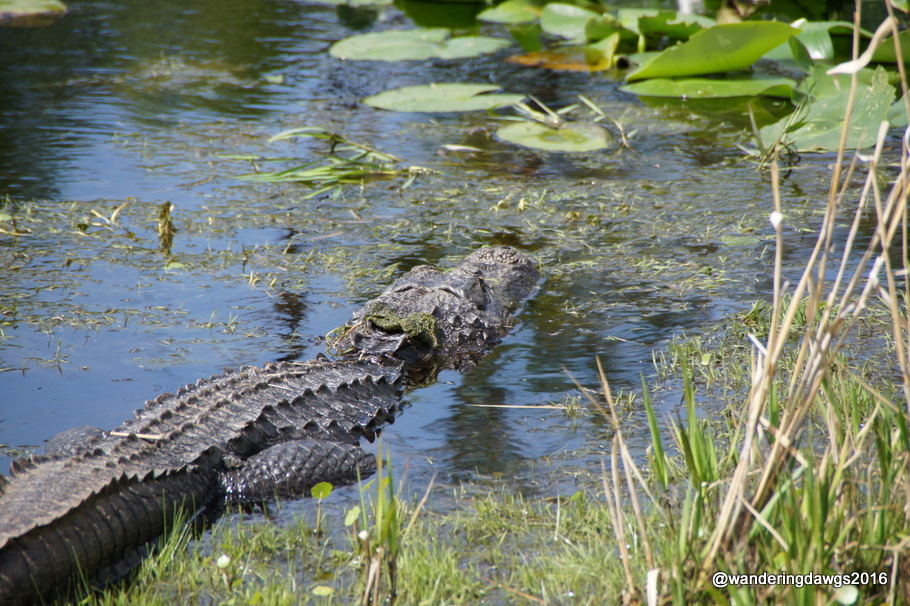
Alligator among the lily pads
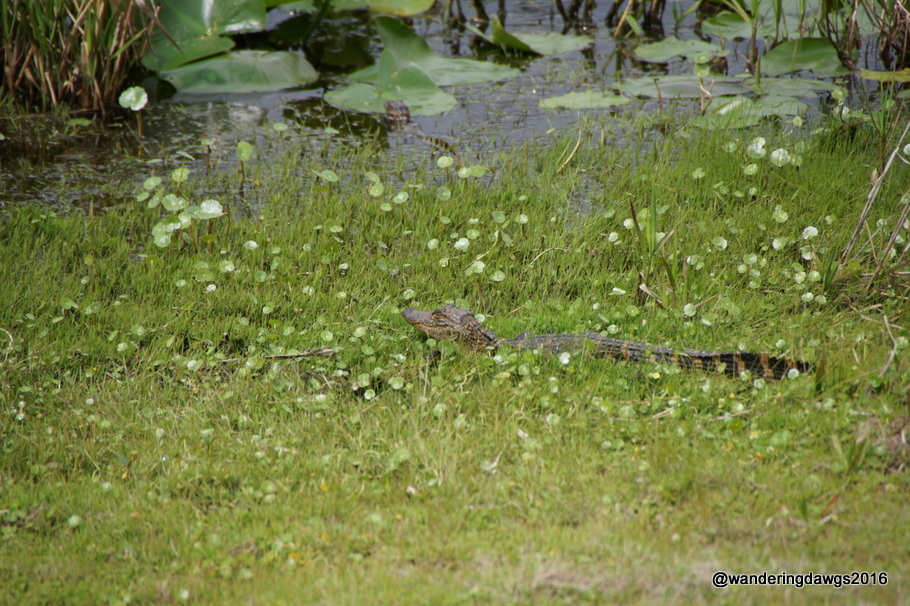
One of the other campers told me about baby alligators beside the road so off we went in search of baby gators.
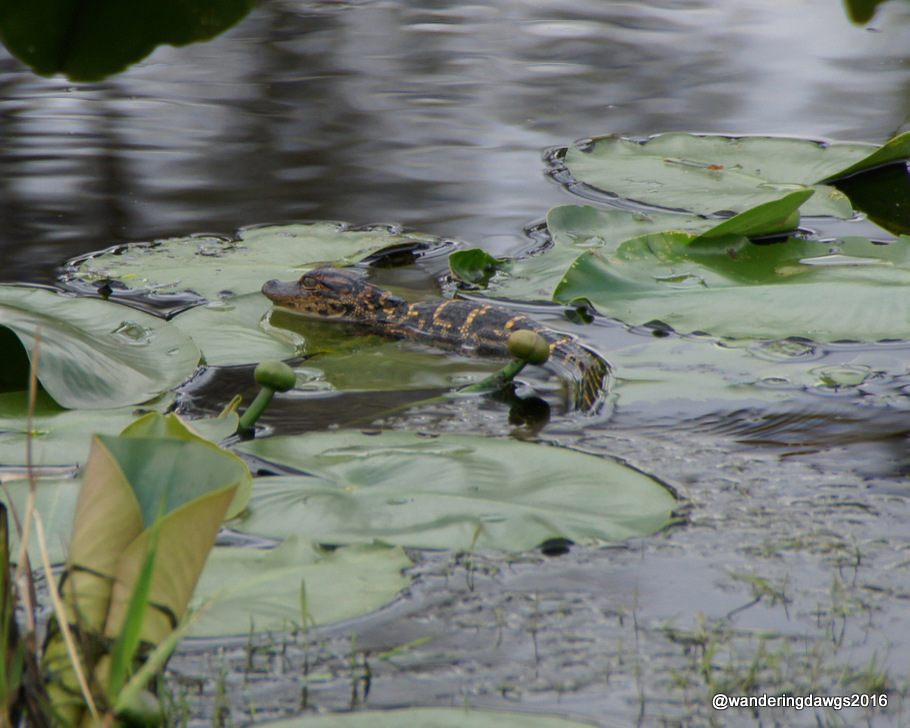
Baby gator in the canal beside the road. Do you see the one in the water?
Baby Gator on Lilly Pad
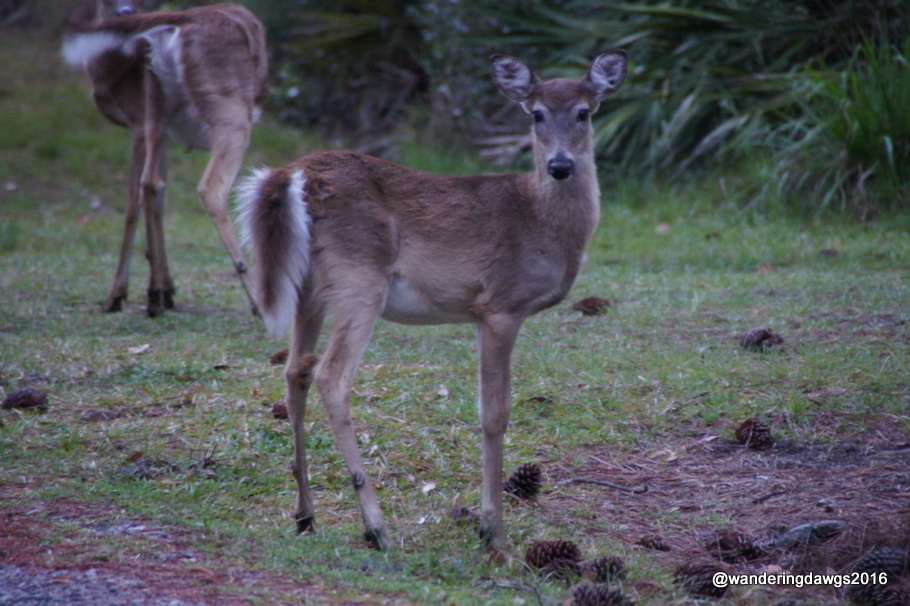
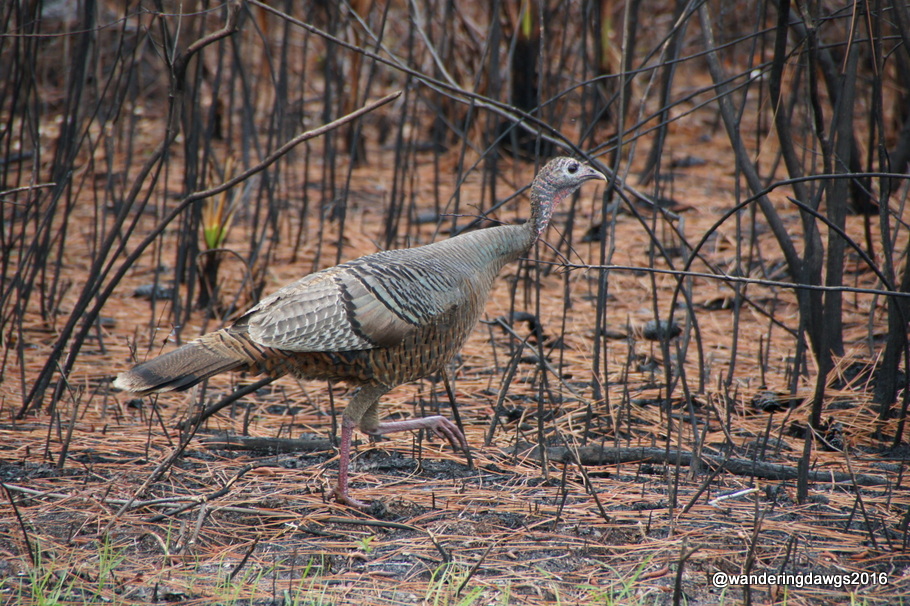
Besides alligators, many other animals make their home in the Okefenokee.
White Tail Deer at dusk
Wild Turkey
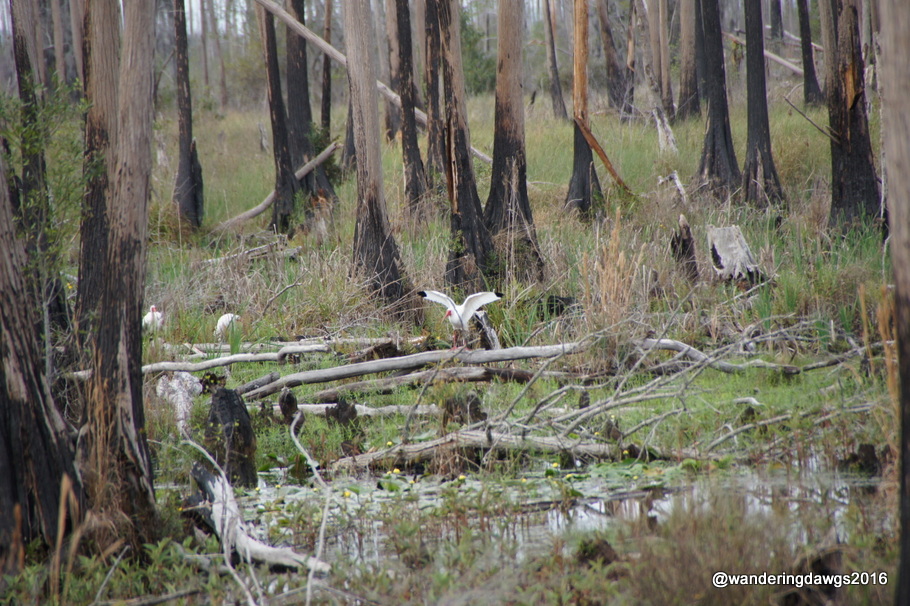
Ibis in the swamp
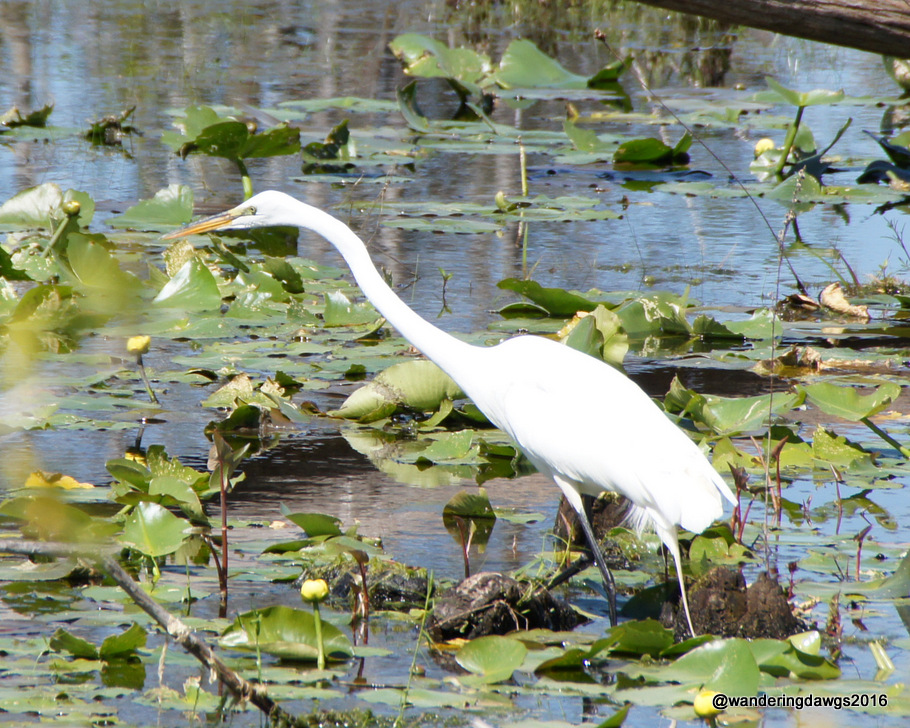
Egret in the swamp
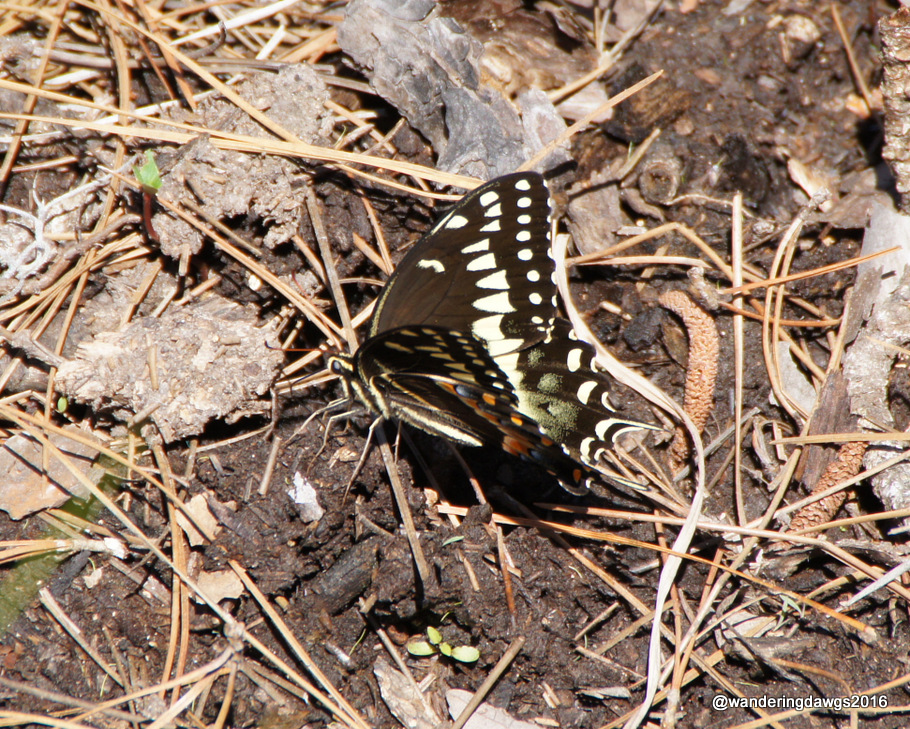
Butterfly beside the trail
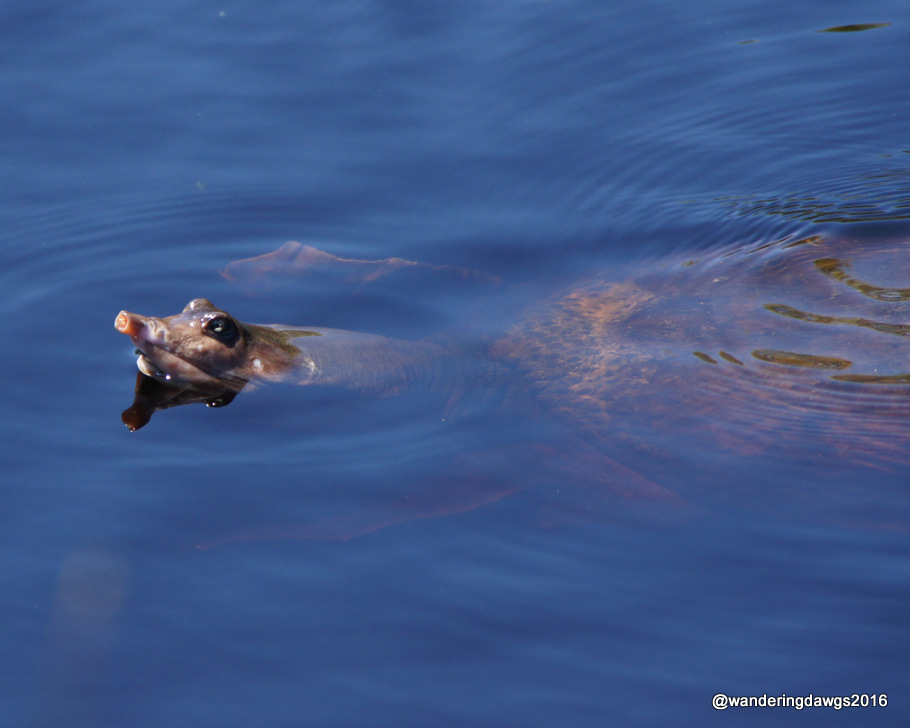
Turtle swimming in the marina
Coming up in my next post – a ranger guided boat tour into the Okefenokee.






 Wandering Dawgs